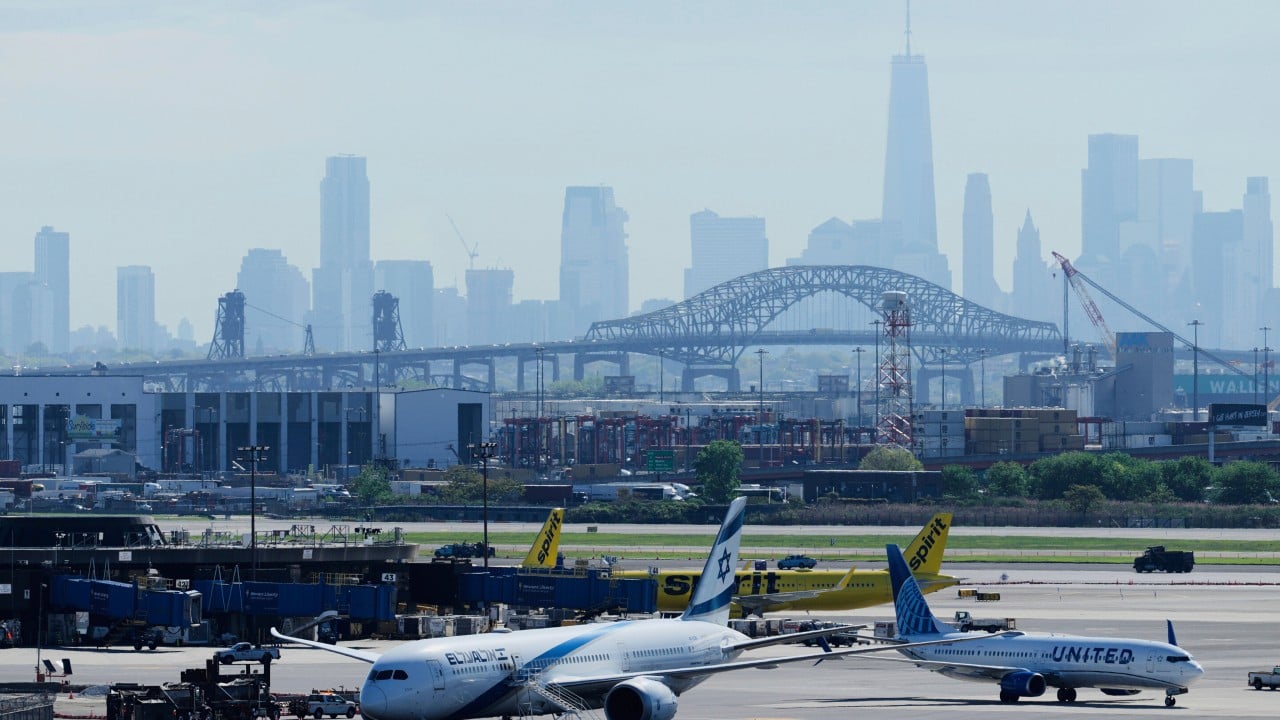
A United Airlines Boeing 767-300 arriving from Zurich recently clipped a light pole and struck a stationary vehicle while taxiing to its gate at Newark Liberty International Airport. While no injuries occurred, the event serves as a blunt reminder of the shrinking margin for error in modern ground operations. This was not a mid-air emergency or a mechanical failure of the airframe, but a breakdown in the most basic phase of flight: moving an aircraft from the runway to the terminal. It highlights a growing tension between aggressive scheduling and the physical constraints of aging infrastructure.
The Physics of a Tarmac Oversight
When a wide-body jet like the Boeing 767-300ER maneuvers through a congested hub like Newark, the pilots are dealing with a wingspan of over 156 feet. The cockpit sits high above the ground, creating significant blind spots directly beneath and behind the engines. Pilots rely on a combination of taxiway markings, ground controller instructions, and, in tight quarters, wing walkers to ensure they remain clear of obstructions.
In this specific instance, the aircraft’s wingtip made contact with a light pole before the engine or wing struck a ground service vehicle. This suggests a deviation from the taxi centerline or a failure to account for the "wing growth" that occurs during tight turns. Modern airports are packed. Every square foot of concrete is accounted for, and when a flight arrives early or a gate change is issued at the last second, the pressure to "tuck in" a massive jet becomes a high-stakes shell game.
The Newark Bottleneck
Newark Liberty (EWR) is notorious among flight crews for its cramped layout. Built in an era when aircraft were smaller and traffic volumes were a fraction of current levels, the airport now handles a relentless stream of heavy international traffic. The "North Terminal" area and the alleys between concourses at Terminal C offer very little room for deviation.
Ground collisions often stem from a "Swiss Cheese" model of failure. One hole is a tired crew at the end of an eight-hour transatlantic trek. Another is a ground controller managing a dozen moving targets simultaneously. A third is a light pole or service vehicle positioned just inches closer to a taxiway than standard clearances usually allow. When these holes align, metal meets metal. United’s dominance at Newark means their crews navigate these constraints more than anyone else, yet familiarity can sometimes breed a dangerous level of comfort.
The Cost of Ground Damage
A wing strike is never "minor" in the eyes of a maintenance chief. The 767 uses a variety of aluminum alloys and composite materials that are designed to withstand immense pressure in flight but are relatively fragile when subjected to a lateral impact from a steel pole.
Beyond the immediate dent, engineers must inspect the entire wing spar for structural deformation. A low-speed impact can send shockwaves through the internal ribbing of the wing, potentially compromising fuel tank seals or flight control surfaces like ailerons and slats. The aircraft is immediately pulled from service, causing a cascade of cancellations. In a tight market where spare hulls are non-existent, one clipped wing can disrupt the travel plans of thousands of passengers over several days.
Hidden Pressures on the Flight Deck
We have to look at the psychological state of the crew. After crossing the Atlantic, the transition from the "macro" environment of oceanic navigation to the "micro" environment of a busy taxiway is jarring. The brain is shifting gears. United, like most major carriers, has been pushing for faster turnarounds to maximize aircraft utilization.
There is an unspoken pressure to clear the taxiway quickly to make room for the next arriving flight. If a pilot feels the heat to vacate a high-speed turnoff or hurry to a gate to avoid a "blocked alley" penalty, their focus shifts from external clearance to internal timing.
The Ground Equipment Factor
The involvement of a truck in this collision brings the human element on the tarmac into sharp focus. Ground handling is often outsourced or managed by entry-level employees working in high-noise, high-stress environments.
Service vehicles are supposed to stay within designated "safety envelopes" marked by red or white lines on the concrete. If a vehicle is parked even slightly outside that line, or if a pilot is slightly off-center, the math fails. Investigations into these incidents frequently find that ground markings were faded or that the vehicle driver assumed the aircraft was following a different lead-in line.
Reevaluating the Safety Culture
United has faced a string of operational hiccups over the last year, ranging from lost tires to engine issues. While unrelated in a mechanical sense, they all point toward a systemic strain. When an airline grows rapidly or tries to squeeze more productivity out of its existing fleet, the "soft" parts of the operation—the procedures, the briefings, the situational awareness—are usually the first to fray.
Safety isn't a static achievement; it's a constant practice of mitigation. To prevent the next wing strike, the industry needs to move beyond blaming the pilot or the driver. We need to look at the lighting, the clarity of taxiway paint, and the "heads-up" technology available in the cockpit.
Some newer aircraft types feature external camera systems that allow pilots to see their wingtips on a flight deck display. The 767, a workhorse designed in the late 1970s and early 80s, lacks these bells and whistles. It requires old-school spatial awareness. As these legacy aircraft continue to fly alongside high-tech jets, the disparity in situational awareness tools becomes a liability that Newark’s tight corners will continue to expose.
United must decide if the current pace of operations at EWR is sustainable without a fundamental redesign of how they manage the final 500 yards of every flight. The alternative is a mounting bill for composite repairs and a slow erosion of passenger confidence. The heavy lifting of aviation happens at 35,000 feet, but the reputation of an airline is often broken on the ground.