The air in Seoul during early December has a specific, biting clarity. It carries the scent of roasted chestnuts from street carts, the sharp exhaust of idling taxis, and the quiet, collective hum of a metropolis winding down after a relentless Tuesday. People were heading home. Commuters pressed their faces against the glass of the Subways, checking their phones, thinking of dinner, of warmth, of the mundane routines that anchor a life.
Then, the screens changed.
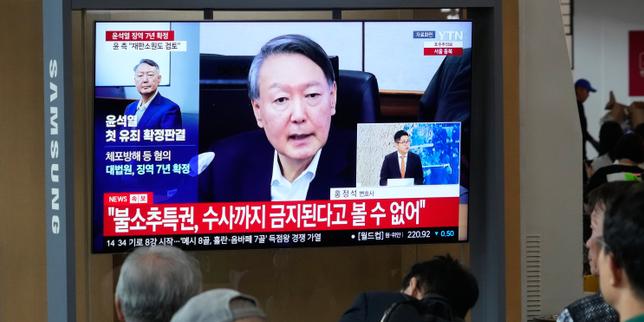
An emergency broadcast cut through the digital noise. The words broadcast across the nation felt like an artifact from a darker, forgotten era. Martial law. It was a term many younger South Koreans had only encountered in history textbooks, associated with black-and-white photographs of tanks in the streets and authoritarian decrees from the 1970s and 1980s. Suddenly, it was live, in high definition, happening in the absolute present.
What follows a moment like that is not immediate panic, but a heavy, disorienting silence. It is the sound of a modern, hyper-technological democracy holding its breath, trying to reconcile the glittering skyline of a global powerhouse with the sudden, terrifying specter of military rule.
The legal machinery that ground into motion afterward would take months to settle, culminating in a historic Supreme Court ruling that drew a definitive line in the sand. But to understand the weight of that final judicial gavel, one has to go back to the concrete realities of that freezing night, where the future of a nation hung on the willingness of ordinary people to refuse to look away.
The Fragility of the Ordinary
Imagine standing outside the National Assembly in Yeouido as the news broke. The building itself, with its massive dome, usually stands as a bureaucratic fortress. That night, it became a stage for an existential drama.
When a state of emergency is declared under such conditions, the constitutional architecture of South Korea provides a specific safeguard: if a majority of the parliament votes to lift the decree, the executive must comply. But a safeguard on paper is useless if the human beings required to execute it cannot physically reach the room.
Reports began to flash across social media. Military helicopters were descending. Troops in full gear, carrying rifles, were moving toward the parliament building.
Consider the choice facing the lawmakers and the citizens who rushed toward the gates. It was dark. The temperature was plummeting. The sight of armed soldiers inside the halls of a democracy is designed to induce compliance through fear. It is a psychological weight that presses down on the chest, whispering that resistance is futile, that the old ways have returned, and that the safest path is to stay inside, lock the door, and wait for the storm to pass.
Instead, a different human instinct took over.
Lawmakers climbed over walls. Citizens linked arms outside the gates, creating a human barrier of down jackets and woolen scarves against the advancing security forces. There was no grand cinematic score playing in the background. There was only the sound of boots on pavement, shouted arguments, the fog of human breath in the freezing air, and the steady, rhythmic clicking of smartphone cameras capturing every second for a watching world.
Inside the chamber, the atmosphere was frantic but focused. The required quorum had to be met. Every single vote mattered. When the speaker finally brought down the gavel to announce the unanimous vote to block the martial law decree, the collective exhale could be felt across the peninsula. The system had held. But the damage to the civic psyche was done, and the demand for accountability was immediate.
The Courtroom as a Mirror
When the chaos subsides, the law takes over. It is a slow, deliberate, and often dry process, which is precisely why it is necessary. It strips away the adrenaline of the night and replaces it with cold, hard analysis.
The legal battle centered on the legality of the decree itself and the actions of those who orchestrated it. As the case wound its way through the lower courts and finally to the highest tribunal in the land, the core question was not just about political overreach. It was about the fundamental breach of trust between a government and the citizens it is sworn to protect.
The defense argued necessity, citing systemic gridlock and national security concerns. They painted a picture of a government paralyzed, requiring drastic measures to restore order and functionality. It is an ancient argument, one used by leaders throughout history who believe that the ends justify the compliance of the populace.
But the prosecutors built a different case, one rooted in the precise language of the constitution. They argued that martial law is not a political tool to be deployed when governance becomes difficult. It is a catastrophic measure reserved for the brink of total societal collapse or foreign invasion. To invoke it lightly, to send troops into the halls of parliament, was an assault on the constitutional order itself.
The lower courts agreed, handing down a significant prison sentence. The appeal to the Supreme Court was the final roll of the dice.
The Weight of the Gavel
The Supreme Court of South Korea does not operate in a vacuum. Its justices are acutely aware of history. The country’s journey to a stable, vibrant democracy was paid for in blood and sacrifice during the late twentieth century. To dismiss the gravity of an unconstitutional martial law declaration would be to invalidate decades of national progress.
When the high court upheld the prison sentence, it was not merely confirming the guilt of an individual. It was delivering a structural warning.
The ruling established a definitive legal precedent: the invocation of emergency military powers under false or political pretenses is a criminal act, severe enough to warrant the deprivation of personal liberty, regardless of the status of the person who ordered it.
The significance of this cannot be overstated. In many parts of the world, legal systems bend under the weight of executive pressure. Courts find ways to rationalize the actions of the powerful, offering loopholes wrapped in technical jargon. The South Korean judiciary chose a different path. They chose clarity.
Consider the contrast between the two scenes. On one night, you have the chaotic, high-stakes confrontation under the glare of flashlights and television cameras, where the future of a democracy is contested in real-time on the streets. Months later, you have a quiet courtroom, the rustle of legal briefs, and a judge reading a decision in a calm, measured voice.
Yet, the quiet room holds the power to validate the sacrifices made in the noisy one.
The Long Memory of a City
The true impact of a judicial decision is rarely found in the immediate headlines. It is found in the subtle shift in how a society views its own safety.
Walk through Seoul today, and the physical signs of that night are gone. The gates of the National Assembly are clear. The subways run on time. The street vendors still sell roasted chestnuts in the winter air. But beneath the surface of the ordinary, there is a renewed awareness of what it takes to keep a society open.
Democracy is often discussed as an abstract concept, a collection of institutions, elections, and documents. But institutions are just buildings, and documents are just ink on paper. They possess no inherent strength of their own. Their power is entirely dependent on the collective will of the people who inhabit them and the courage of the officials who enforce them.
The Supreme Court's ruling served as a vital reminder that accountability is the ultimate anchor of freedom. It proved that the law can be a shield for the citizen, rather than just a weapon for the state.
The lights stayed on in Seoul because people refused to let them go out. And the highest court in the land made sure that the darkness would not easily return.