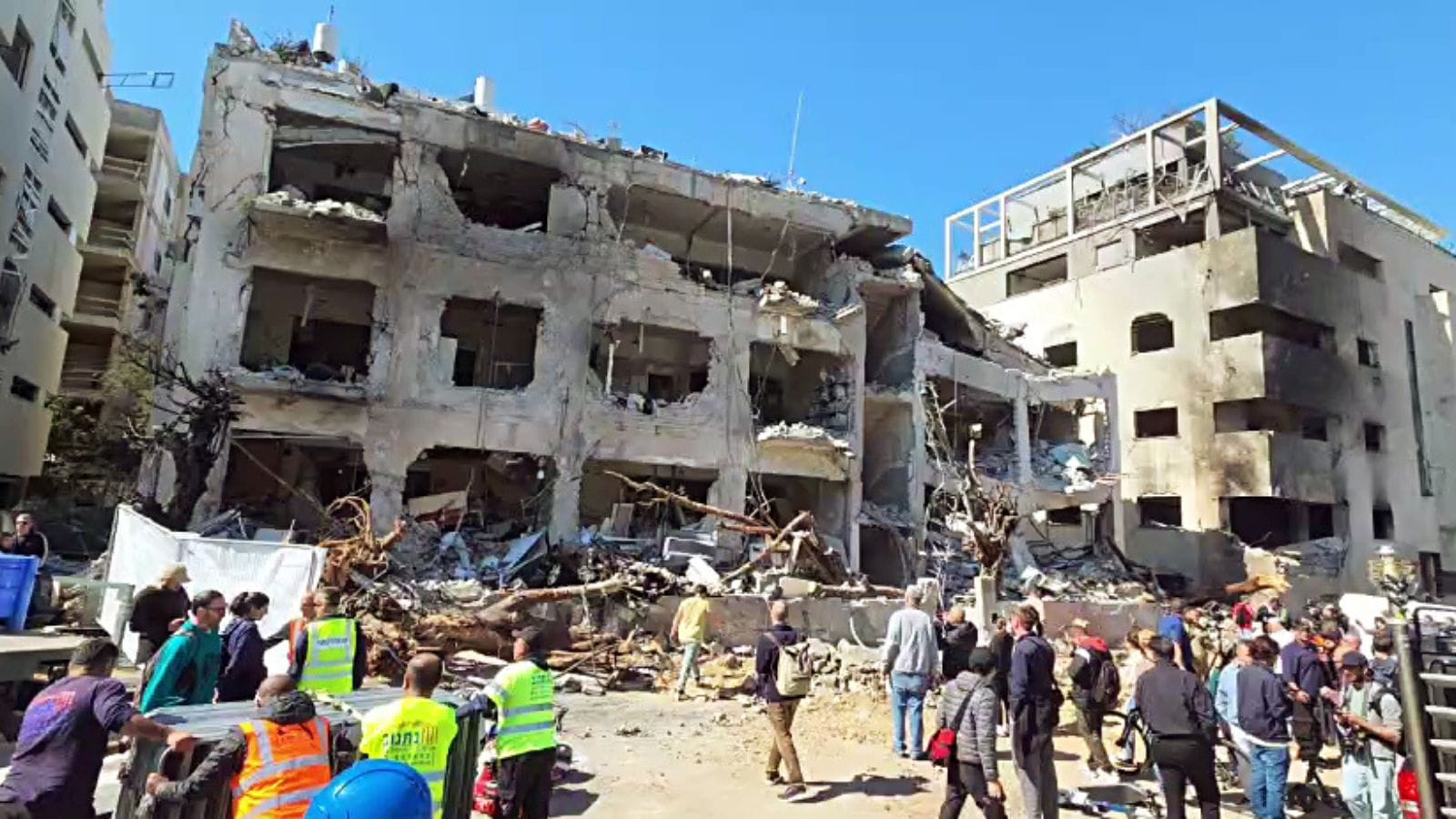
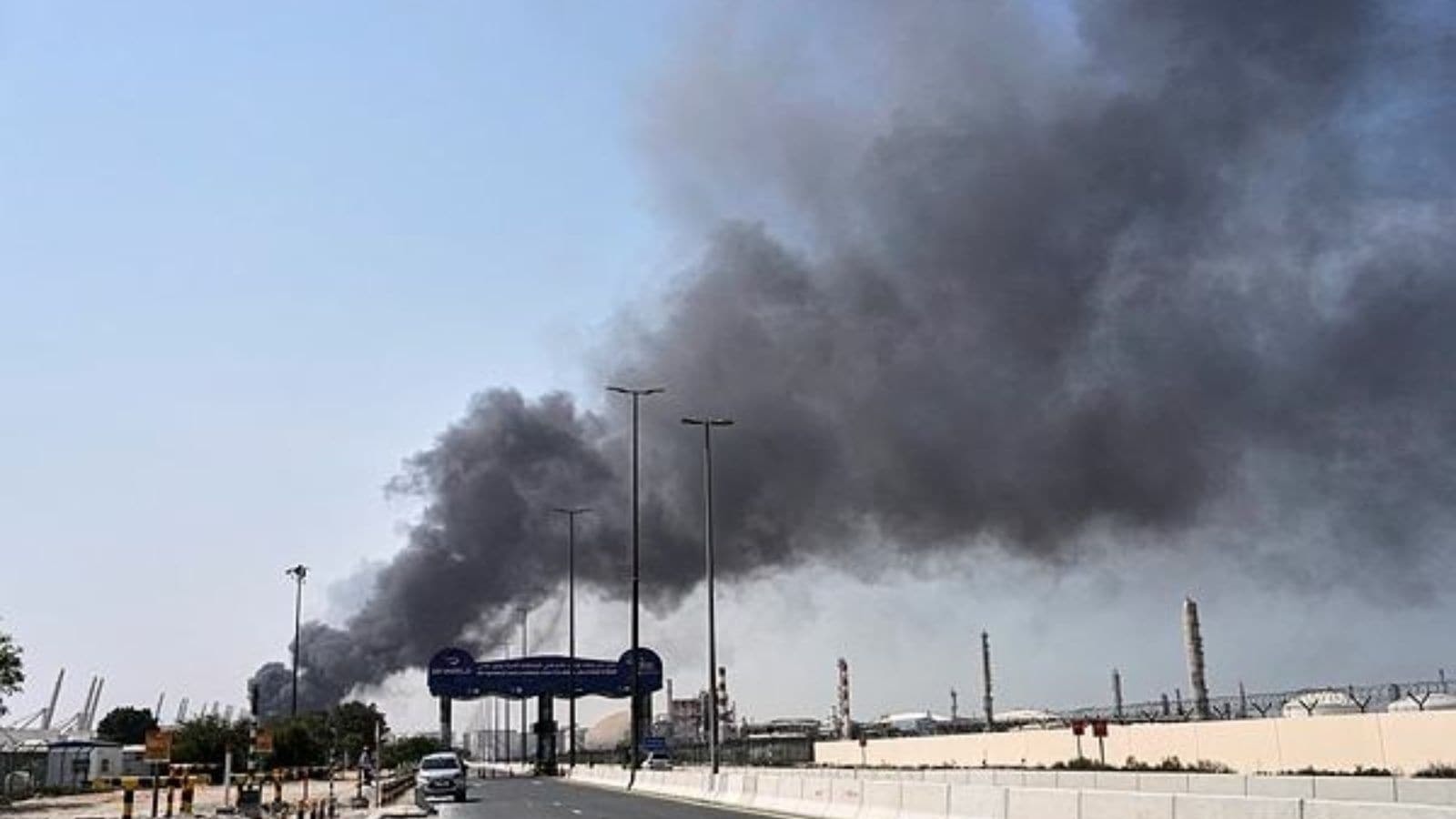
The air in Tehran does not just carry the scent of exhaust and jasmine. It carries the weight of forty-five years of a single, unyielding breath. For decades, that breath belonged to Ali Khamenei. It was a rhythmic, predictable lungful of history, theology, and iron-fisted defiance. But when the reports surfaced that a precision strike had finally silenced that rhythm, the silence that followed wasn’t empty. It was heavy. It was the kind of silence that occurs right before a mountain collapses.
In Washington, the reaction was not silence. It was a roar.
Donald Trump did not lean into the diplomatic ambiguity that usually follows the assassination of a head of state. He stepped into the vacuum with the practiced ease of a man who views the world as a series of hostile takeovers. His rhetoric regarding "regime change" wasn't a suggestion; it was an invitation to an autopsy of the Islamic Republic. While the satellites were still cooling from tracking the heat signatures of the missiles, the geopolitical map of the Middle East was already being redrawn in permanent marker.
Consider a hypothetical young woman in Isfahan named Leila. She is twenty-four. She has never known a world where her hair wasn't a political statement or where her internet wasn't a filtered, flickering ghost of the outside world. To Leila, Khamenei wasn't just a leader; he was the personification of the ceiling. He was the reason she couldn't breathe, couldn't dance, couldn't dream without looking over her shoulder. When the news broke, she didn't rush to the streets to weep. She sat in her kitchen, gripped the edge of a wooden table, and waited for the sound of the world changing.
She is the human element the briefings usually ignore.
The strikes were technically perfect. Modern warfare has evolved into a surgical exercise where "collateral damage" is a metric to be minimized by algorithms, but the psychological collateral is infinite. By removing the Supreme Leader, the United States didn't just remove a general or a politician. They removed the keystone.
Without the keystone, the arch begins to scream.
The Mechanics of a Power Vacuum
When a regime is built on the absolute authority of one man, his disappearance creates a physics problem. There is suddenly an immense amount of social and political energy with nowhere to go. Trump’s talk of regime change assumes that this energy will naturally flow toward a Western-style democracy. It is a bold, perhaps reckless, calculation.
History is a messy teacher. It shows us that when you remove a dictator, you don't always get a liberator. Sometimes, you just get a bigger fight.
The Iranian Revolutionary Guard Corps (IRGC) is not a bowling pin waiting to be knocked over. It is a multi-billion dollar conglomerate with its own army, its own intelligence wing, and its own survival instinct. To them, the death of Khamenei isn't just a loss of a leader; it’s an existential threat to their bank accounts and their lives. They are cornered. And a cornered entity with ballistic missiles is rarely interested in a "peaceful transition."
Trump’s strategy hinges on the idea that the Iranian people are a coiled spring, ready to snap back into a pre-1979 reality the moment the pressure is released. He spoke of a "new era" and a "free Iran," words that sound melodic in a televised address but feel like a gamble when you are the one standing in the middle of a Tehran square.
The Invisible Stakes of the Digital Battlefield
We often talk about these conflicts in terms of "strikes" and "regime change," but the real war is being fought in the pockets of the citizens. This is where the technology category bleeds into the blood and grit of news.
In the hours following the strike, the digital iron curtain in Iran tightened. Servers groaned. VPNs—the lifeblood of Iranian resistance—struggled to find a way through the darkness. The government knows that if people can talk, they can organize. If they can organize, they can finish what the missiles started.
Imagine the irony. The most advanced weaponry in human history was used to take out a man who lived a life of ascetic religious devotion, yet the fate of his entire nation now rests on whether or not a twenty-year-old can bypass a firewall to post a video on a social media app.
The stakes aren't just about who sits in the palace. They are about whether the infrastructure of a modern nation can survive the total decapitation of its leadership. We are watching a live-action experiment in whether a 21st-century society can be rebooted like a crashed operating system.
The Trump Doctrine of Maximum Friction
Donald Trump has always favored the "big play." His approach to Iran has been a consistent escalation of "maximum pressure," a phrase that feels clinical until you look at the price of bread in a Tehran market. By endorsing regime change so overtly after the strike, he has burned the bridges of traditional diplomacy.
There is no "going back" to a nuclear deal now. There is no middle ground.
This is a high-stakes poker game where the chips are human lives and the deck is stacked with decades of mutual resentment. The American perspective often frames this as a victory for liberty. But for the person on the ground, liberty is often preceded by chaos.
Chaos looks like closed banks.
Chaos looks like empty grocery store shelves.
Chaos looks like the sudden, terrifying realization that the secret police might be more afraid than you are—and therefore more dangerous.
The rhetoric of regime change often ignores the "how." It focuses on the "what." Yes, a free Iran is a noble goal. But how do you get there without the country turning into a fractured map of warlords and sectarian violence? Trump’s confidence suggests he has a plan, or perhaps he believes that the sheer force of American will is enough to dictate the outcome.
But the Iranian street has its own logic.
The Ghost in the Machine
The tragedy of the "standard" news report is that it treats countries like chessboards. It forgets that every pawn is a person with a mortgage, a child with a fever, or a secret poem hidden in a drawer.
When we say "Khamenei is dead," we are talking about the end of an era that defined the lives of eighty million people. Some are celebrating in the privacy of their homes, whispering "finally" into their tea. Others are terrified, fearing that the only thing worse than a tyrant is the void he leaves behind.
The invisible stakes are the hearts of the undecided. There is a vast middle class in Iran that is tired of the morality police but equally tired of being a target in a superpower’s crosshairs. They are the ones who will ultimately decide if Trump’s vision of regime change becomes a reality or a catastrophe.
They are watching the sky, but they are also watching us.
They see the precision of our missiles and the bluntness of our rhetoric. They wonder if we understand the difference between destroying a government and saving a country.
The strikes have ended the reign of a man who seemed eternal. The statues will likely fall. The portraits will be burned. The official history will be rewritten in the coming weeks by whoever manages to grab the microphone first. But the human narrative is just beginning. It is a story of a people who have been held underwater for half a century, suddenly breaking the surface.
They are gasping for air.
Whether they find oxygen or a vacuum depends less on the next missile and more on whether the world remembers that behind the headlines of "regime change" and "precision strikes" lies a living, breathing nation that is tired of being the setting for everyone else's war.
The old guard is gone. The night is long. And in the morning, the people of Iran will wake up to a sun that looks exactly the same, in a world that has been irrevocably shattered.
The ceiling is gone. Now, they have to figure out how to stand up without it.
Would you like me to analyze how this shift in Iranian leadership might specifically impact global oil markets and the technology sector's supply chains?