Silence.
That is what comes before the rotors, a heavy, suffocating stillness that settles over the Sierra Madre foothills just before dawn, broken only by the dry rustle of mesquite scrub and the distant, rhythmic bark of a stray dog who knows something is wrong long before the humans do.
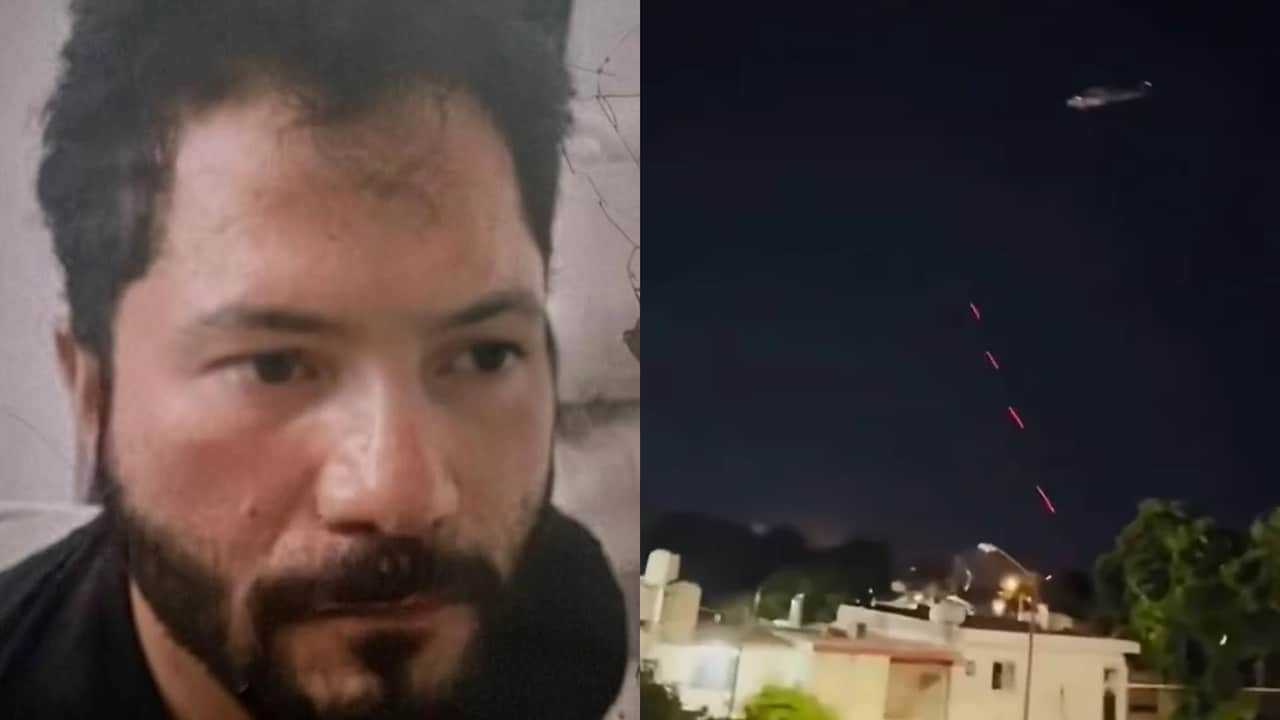
If you have seen the video—and millions have, watching it through the sterile glow of a smartphone screen over morning coffee—you know what happens next. A grainy, thermal-white silhouette of a Sikorsky UH-60 Black Hawk hovers against an ink-black sky. Then comes the streak. A continuous, terrifying ribbon of tracer fire erupts from a door-mounted M134 Minigun, pouring thousands of rounds per minute into a compound below like a glowing waterfall of molten lead.
The headlines call it dramatic. They call it a victory. They reduce a multi-hour military siege into a forty-second clip of pyrotechnic precision, complete with a neat tally of arrested kingpins and seized rifles.
But a camera mounted thousands of feet in the air cannot record the smell of burning diesel and copper. It cannot capture the way a concrete floor vibrates against the bare soles of a child's feet when a 7.62mm round shatters a cinderblock wall fifty yards away. When we watch war from the altitude of a satellite, we forget that someone has to sweep up the brass casings when the helicopters fly home.
The Architecture of a Siege
To understand what happened in the early hours of that raid, you have to understand the geography of Sinaloa. This is not merely a state in northwestern Mexico; it is a fortress carved out of volcanic rock, deep canyons, and tightly woven familial loyalties.
For decades, the capture of high-value cartel targets—events like the 2017 operation that netted Juan Francisco Patrón Sánchez, known as "El H2," in Tepic, Nayarit, or the bloody 2023 capture of Ovidio Guzmán López in Jesús María—has followed a predictable, escalating script. Standard police work does not exist here. Local municipal forces are often outgunned, underpaid, or compromised before their shifts even begin. When the Mexican Navy (SEMAR) or the Army (SEDENA) decides to move on a plaza boss, they do not knock on the door with a warrant. They bring an air wing.
Consider a hypothetical family living three streets over from the target compound—let us call them the Mendozas. Mateo is a mechanic who repairs tractor engines; his wife, Elena, teaches primary school. They have no connection to the narcotics trade, no offshore accounts, no armored SUVs. Yet at 4:15 AM, their lives are violently conscripted into a geopolitical chess match.
When the Black Hawks descend, the acoustic pressure alone is physical. It feels like standing inside a giant drum while someone beats it with a sledgehammer. The Mendozas do not run for the door; running means stepping into a crossfire between federal special forces and cartel sicarios armed with Barrett .50-caliber sniper rifles. Instead, they drag a mattress into the windowless hallway, lie flat on the tile, and count the seconds between bursts of heavy machine-gun fire.
That is the invisible stake of every viral raid video. We watch the surgical strike; the Mendozas live through the earthquake.
Why Helicopters Rain Fire
People watching the footage often ask a simple, visceral question: Why use a minigun in a residential neighborhood?
The answer lies in the brutal mathematics of asymmetric warfare. In the early 2000s, Mexican cartels operated largely like traditional organized crime syndicates—secretive, reliant on bribery, and generally eager to avoid direct, prolonged firefights with the state. That era is dead. Over the past twenty years, groups like the Sinaloa Cartel and the Jalisco New Generation Cartel (CJNG) have transformed into paramilitary insurgencies.
Think of a traditional criminal gang as a pickpocket in a crowded market; they want to vanish before you notice your wallet is gone. A modern Mexican cartel is an entrenched battalion holding a mountain pass. They do not run. They dig in.
During the 2017 Tepic raid—one of the earliest and most widely circulated videos of a Black Hawk firing on an urban compound—Mexican Marines were pinned down by heavy automatic fire coming from the rooftops. Cartel gunmen routinely deploy belt-fed machine guns, rocket-propelled grenades, and improvised armored vehicles known as monstruos. Against that level of entrenched firepower, sending infantry across an open courtyard is suicide.
The helicopter is deployed not merely as transport, but as flying artillery. A minigun firing up to 6,000 rounds per minute is designed for suppression—a wall of lead meant to force enemy gunmen away from windows and parapets so ground troops can breach the perimeter. From a purely tactical standpoint, it works. It saves the lives of the marines on the ground.
Yet every tactical solution creates a strategic nightmare. When the state responds to cartel militarization with aerial bombardment, the line between law enforcement and civil war dissolves entirely.
The Myth of the Decapitation Strike
There is a comforting lie embedded in the way we consume news about the drug war. It is the belief that if you capture the man at the top, the machine stops.
Military strategists call this the "kingpin strategy," and for nearly two decades, it has been the cornerstone of joint U.S.-Mexican counter-narcotics policy. Since President Felipe Calderón declared war on the cartels in December 2006, dozens of the most notorious figures in criminal history have been killed or captured—from Joaquín "El Chapo" Guzmán to Arturo Beltrán Leyva.
I remember standing in a dusty plaza in northern Mexico years ago, listening to a local journalist explain the aftermath of a major capture. He picked up a dry twig, snapped it in half, and threw the pieces onto the dirt. "Before," he said, pointing to the broken wood, "there was one boss who set the rules. You knew who owned the street. You knew who not to look in the eye. Now? Now there are six kids with assault rifles fighting over the pieces."
History backs him up with grim consistency. When a supreme leader falls, the cartel rarely collapses; instead, it fractures. Lieutenants turn on one another to claim the vacant throne. Supply routes are contested. Extortion, kidnapping, and local violence spike as splinter factions scramble for revenue to fund their internal wars.
Between 2006 and 2024, Mexico recorded more than 400,000 homicides and over 100,000 disappearances. Those numbers did not drop when the Black Hawks flew. In many regions, they climbed.
The Morning After the Cameras Leave
By 9:00 AM, the helicopters are gone. The tactical teams have extracted their high-value detainee, loaded him onto a transport plane bound for a maximum-security prison like Altiplano, and issued a triumphant press release complete with photographs of gold-plated pistols and stacks of seized currency.
The international news cycle moves on. The video clip gets pushed down the feed by a celebrity scandal or a stock market dip.
In the neighborhood, however, the real reckoning is just beginning.
Walk down that street at noon, and you will see the quiet terror that no press conference mentions. The asphalt is scarred with black scorch marks from burning trucks used as narcobloqueos—roadblocks set ablaze by cartel reinforcements trying to stop military convoys from reaching the extraction point. Utility poles lean at drunken angles, their transformers shot out during the blackout that preceded the assault.
Residents emerge cautiously from behind shuttered doors. They do not celebrate. Celebrating in public is a death sentence when the cartel's lookouts—the halcones, often teenagers on motorbikes with cheap prepaid phones—are already back on the corners, taking notes on who talks to reporters and who looks too relieved.
Mateo, our hypothetical mechanic, steps outside to inspect his workshop. A stray round has punched through the corrugated tin roof and buried itself in the engine block of a customer's truck. Insurance does not cover acts of cartels, and the government compensation process is a labyrinth of paperwork that requires filing a formal complaint—something no sane person does when the men who fired the shots still control the neighborhood.
He pulls a rag from his pocket, wipes the dust from his hands, and gets back to work. What else can he do?
What We Refuse to See
It is easy to watch a video of a Black Hawk raining fire into the dark and feel a surge of cinematic satisfaction. Good guys in the sky, bad guys on the ground, justice delivered at three thousand rounds a minute. It is clean. It is loud. It feels like an ending.
I used to believe in those endings, too. Years ago, every major capture felt like a turning point, a sign that the tide was finally shifting toward order and the rule of law. It took watching the same towns burn through three successive generations of "captured" leaders to realize that the helicopter is not a cure; it is a symptom.
As long as billions of dollars flow south from consumers in the north, and tens of thousands of high-powered weapons flow back across the same border in the opposite direction, there will always be another lieutenant waiting to step into the compound. There will always be another convoy of armored trucks idling in the brush.
And somewhere in the dark, a family will pull a mattress into a hallway, press their hands over their ears, and wait for the sky to stop falling.