Saltwater does not usually taste like smoke. Yet for the people huddled in the dark hull of an inflatable dinghy forty feet off the coast of northern France, the night air tasted entirely of ash, burning rubber, and raw panic.
It was supposed to be a crossing. It turned into a crucible.
Consider the mechanics of desperation. When a motor sputters and dies in the freezing swells of the English Channel, silence does not follow. Instead, a wall of wind rushes in, carrying the sound of distant shipping lanes and the frantic shouting of people realizing that the thin rubber beneath their feet is no longer a vessel, but a trap. Then came the spark. Whether from a jerry-rigged fuel line or a discarded cigarette in the chaos, flames licked up the side of the pontoon.
Panic has its own physics. It accelerates outward, faster than any rescue boat can cut through the chop.
Over one hundred and seventy human beings found themselves trapped between a burning hull and an indifferent sea. They were mothers, fathers, young adults clutching plastic bags with birth certificates wrapped in duct tape, and children too cold to cry. They did not wake up that morning thinking about international maritime law or diplomatic handshakes between London and Paris. They thought about the horizon. They thought about air.
And then, the grey hulls of the coast guard arrived.
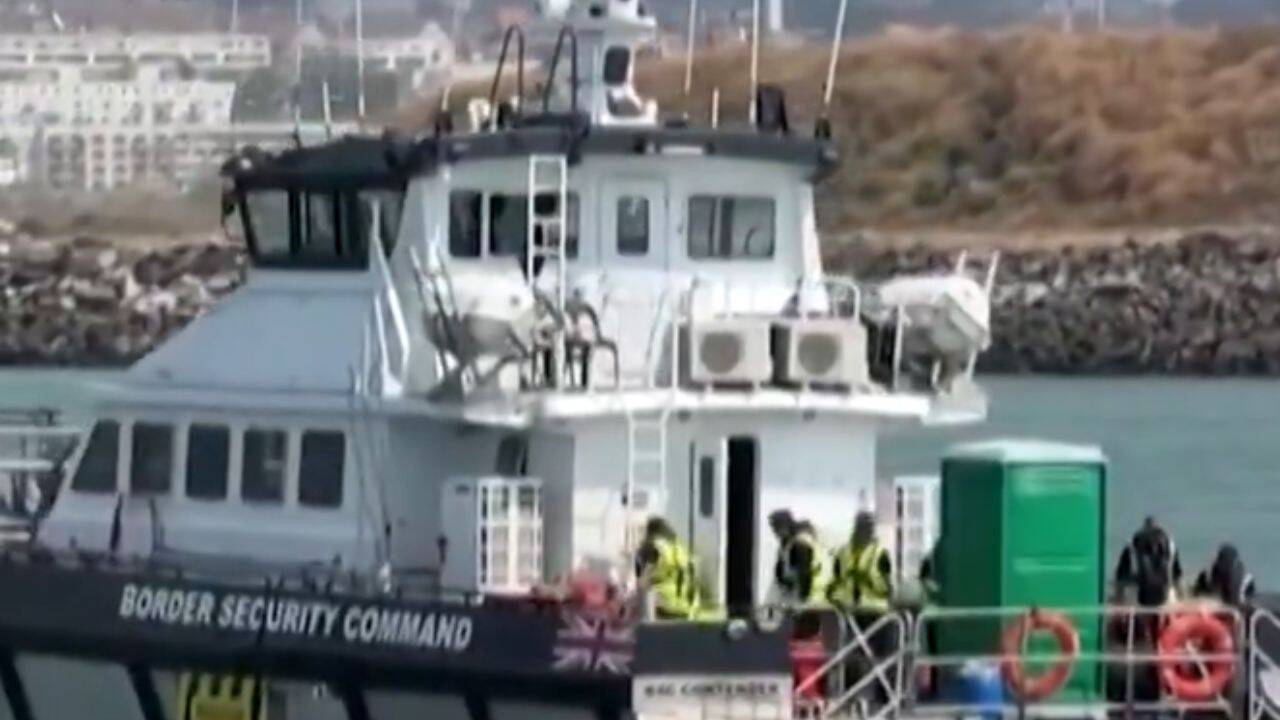
Searchlights sliced through the salt spray. Heavy ropes dropped over churning water. Hands—gloved, scarred by salt, urgent—reached down to drag freezing bodies out of the burning dark and onto safety. For a brief, suspended moment on the deck of a rescue cutter, nationality did not matter. Heartbeats did.
Rescue is rarely the end of a story. It is merely the violent pivot point of one.
Hours later, as thermal blankets were wrapped around shivering shoulders and hot cups of tea were pressed into numb hands, the bureaucratic machinery of two nations swung into gear. The official statements were drafted in crisp, clean office buildings far from the smell of diesel smoke. The policy was clear, delivered with administrative finality: all will be returned.
Returned. A polite word for a revolving door.
To understand why people step onto a burning tube of PVC in the middle of a November night, you have to abandon statistics and look at the geometry of human endurance. No one risks drowning their children because life is comfortable. They take that risk because the alternative—the waiting camps, the legal purgatory, the slow erosion of a future—feels even more fatal than the sea.
We look at migration through the lens of borders, maps, and red lines drawn on parchment. But rivers and straits do not care about treaties. They only care about gravity and momentum. When pressure builds behind a dam, the water eventually finds a seam.
Imagine standing on a stretch of beach at 3:00 AM. The tide is pushing out. The wind is biting straight through a winter coat. You have spent your last savings on a place in a boat that looks like a pool toy. You know the odds. You know the Channel is one of the busiest shipping lanes in the world, crowded with container ships that cannot stop for a floating speck. You know the water is cold enough to stop your heart in minutes.
And still, you step in.
That is not recklessness. That is the triumph of hope over probability.
The political calculus of return policies assumes that deterrence can outrun desperation. It treats human beings like traffic signals—something to be redirected, turned around, or switched off. But a person running from war, poverty, or a fractured world is not traffic. They are an unstoppable force meeting an immovable wall, and the friction always leaves burns.
As the smoke cleared over the Channel and the rescued passengers were processed back onto French soil, the headlines shifted. The news cycle moved on to the next crisis, the next debate, the next press conference.
Yet out there on the dark water, the tide keeps rolling in. The salt still stings the eyes. And somewhere on a dark shore, someone is looking out at the lights of the horizon, tightening the straps of a backpack, and waiting for the wind to drop.