Four years after underwater blasts tore through the Baltic Sea, a single defendant is finally sitting in a German courtroom.
The trial over the September 2022 Nord Stream pipeline explosions opened at the Hanseatic Higher Regional Court in Hamburg in mid-October 2026. Prosecutors brought Serhii Kuznietsov (referred to as Serhii K. in court filings under German privacy rules) into the dock after arresting him in Italy in August 2025 and extraditing him to Germany later that year. He denies any involvement. And honestly, this courtroom battle is way messier than a standard criminal prosecution.
What started as a mysterious subsea sabotage case has turned into a high-stakes legal and political test for Berlin. German prosecutors allege the suspects acted on behalf of Ukrainian state authorities. Kyiv denies any role. Meanwhile, Germany is trying to balance rule-of-law obligations with unwavering military and financial backing for Ukraine.
Why the Nord Stream Pipeline Explosions Trial Matters Now
Most coverage treats this trial like a whodunit finally reaching a verdict. That misses the bigger point.
For years, investigators in Germany, Sweden, and Denmark chased leads across European waters while public frustration mounted. Sweden and Denmark closed their investigations in February 2024 without publicly assigning blame. Germany kept digging. Putting a suspect on trial in Hamburg forces allegations that previously lived in leaked intelligence reports and media scoops into a formal judicial record.
Still, one defendant in a glass-walled courtroom can't resolve every geopolitical question surrounding the blasts. Prosecutors have identified seven Ukrainian suspects overall, yet only Kuznietsov is currently standing trial. Another suspect, scuba diver Volodymyr Zhuravlov (identified in court reporting as Volodymyr Z.), was arrested in Croatia in August 2026 and has fought extradition.
A Delicate Political Tightrope for Berlin
Put yourself in the shoes of German officials watching this unfold in Hamburg. Berlin spent years weaning itself off Russian pipeline gas after Moscow invaded Ukraine in 2022 and choked off deliveries. At the same time, Germany became one of Kyiv's biggest supporters.
When German prosecutors allege that suspects acted on behalf of Ukrainian state authorities, it puts uncomfortable pressure on Berlin's diplomatic messaging. Even as Chancellor Friedrich Merz has doubled down on support for Ukraine—traveling to Kyiv in early October 2026 with a fresh aid package including joint production of interceptors against Russian jet-powered drones—the trial keeps reopening a sore spot between allies.
Critics in Ukraine and elsewhere have questioned the prosecution's framing. Some commentators in Kyiv have dismissed the case as absurd or pointed to unverified theories about Russian operations, while supporters outside the Hamburg courthouse have rallied around the defendant. On the flip side, Moscow has long blamed Western countries for the sabotage, even though German prosecutors have focused their criminal indictment on a Ukrainian group.
The Charges and the War Crime Debate
If you only read headlines, you might assume Kuznietsov is simply charged with blowing up a pipe. The legal reality is much sharper—and far more controversial.
German prosecutors brought four charges against him:
- Attacking protected civilian objects as a war crime under Section 11(1) of Germany's Code of Crimes Against International Law (VStGB), tied to an armed conflict.
- Causing an explosion under Section 308(1) of the German Criminal Code.
- Destroying structures under Section 305(1) of the German Criminal Code.
- Disrupting public services under Section 316b(1) and (3) of the German Criminal Code.
That war crime charge is the lightning rod. Calling an attack on a gas pipeline a war crime isn't automatic. Under international humanitarian law, prosecutors have to show a nexus to an armed conflict, the use of military means, and that the target wasn't a lawful military objective.
In a December 2025 decision reviewing pretrial detention, Germany's Federal Court of Justice noted that the pipelines remained technically capable of carrying gas before the blasts, even though flows had been halted. Still, whether a cross-border gas pipeline—co-owned by Russian interests and tied to war financing—counts as a protected civilian object under humanitarian law is something legal scholars and courts debate fiercely.
Early in the trial, Kuznietsov's defense sought to halt the proceedings, arguing his defense rights were constrained. The Hamburg court rejected that motion on the second day of hearings, ruling that German law didn't limit his defense and that a foreign state's rules don't restrict freedom to testify in a German court.
What Investigators Found vs. What Remains Disputed
Let's be real about how much is proven versus how much is contested.
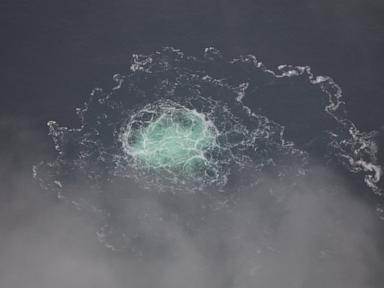
Over the past four years, reporting by outlets like The Guardian and RFE/RL has highlighted allegations that a small team—including trained divers and a former officer or intelligence veteran—used a rented yacht and heavy explosives in the Baltic Sea near Bornholm. Investigators and lawmakers have pointed to more than 450 kilograms of explosives used in the blasts, which ruptured lines and sent massive amounts of gas and seafloor sediment churning upward.
Yet major gaps and competing narratives still exist.
- Official denials: Ukrainian President Volodymyr Zelenskyy and former top commander Valerii Zaluzhny have denied Ukrainian state involvement in the blasts.
- Intelligence and rival theories: Media reports have cited intelligence warnings and debates over who knew what beforehand, while other accounts have raised alternative hypotheses or pointed to Russian naval activity near the area days earlier.
- Insurance and state responsibility: In July 2026, London's High Court rejected a 579-million-euro insurance claim tied to the pipeline damage, applying a war exclusion clause after finding the Russo-Ukrainian war was a significant cause and a state was behind the sabotage, even without naming a specific perpetrator.
Notice that distinction. A civil court ruling on an insurance policy isn't the same thing as a criminal conviction beyond a reasonable doubt in Hamburg. Defense counsel has argued there's no conclusive evidence tying Kuznietsov to the attack, and the trial is scheduled to run through multiple sessions into early 2027.
Practical Ways to Follow the Case Without Getting Burned
If you're tracking this story—whether for energy markets, European security, or international law—don't get pulled into every sensational rumor online.
- Watch courtroom rulings, not anonymous leaks: Pay attention to what prosecutors actually introduce in Hamburg and how the judges rule on evidence and jurisdiction.
- Separate criminal guilt from state attribution: Even if a German court convicts an individual defendant, state-level responsibility under international law involves separate legal standards and diplomatic pushback.
- Track European subsea infrastructure policy: Beyond the courtroom, watch how the EU and NATO reinforce undersea cables and pipelines in the Baltic and North Seas, since physical security along seabed corridors is a lasting consequence of the 2022 blasts.
The Hamburg hearings are only getting started, and every session will test how Europe handles wartime accountability when the alleged actors aren't your enemies.