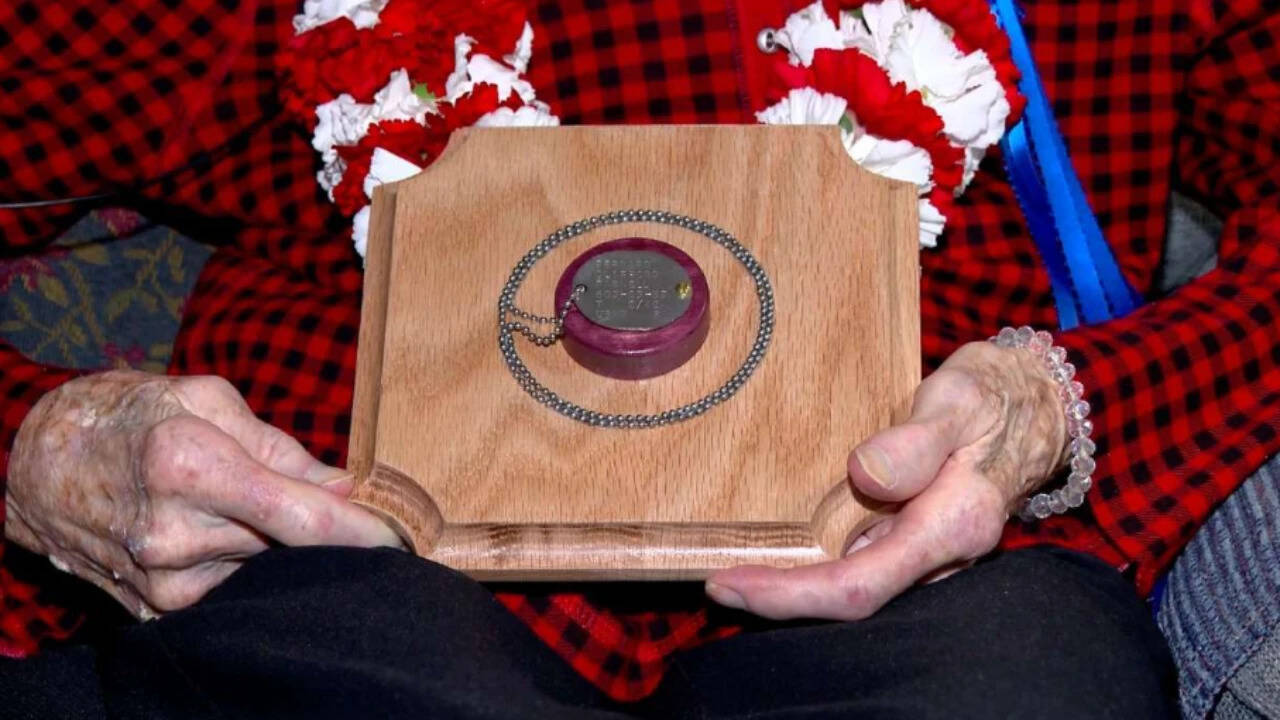
The headlines recently poured out sentimentality over a 104-year-old woman receiving her fallen brother's World War II dog tags 83 years after his death. The media loves a tidy emotional loop. It gives people a warm, tear-jerking narrative about closure, remembrance, and the unbroken bonds of family across decades. It treats history like a lost package delivered by an efficient postal service, finally arriving just in time for a wholesome photograph.
It is also an absolute evasion of reality.
We cling to metal tags and returned artifacts because looking at actual veterans and military families requires dealing with systemic failures that persist right now. Focusing on an octogenarian receiving a stamped piece of brass is easier than confronting why modern veterans face bureaucratic nightmares, chronic underfunding, and systemic indifference when they return from foreign engagements.
We love the aesthetic of remembrance while completely ignoring the mechanics of accountability.
Let us dismantle the comfortable myth that emotional closure comes from recovered personal property.
The Romanticized Archive Industry
For decades, military artifact recovery has operated on a mixture of genuine altruism and performative sentimentality. Organizations spend thousands of man-hours tracking down lost identification tags, crash sites, and wedding bands. They track serial numbers through dusty archives and present them on velvet pillows to weeping relatives.
The public eats it up. It satisfies a deep psychological need for narrative completion. Stories require a beginning, middle, and end. A soldier goes missing in action in 1941; eight decades later, a metal rectangle comes home. Roll credits.
Except real history does not have a tidy third act.
When a family receives dog tags after eighty-three years, it does not heal the absence. It marks the institutional failure that left those items sitting in a drawer, a locker, or a foreign archive for nearly a century in the first place. If the military logistics and record-keeping systems had functioned with absolute transparency during active conflicts, these items would have returned with the casualty reports. Instead, they became historical curiosities, waiting for a persistent amateur historian or a lucky metal detector find to generate a viral news cycle.
We have built an entire culture around celebrating the discovery of forgotten pieces of past wars while remaining chronically apathetic to the conditions of current service members.
The Cost of Performative Closure
Why do we obsess over items from the Second World War while active-duty service members sleep in moldy barracks and struggle to navigate veteran healthcare systems?
Because brass tags do not demand policy changes. A dog tag returned to a nursing home resident requires nothing from the taxpayer, nothing from the government, and nothing from the institutions that sent young people into combat zones. It is a completely safe emotional transaction.
Imagine a scenario where every hour spent tracking down a missing World War II artifact was redirected toward auditing the Department of Veterans Affairs claims backlog. Imagine if the national appetite for tear-eyed human interest stories translated into legislative pressure for housing assistance for homeless veterans.
It never does. Nostalgia is an opiate that dulls our sense of present-day responsibility.
When people read about a centenarian getting her brother's tags, they feel a momentary spike of national pride and shared human connection. Then they close the tab and return to ignoring the staggering rates of veteran homelessness and occupational injuries. The artifact becomes a proxy for care. We substitute the symbol of remembrance for actual stewardship.
Redefining True Respect
If we actually respected the sacrifice of those who fought in global conflicts, our primary focus would be historical literacy and institutional integrity, not reality-television-style reunions with scrap metal.
First, stop treating history like a Hallmark movie. World War II was a mechanized slaughter of unprecedented scale, not a backdrop for wholesome viral content. Millions of families never received dog tags, never received bodies, and never received answers. Romanticizing the rare exceptions where a piece of metal happens to surface after eighty-three years insults the vast majority of families who received nothing but a telegram and a flag folded into a tight triangle.
Second, redirect the energy. If you want to honor a veteran from the greatest generation, do not look for their lost identification tags in a European mud pit. Support the people wearing uniforms today who are currently dealing with toxic burn pits, inadequate mental health resources, and predatory transition programs.
True respect requires uncomfortable systemic fixes, not sentimental applause.
The next time a heartwarming story about a recovered artifact crosses your screen, ask yourself what institutional failure allowed that item to remain lost for a lifetime. Ask yourself why it takes an act of archaeological luck to return personal property that should never have been separated from a grieving family in 1941.
Stop crying over the metal. Fix the system that makes the metal necessary.