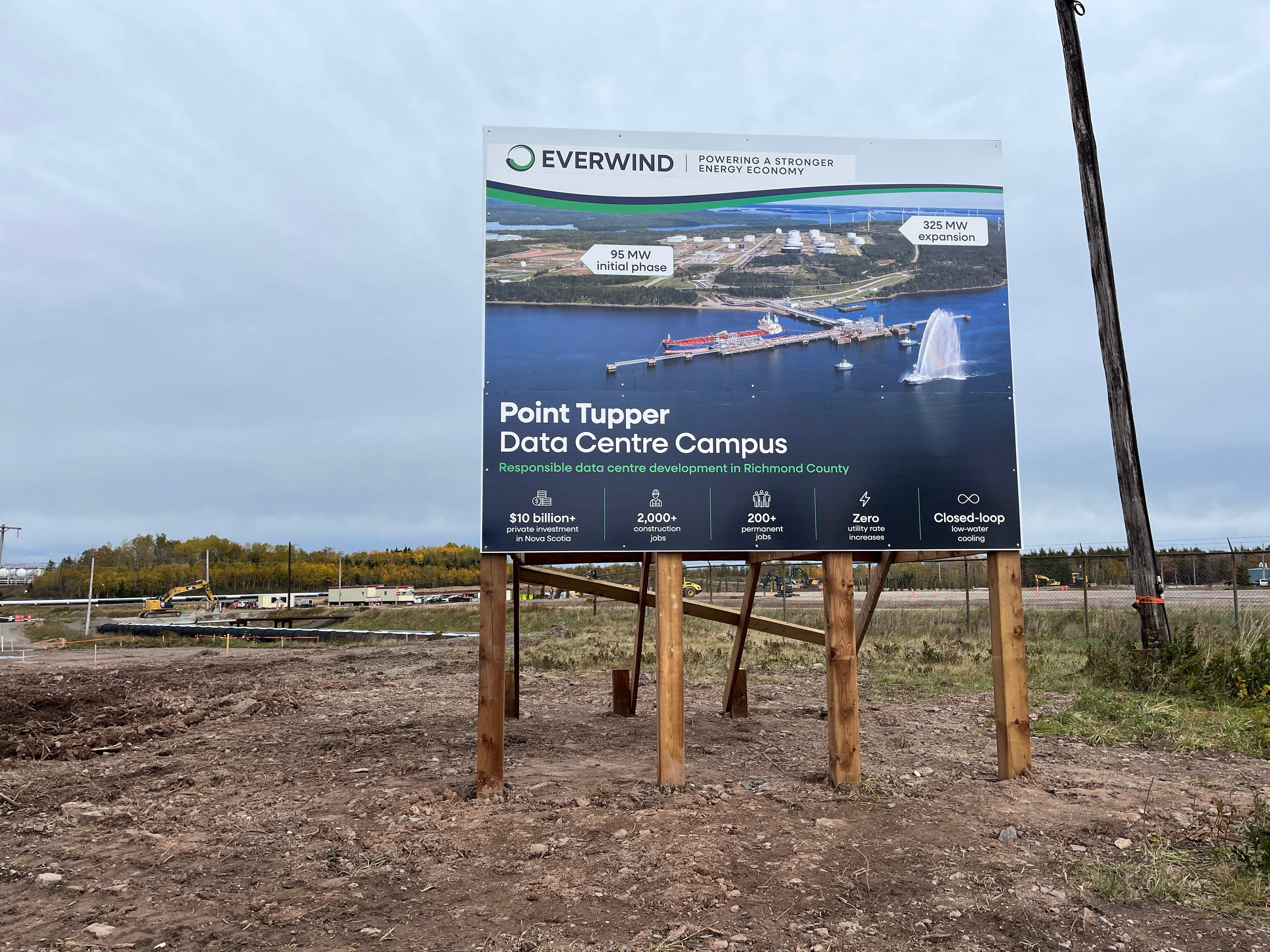
Blaming a local AI data centre for Nova Scotia’s energy and water anxieties is lazy politics. It makes for great headlines. It makes terrible infrastructure policy.
When headlines scream that a proposed server facility is "just not acceptable," the usual script plays out on cue. Residents worry about higher power bills. Environmentalists worry about strain on municipal water and electricity grids. Local politicians echo the outrage because standing against a mysterious, high-tech warehouse is safe, easy, and loud. For an alternative view, see: this related article.
Here is the problem with that consensus. It treats a single data centre as the villain when the real culprits are decades of underinvestment in transmission, a slow shift away from fossil generation, and a provincial grid that has struggled with cost and reliability long before any rack of GPUs showed up on a site plan.
I have watched industrial and infrastructure projects across North America stall or die because critics conflate site-level friction with systemic failure. I have seen communities fight a visible target while ignoring the structural bottlenecks that actually determine whether their lights stay on and their bills stay reasonable. Fighting a data centre without fixing grid rules and power supply is like blaming the refrigerator for a bad electrical panel. Related coverage on this trend has been published by CNET.
The Lazy Consensus Around Data Centres
The standard argument against a Nova Scotia AI data centre follows a predictable chain. AI computing takes massive electricity. Electricity in Nova Scotia is already expensive and tied to a grid transitioning off coal. Therefore, building a data centre in the province automatically drives up consumer rates, threatens green goals, and drains local resources.
That sounds intuitive. It also skips half the engineering and economics.
First, a data centre does not operate in a vacuum. What it costs the grid—and what it contributes—depends on utility rate structures, interconnection agreements, load profiles, and whether new generation or storage is paired with the project. In many jurisdictions, large commercial and industrial customers are billed under specialized tariffs designed to recover infrastructure costs, or they enter power purchase agreements that bring new capacity onto the system. If a province allows a massive power buyer to socialize grid upgrades onto household ratepayers without guardrails, that is a regulatory failure, not an inherent law of computing.
Second, "AI data centre" is often used as a catch-all bogeyman covering everything from hyperscale model training clusters to smaller regional cloud or colocation hubs. Training frontier models requires enormous, concentrated power draw and specialized cooling. Regional inference, enterprise hosting, or sovereign cloud workloads look very different in scale and thermal profile. Lumping every server project into one apocalyptic bucket obscures the actual trade-offs.
Outrage over a visible building is easy to organize. Fixing tariff design, permitting delays, and inter-provincial transmission takes years of unglamorous work.
Water is another flashpoint where lazy talking points outrun engineering reality. Critics often assume every data centre guzzles millions of gallons of fresh water through open evaporative cooling towers. In reality, modern facilities use a mix of closed-loop chilled water systems, air-cooled designs, adiabatic economizers, and liquid cooling depending on climate and water availability. In cooler maritime climates like Nova Scotia, ambient air and closed-loop systems can do heavy lifting during much of the year, shifting the debate from "water depletion" to peak summer efficiency and electricity draw.
The Real Bottlenecks Facing Nova Scotia
If residents and policymakers want to know why energy costs and reliability feel precarious in Nova Scotia, they need to look past the server racks.
Grid Aging and Generation Mix
Nova Scotia’s power system has long faced structural realities distinct from larger, more interconnected markets. Historically heavy reliance on coal, multi-year capital obligations, severe coastal weather events, and the cost of transitioning toward renewables and cleaner baseload create real upward pressure on rates. When a grid carries legacy costs and weather exposure, adding any large new industrial load sharpens scrutiny.
Yet blocking every new load does not lower legacy utility costs. Fixed infrastructure expenses spread across a smaller or stagnant demand base can actually mean fewer megawatt-hours to absorb fixed system costs, depending on how tariffs are structured. The real question is not whether electricity exists in the abstract, but how new demand is matched with new generation, storage, and transmission upgrades.
Permitting and Transmission Friction
Building clean power and moving it where it is needed is painfully slow across much of Atlantic Canada and North America. Transmission lines face years of siting, environmental review, and cost-allocation disputes. Without stronger regional grid ties and faster permitting for generation and storage, any spike in demand—whether from heat pumps, electric vehicles, industrial decarbonization, or computing—exposes how tight local margins can feel.
Compare that reality to the public debate. It is far simpler to rally outside a zoning hearing against a data centre than to untangle regional transmission bottlenecks or utility rate regulation. That mismatch explains why the backlash grows so fast while practical policy lags behind.
What People Actually Ask When a Data Centre Arrives
When a project like this hits the news, the same questions surface immediately. Most of them deserve a straight answer—and a challenge to their hidden assumptions.
Will This Raise My Power Bill?
It can if regulators let it, and it does not have to if rules are written properly. If a data centre draws power during tight system peaks and pays standard retail rates that fail to cover peak capacity or grid reinforcement costs, other customers can feel the squeeze. Conversely, if the facility faces time-varying rates, curtailable load agreements, or requirements to fund dedicated grid upgrades and new clean generation, it can support system economics rather than undermine them. Blaming the project instead of demanding strict cost-causation rules lets utilities and policymakers off the hook.
Does Nova Scotia Even Need Local AI Infrastructure?
That question assumes digital demand disappears if you say no locally. It does not. Nova Scotians already use cloud services, AI tools, financial platforms, and enterprise software every day—the servers just sit somewhere else. Local capacity can lower latency for regional businesses, support data residency or public-sector needs, and anchor local tech and engineering jobs. Whether local hosting makes sense comes down to power cost, carbon intensity, cooling efficiency, and economic return—not moral panic over owning a server hall.
Are Data Centres inherently Bad for Climate Goals?
Only if they are powered by high-carbon marginal generation without offsetting clean supply. Energy researchers and grid analysts—including organizations like the International Energy Agency and Lawrence Berkeley National Laboratory—have repeatedly shown that data centre electricity growth is accelerating globally alongside AI adoption, while its climate footprint hinges on grid decarbonization and clean power procurement. An inefficient facility on a coal-heavy grid is a climate headache. A high-efficiency facility backed by firm zero-carbon power and storage is a different story entirely.
Imagine a scenario where a province rejects a data centre outright, celebrates a political win, and then watches residential electricity bills climb anyway because aging lines needed storm hardening, fuel costs shifted, and electrification expanded peak demand. Nothing fundamental about the grid improved. The province just traded a potential source of tax revenue, grid investment, and industrial demand for a temporary feeling of control.
The Blind Spots of a Contrarian Stance
Pushing back against knee-jerk data centre opposition does not mean handing tech companies a blank check. There are real risks to taking a pro-infrastructure stance, and pretending they do not exist hurts credibility.
First, large power loads can strain local grids if utilities overestimate available capacity or move too slowly to bring new generation online. Data centres often want speed to market—sometimes faster than transmission lines can be built. If a utility says yes before the wires and generation are ready, reliability suffers.
Second, developers sometimes pitch big economic and green benefits while negotiating opaque power deals or tax incentives that leave taxpayers carrying too much risk. Without transparent reporting on actual electricity use, water consumption, emissions, and grid upgrade contributions, public skepticism is earned, not irrational.
Third, public trust in Nova Scotia is shaped by lived experience with utility bills and service disruptions. Telling frustrated ratepayers to "trust the market" or accept vague promises of future benefits will backfire every time. Transparency has to come before cheerleading.
A Smarter Way to Handle AI Infrastructure
If Nova Scotia—or any region facing similar backlash—wants a better outcome than shouting matches and stalled projects, the playbook needs a reset.
- Mandate strict cost-causation tariffs. Require large data centres to pay for the grid upgrades their connection necessitates and price power so residential ratepayers do not subsidize peak strain.
- Tie large loads to clean firming and flexibility. Push for clean power matching, battery storage, and demand-response agreements that allow facilities to curtail or shift load during grid stress events.
- Publish hard operational numbers. Require clear, ongoing disclosure of actual power draw, cooling water use, local jobs, and tax contributions—no glossy slide-deck spin.
- Fix the grid bottlenecks in parallel. Stop treating data centres as a distraction from transmission, storage, and permitting reform. Build the grid for electrification, industry, and digital infrastructure together.
What to Do Next
Stop treating a single data centre proposal as a referendum on the soul of the province. Demand hard contract terms, transparent grid impact studies, and ratepayer protections—then fix the underlying power system so Nova Scotia is building infrastructure on its own terms instead of reacting in fear.