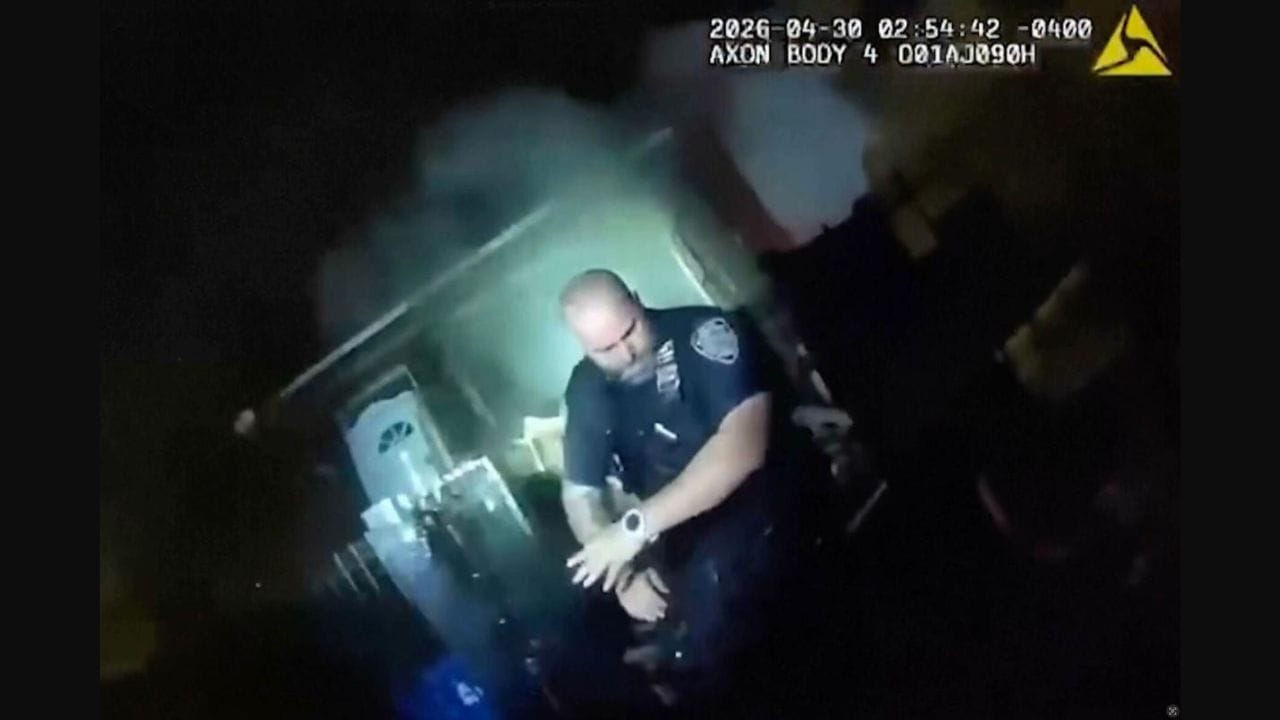
The headlines are predictable. A residential block in New York City turned into a crater. Police officers were launched into the air by a concussive blast. Eight people are in the hospital. The media cycle immediately pivots to the "heroism" of first responders and "prayers" for the victims.
This reaction is intellectually lazy. It ignores the math of a decaying urban grid.
We treat these explosions like freak lightning strikes. They aren't. They are the logical, mathematical certainty of maintaining a high-pressure 19th-century infrastructure in a 21st-century density. If you live in a pre-war building, you aren't sitting on a "home." You are sitting on a pressurized bomb that the city lacks the courage to decommission.
The Myth of the Vigilant Neighbor
The standard advice from Con Edison and the FDNY is always the same: "If you smell something, say something."
This is a failure of engineering rebranded as a civic duty. By the time a human nose detects the mercaptan—the sulfur-like odorant added to natural gas—the concentration might already be approaching the Lower Explosive Limit (LEL). Natural gas is explosive when it makes up between 5% and 15% of the air.
In a confined basement or a wall cavity, that window closes in minutes. Relying on "smell" as a primary safety sensor in 2026 is like relying on a canary in a coal mine while owning a digital methane detector. We are subsidizing the utility's refusal to modernize by putting the burden of leak detection on a tenant who just wants to boil water for pasta.
I have spent years looking at urban infrastructure failures. The "lazy consensus" says we need better response times. I say response times are irrelevant once the ignition spark happens. We need a forced, accelerated divorce from residential gas.
The Physics of the Concussive Blast
When you read that "officers were sent flying," you are reading about a failure of the building envelope.
Most people don't understand the sheer power of a natural gas detonation. One cubic foot of natural gas contains about 1,000 BTUs of energy. When that gas leaks and mixes with air in a standard 10x10 room, the resulting explosion can exert thousands of pounds of pressure per square foot on the walls.
Standard New York City brownstone construction—unreinforced masonry and timber joists—cannot withstand that internal pressure. The walls don't just crack; they fail outward, turning bricks into shrapnel. This isn't an "accident." It is the predictable behavior of brittle materials under extreme internal load.
The police officers were caught in a "pressure wave," which travels faster than the physical debris. If you are close enough to see the flash, the air has already tried to liquefy your internal organs.
Why "Fixing the Pipes" Is a Financial Fantasy
The status quo argument is that we should invest billions into "repairing" the existing gas main network. This is a sunk cost fallacy of catastrophic proportions.
The cost to replace a single mile of gas main in Manhattan or Brooklyn can exceed $5 million to $10 million when you factor in labor, permitting, and the logistical nightmare of digging up 100-year-old streets.
- Material Decay: Cast iron pipes are prone to "graphitization," where the iron leaches out, leaving a brittle carbon skeleton.
- Soil Subsidence: The constant vibration of subways and heavy trucking creates micro-fissures in these aging lines.
- The "Sealing" Lie: Modern internal liners can prolong the life of a pipe, but they do nothing to address the joints, which are the primary failure points during temperature shifts.
We are pouring money into a system that is fundamentally incompatible with a high-density future. Every dollar spent patching a gas leak is a dollar not spent on heat pumps and induction infrastructure.
The Hard Truth About Induction and Electrification
People hate this. They want their blue flames. They claim induction stoves are "for the elite" or that they "don't cook as well."
I’ve seen developers fight tooth and nail to keep gas lines in new builds because "luxury buyers want gas ranges." This isn't about cooking; it's about a stubborn, aesthetic attachment to a combustion-based lifestyle.
Electrification is the only way to remove the "blast radius" from the residential experience. If an electric stove fails, you get a dead burner. If a gas stove or its associated plumbing fails, you lose the zip code.
The downside? The NYC electrical grid is currently a joke. We are trading a "blast risk" for a "blackout risk." That is a trade we should be honest about. Transitioning to all-electric buildings requires a massive upgrade to the local distribution transformers—the green boxes you see on the street that are already humming at max capacity every August.
But I would rather sit in the dark for four hours than be "sent flying" by a basement leak.
Stop Asking if the Pipes are Safe
The "People Also Ask" sections on Google are filled with questions like: "How do I know if my gas line is leaking?" or "Is my building's gas safe?"
These are the wrong questions. The premise is flawed. You are asking for a guarantee of safety from a system that relies on hundreds of thousands of miles of pressurized, underground metal exposed to the elements.
The honest answer is: You don't know. You are trusting a landlord who might be cutting corners on inspections and a utility company that views "acceptable loss" as a line item in a quarterly report.
If you want actual safety, you need to do three things that contradict the "official" advice:
- Demand a digital LEL detector: Stop relying on your nose. Buy a plug-in combustible gas detector with a digital readout of the LEL percentage. If it hits 1%, leave. Don't call the landlord. Don't sniff around. Leave.
- Aggressively advocate for Local Law 97 compliance: This isn't just about "carbon footprints." It’s about getting the combustion out of the basement. Buildings that don't transition will eventually become uninsurable.
- Kill the gas fireplace: It’s a decorative bomb. It serves zero functional purpose in a modern HVAC setup and adds multiple failure points to your living space.
The High Cost of Sentimentality
We treat our old buildings like precious artifacts, but we ignore the guts that make them dangerous. A "historic" brownstone with an active, unlined gas main is just a beautiful pile of kindling.
The city council will hold hearings. They will talk about "increased inspections." They will fine a few contractors. They will change exactly nothing.
The explosion in NYC wasn't a tragedy of errors; it was a tragedy of inertia. We choose gas because it’s there. We stay with gas because the alternative is expensive and requires a total rethink of how a city breathes.
Until we stop viewing natural gas as a "utility" and start viewing it as a "legacy hazard," the next house is already counting down.
Move the stoves. Rip the mains. Stop pretending that a "scent" is a safety plan.


