The headlines are predictable. They scream about "institutional adoption" and "the bridge between TradFi and DeFi." When the Intercontinental Exchange (ICE)—the powerhouse owner of the New York Stock Exchange—plugs capital into OKX at a $25 billion valuation, the talking heads start their standard routine. They tell you it's a sign that the old guard finally sees the light.
They are lying to you. Or worse, they’re just repeating the same tired, lazy consensus that has blinded investors for a decade.
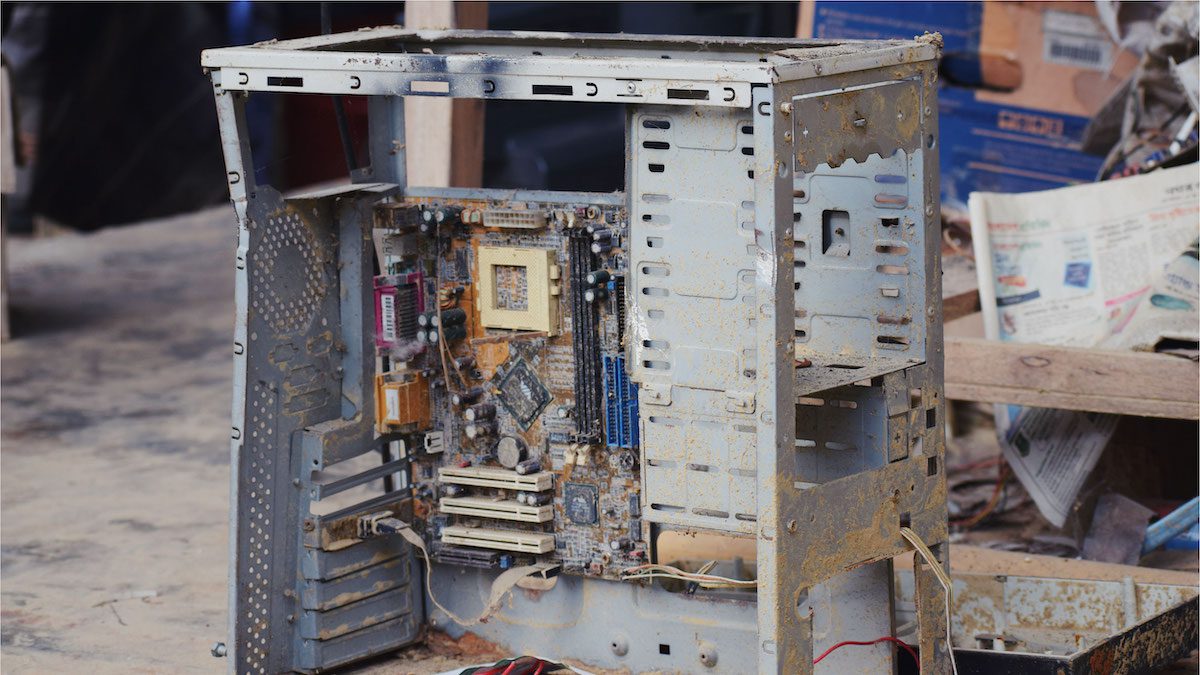
The NYSE isn’t investing in OKX because they believe in the "future of money." They are buying a life raft because they realize their current infrastructure is a digital museum. This isn't a "strategic partnership." It's an admission of defeat. If you think this deal is about crypto going mainstream, you’ve missed the entire point of why a $25 billion valuation matters in a market that remains as volatile as a kerosene fire.
The Liquidity Trap the NYSE Can't Solve
The NYSE operates on an aging model of gatekeepers, clearinghouses, and T+1 settlement cycles. It’s slow. It’s expensive. It’s fragile. OKX, despite the regulatory heat that follows every offshore exchange, operates on a 24/7, T+0 reality.
When ICE looks at OKX, they don't see a "crypto exchange." They see a superior matching engine. They see a clearing and settlement layer that doesn’t require a week of paperwork to move a billion dollars.
The "lazy consensus" says this deal helps crypto gain legitimacy. The reality? This deal is about the NYSE desperately trying to port the efficiency of crypto rails back into the stale world of equities. They are buying the tech stack, not the asset class. If they could run the S&P 500 on the OKX engine without the Bitcoin baggage, they would do it tomorrow.
A $25 Billion Valuation is a Psychological Floor Not a Metric
Let’s talk about that $25 billion number. In any other industry, a $25 billion valuation requires a clear path to $2 billion in annual free cash flow. In the crypto world, valuations are based on "implied ecosystem value"—a polite way of saying we’re guessing based on trading volume that might vanish the moment a regulator sneezes.
By investing at this valuation, ICE isn’t saying OKX is worth $25 billion today. They are setting a floor for the entire industry to prevent a total collapse of their own digital asset investments. ICE already owns Bakkt, which has been, frankly, a commercial disaster. Bakkt tried to be the "safe" way for institutions to touch Bitcoin, and nobody cared.
The move into OKX is a pivot away from the sanitized, "compliant" crypto model that failed, toward the raw, high-volume reality of global retail trading. They’re buying the users they couldn’t attract themselves.
Why "Institutional Adoption" is a Mythical North Star
Every time a bank or an exchange owner makes a move, the crypto crowd cheers for "institutional adoption." This is a fundamental misunderstanding of how institutions operate. Institutions don't "adopt" technology; they cannibalize it.
ICE doesn't want to help OKX grow. They want to understand the plumbing so they can eventually replace the middlemen they currently have to pay. The NYSE exists because of friction. Every broker, dealer, and specialist takes a cut because the system is complicated. Crypto removes that friction.
If the NYSE truly "adopts" crypto, the NYSE as we know it ceases to exist. Why would I pay a brokerage fee and wait for a settlement window when I can swap assets directly on a distributed ledger?
The Regulatory Smoke Screen
You’ll hear analysts say this deal provides a "regulatory bridge." This is nonsense. OKX has spent years dodging the very authorities that the NYSE invites to lunch. The idea that ICE will "clean up" OKX is a fantasy.
Instead, look at the geography. OKX is dominant in regions where the NYSE has zero footprint. This is a land grab for the Global South and Asian markets. ICE is realizing that the US equity market is saturated. The growth isn't in Manhattan; it’s in the millions of traders in emerging markets who will never open a Schwab account but have no problem liquidating a position on their phone at 3:00 AM on a Sunday.
The Engineering Reality: Efficiency Over Ideology
For years, I’ve seen companies blow millions trying to "blockchain-ify" their businesses. Most of them fail because they try to force a decentralized solution onto a centralized problem.
ICE is doing the opposite. They are taking a centralized giant (the NYSE) and trying to inject the speed of a decentralized-adjacent engine (OKX). This is purely an engineering play.
Consider the technical debt of a traditional exchange. Every order has to pass through legacy protocols like FIX (Financial Information eXchange). It works, but it’s the equivalent of sending a telegram in the age of fiber optics. OKX’s API infrastructure and WebSocket connectivity are built for high-frequency, high-concurrency environments that the NYSE can only dream of.
The Risk Nobody is Discussing
The contrarian truth? This deal could be the beginning of the end for ICE’s reputation as the "safe" harbor. By tying their wagon to a high-profile crypto exchange, they are inheriting every bit of tail risk associated with the offshore crypto markets.
If OKX faces a liquidity crunch or a massive security breach, the contagion doesn't stay in the crypto "realm." It bleeds into the valuation of ICE. They are essentially shorting their own stability in exchange for a gamble on high-velocity trading tech.
Stop Asking if This is Good for Bitcoin
The most common question people ask is, "Does this mean Bitcoin is going to $100k?" It’s the wrong question. Bitcoin is just the first use case for the rails OKX built.
The real question is: "When will the NYSE start tokenizing Apple and Tesla shares to trade on this new infrastructure?"
The answer is sooner than you think. And when that happens, the "New York" part of the NYSE becomes irrelevant. The "Stock Exchange" part becomes a software protocol.
ICE isn't investing in the future of crypto. They are desperately trying to ensure they aren't the last ones left standing when the traditional floor falls through. They are buying the tools of their own destruction, hoping they can learn how to use them before the market realizes they’re obsolete.
The NYSE just bought a $25 billion insurance policy against its own irrelevance. Don't call it a partnership. Call it a survival tactic.
Forget the "bridge." The old world is burning, and the owners of the NYSE are the first ones running for the exit with the fire extinguishers.