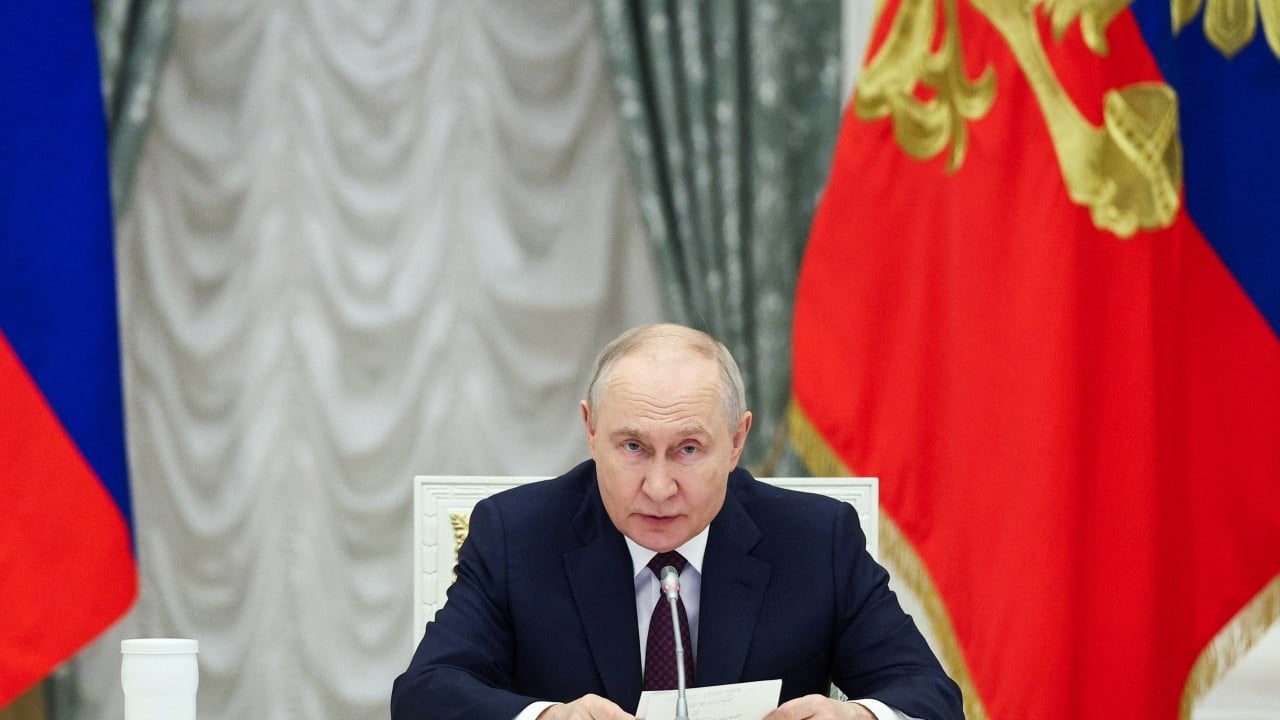
Mainstream foreign policy coverage loves a simple villain-versus-envoy narrative. When headlines declare that Vladimir Putin refuses to compromise on Ukraine during meetings with U.S. envoys, the standard commentary treats the statement as a shocking roadblock to peace. That interpretation relies on a fundamental misunderstanding of how coercive diplomacy and high-stakes negotiations actually function.
Treating a leader’s public refusal to compromise as the end of the conversation confuses opening-bid posturing with final settlement terms. In high-level geopolitical bargaining, public maximalism is rarely a literal roadmap; it is an instrument designed to shape the negotiating environment before real concessions are ever placed on the table.
The Illusion of the "Stubbornness" Narrative
Standard diplomatic reporting often frames stalled talks around personal intransigence. According to traditional realist scholars like Thomas Schelling, who analyzed the strategy of conflict during the Cold War, public commitment to an inflexible position is a deliberate bargaining tactic. By signaling that your hands are tied—whether by domestic politics, historical grievances, or constitutional claims—you force the opposing side to bear the burden of finding a creative exit ramp.
When Russian officials state that their core demands regarding Ukrainian neutrality or territorial status are non-negotiable, Western commentary frequently reacts as though Moscow has simply hung up the phone. Yet diplomatic historians and negotiation theorists point out that the loudest assertions of inflexibility often occur right before back-channel discussions shift toward technical compromises.
Consider the mechanics of asymmetric leverage:
- Domestic Audience Costs: Leaders in authoritarian or semi-authoritarian systems still face intense pressure from nationalist factions and security elites. A sudden public softening looks like weakness, which can destabilize internal coalitions.
- Sunk Cost Signaling: After expending immense military, economic, and political capital, any leadership must demonstrate to its domestic public that the core objectives remain intact.
- Testing Western Cohesion: Refusing to budge in initial envoy meetings tests whether Washington and its European allies share the same threshold for fatigue, financial strain, and escalation risk.
What Analysts Get Wrong About Diplomatic Deadlocks
Most observers assume that negotiations fail because the two sides cannot agree on the middle ground. In reality, protracted conflicts stall because the parties disagree on their Best Alternative to a Negotiated Agreement (BATNA)—a foundational concept developed by Roger Fisher and William Ury at the Harvard Negotiation Project.
A state will only make substantive concessions when its leadership believes that continuing the conflict will produce a worse outcome than signing an imperfect deal. As long as Moscow calculates that time, demographic endurance, or shifting Western political priorities work in its favor, offering concessions in an envoy meeting makes zero strategic sense. Conversely, as long as Kyiv and its partners believe that sustained sanctions, military aid, and diplomatic isolation will eventually exhaust Russian capacity, they have equally little incentive to validate territorial changes.
The Trap of Mirror-Imaging
Western policy circles frequently fall victim to "mirror-imaging"—assuming foreign leaders weigh costs and benefits using the exact same framework as democratic governments in Washington or Brussels.
In Western political systems, prolonged conflict carries immediate electoral penalties, inflation concerns, and legislative gridlock. Analysts projecting those pressures onto the Kremlin often assume that economic pain must automatically translate into diplomatic flexibility. However, geopolitical analysts at institutions like Chatham House and the Carnegie Endowment for International Peace have repeatedly noted that the Kremlin prioritizes regime security and geopolitical buffer zones far above short-term macroeconomic comfort. When you misread a counterpart's utility function, every refusal to compromise looks irrational rather than calculated.
Dismantling the Common Questions Around U.S.-Russia Talks
Public debate around envoy meetings tends to revolve around flawed premises. Addressing what people actually ask requires stripping away wishful thinking.
Does a refusal to compromise mean diplomacy is dead?
No. Diplomatic engagement serves multiple functions beyond signing a peace treaty. Envoy meetings establish red lines to prevent unintended direct military clashes between nuclear-armed states, test whether specific side-deals (such as prisoner exchanges, grain corridors, or infrastructure ceasefires) are viable, and gather direct intelligence on the opposing leadership’s psychological and political state.
Can U.S. envoys force a breakthrough through better persuasion?
Persuasion rarely moves sovereign states on core security issues. Envoys do not change minds through rhetoric; they transmit changes in reality. A diplomatic breakthrough only happens when the facts on the ground—military momentum, economic sustainability, or alliance unity—shift enough to alter each side's calculation of risk.
Why meet at all if positions are irreconcilable?
Refusing to talk does not freeze a conflict; it simply removes visibility into the adversary's intentions. Historical precedents, from the Korean War armistice talks in Panmunjom to the Paris Peace Accords over Vietnam, demonstrate that belligerents often spend years trading maximalist demands across a table while fighting continues at full intensity. Talking is not a reward for good behavior; it is a mechanism for managing friction.
The Risks of Both Approaches
Neither hardline isolation nor premature accommodation offers a risk-free path, and honest strategic analysis requires acknowledging the downsides of both.
- The Danger of Premature Concessions: Offering major compromises just to keep an envoy dialogue alive signals desperation. In coercive bargaining, unreciprocated concessions rarely generate goodwill; instead, they convince the opposing side that holding out longer will yield even greater rewards.
- The Danger of Diplomatic Absolutism: Refusing all high-level contact until one side capitulates completely eliminates off-ramps. Without active communication channels, minor battlefield incidents or misread military exercises carry a much higher risk of spiraling into uncontrolled escalation.
Reading the Real Signals Behind Envoy Meetings
If you want to understand where the conflict is actually heading, stop parsing the public press releases issued after envoy visits. Public statements are theater aimed at domestic constituents and third-party observers.
Instead, track the structural indicators that govern leverage:
- Industrial and Ammunition Output: Which side is successfully scaling defense manufacturing relative to battlefield consumption?
- Fiscal Endurance: How are sovereign wealth reserves, inflation rates, and war-related budget deficits evolving over multi-year horizons?
- Coalition Discipline: Are secondary powers—from European capitals to Beijing, New Delhi, and Ankara—tightening or loosening their economic and diplomatic alignment?
When those underlying variables shift, the public rhetoric about "no compromise" will vanish overnight—not because anyone had a change of heart, but because the math finally forced a new calculation.