Someone hid a thumb-sized listening device behind a conference room TV at OpenAI, wrapped in toilet paper, and plugged it into a USB port. That sounds like a cheap spy thriller until you realize it happened inside one of the most closely watched AI labs in the world.
Federal prosecutors announced the arrest of OpenAI engineer Abdulrahman Alfozan on October 13, 2026, after security teams uncovered the concealed recorder in a San Francisco office. Authorities charged him with using or endeavoring to use a device to intercept oral communications, a crime carrying up to five years in prison and a $250,000 fine upon conviction.
Most coverage stops at the headline shock: a tech insider got caught bugging an executive room. Honestly, that misses the real story. This case exposes how physical security still trips up high-tech companies, how AI tools can both aid a plot and help investigators unravel it, and why insider threats inside frontier AI labs are no longer theoretical.
How Investigators Uncovered the Hidden Device
Security staff found the first recording device on September 30, 2026, tucked behind a television in an executive conference room where leadership frequently discussed sensitive research, product roadmaps, business deals, and government engagements. Prosecutors believe it had been placed there around September 28. While the stored data was encrypted and couldn't be read right away, the hardware itself gave investigators plenty to work with.
OpenAI said it used its own AI models to examine the device and trace its origins, narrowing down which employee had planted it a few days earlier before referring the matter to the FBI. That detail stands out. In past corporate espionage cases, companies spent weeks combing through badge logs and hardware receipts by hand. Here, AI helped speed up the forensic puzzle.
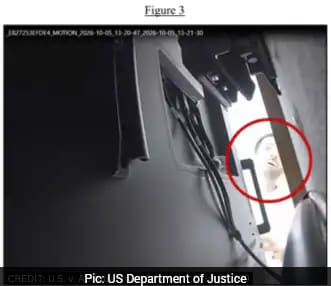
Once security teams knew where the first device had been found, they set up a quiet trap. They installed a security camera inside the conference room. According to the criminal complaint, footage on October 5 showed Alfozan—who had been hired in July 2025 as an engineering leader for AI and data systems—entering the room and looking behind the TV.
That same day, things got even messier for the suspect. Alfozan left a bag unattended elsewhere in the building. Security personnel opened it, found his wallet and ID, and spotted a second recording device similar to the first one. OpenAI fired him, and federal authorities moved in.
What Prosecutors Say Happened Behind the Scenes
A hidden microphone rarely appears out of thin air. According to the Justice Department's complaint, investigators linked the operation to digital breadcrumbs across multiple tools.
Between September 24 and September 30, a chatbot account belonging to Alfozan's spouse—which shared identifiers with his own account—was allegedly used to research building, customizing, testing, and concealing audio recording hardware. Prosecutors said the prompts touched on continuous audio recording, Wi-Fi connectivity, live listening, encryption, remote access, and even details matching the recovered device's custom header and MAC address.
Separately, Alfozan allegedly used a workplace productivity tool to look up meeting room locations, room capacities, calendars, and where executives or outside partners were meeting. Surveillance video also placed him near the restricted conference room several times before the bug turned up, despite lacking authorization for those executive meetings.
One important nuance deserves attention so nobody jumps to conclusions. OpenAI stated it had no indication that model weights, source code, or customer data were improperly accessed or exfiltrated. Spoken strategy sessions can still be valuable—especially when executives talk through unannounced partnerships, policy negotiations, or product pivots—but stealing weights or source code is a very different technical breach.
Why This OpenAI Employee Arrest Matters Right Now
You don't need a tin-foil hat to see why a bugging case at an AI lab draws national security scrutiny. Frontier AI companies sit at the intersection of commercial competition, intellectual property, and geopolitical leverage. Even the Justice Department noted that the prosecution supports National Security Presidential Memorandum 11, an initiative aimed at protecting American leadership in superintelligence technology.
Courts have treated foreign ties seriously in these proceedings too. Reporting from CBC News and La Gazette France noted that Alfozan is a Saudi national who has been a U.S. legal permanent resident since September 2020, and a federal judge in San Francisco kept him detained pending proceedings amid flight-risk concerns. Prosecutors pointed to past history involving another Saudi engineer who left Twitter and fled to Saudi Arabia in 2015, while defense counsel argued Alfozan had no intent to flee and that OpenAI had successfully worked with his ties to Saudi Arabia.
From a security standpoint, this case also highlights a classic blind spot. Tech companies spend fortunes hardening cloud infrastructure, locking down repositories, and monitoring outbound network traffic. Meanwhile, a physical USB port behind a wall-mounted TV can sit right under everyone's nose. Toilet paper as makeshift camouflage isn't high-tech. Yet it worked for a couple of days because physical sweeps of conference rooms often lag behind digital defenses.
Common Mistakes Companies Make With Insider Threats
Having worked around enterprise security teams and incident response playbooks, I see the same pattern repeat whenever a high-profile insider case breaks. Companies either overreact with sweeping surveillance that alienates honest staff, or they treat physical access like an afterthought once badge swipes are set up.
Here are the traps organizations usually fall into:
- Assuming badge access equals room security: Just because someone works in the same building doesn't mean they need proximity to executive rooms or sensitive hardware zones.
- Ignoring low-tech hardware vectors: People worry about zero-day exploits and nation-state malware, while a physical device plugged into a display or power strip goes unchecked.
- Treating AI logs as separate from physical security: Prompts, calendar queries, and internal tool lookups often tell the story weeks before an incident is discovered.
- Waiting too long to preserve evidence: When a suspicious gadget is found, moving carelessly can wipe metadata or tip off the person who planted it.
Let's be honest: no workplace can eliminate every insider risk without turning the office into a maximum-security prison. Still, basic discipline goes a long way. If a room hosts confidential strategy talks, you shouldn't leave open USB ports, unmonitored bags, or loose calendar visibility lying around unexamined.
Practical Steps for Security Teams and Leaders
If you run a company, manage operations, or advise security teams, use this incident as a practical checklist rather than just watercooler gossip.
- Audit conference rooms like sensitive servers: Check what ports are active on TVs, docks, and conferencing gear, and schedule routine physical inspections for rooms used for high-stakes meetings.
- Tighten least-privilege habits around physical spaces: Restrict access to sensitive areas and review how easily employees can map out executive schedules and room assignments.
- Connect security and legal early: When suspicious hardware turns up, coordinate with legal counsel and law enforcement before confronting suspects or handling evidence, so you don't compromise a criminal case.
- Enforce clear rules on unattended belongings: Make sure security teams have clear policies for handling bags left in common or restricted areas while documenting chain of custody properly.
The details in the OpenAI case are still moving through federal court, and Alfozan faces charges that he has yet to answer at trial. One thing is already clear, though: in an era of billion-dollar AI bets, a tiny hidden recorder can trigger massive legal, political, and operational fallout fast.