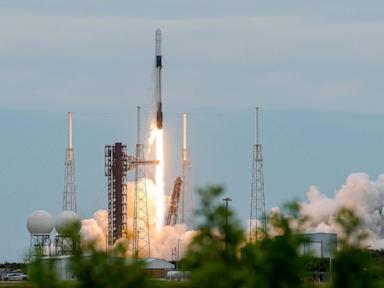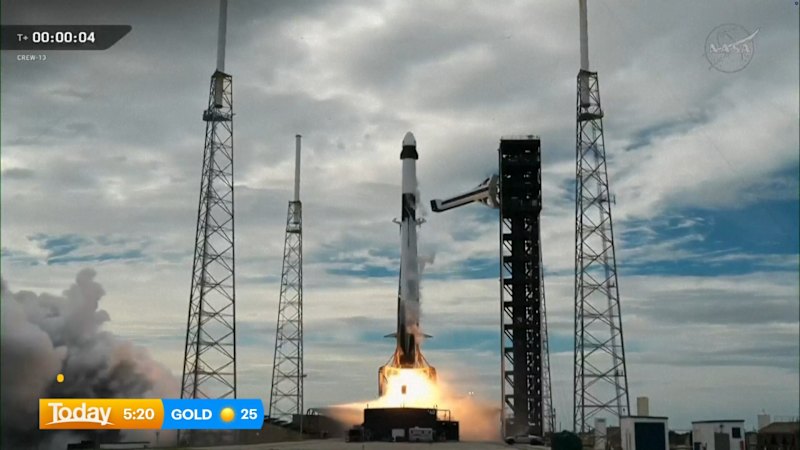
Commercial human spaceflight has transitioned from an experimental engineering milestone to a routine exercise in high-frequency orbital logistics. When a private spacecraft launches four astronauts toward the International Space Station, the event is frequently framed in popular media as a triumph of exploratory daring. A rigorous operational deconstruction reveals a different reality. This is an exercise in capacity utilization, risk management, and the industrialization of low Earth orbit.
Evaluating the mechanics of crew rotation missions requires moving past the superficial spectacle of rocket launches. The system operates on three foundational pillars: cadence predictability, hardware reusability economics, and orbital redundancy management.
The Cadence Predictability Imperative
In traditional aerospace procurement, missions were treated as bespoke, artisan projects. Each flight possessed unique vehicle signatures, custom integration hurdles, and extended timeline variances. Commercial crew operations invert this paradigm by enforcing strict manufacturing and operational standardization.
The primary economic driver of modern orbital transport is not single-flight cost reduction, but fixed-cost amortization over a high-frequency launch cadence. When launch service providers establish a predictable rhythm of crew and cargo missions, ground infrastructure costs, mission control overhead, and engineering review cycles distribute evenly across dozens of flights.
[Vehicle Standardization]
       │
       ▼
[Predictable Launch Cadence]
       │
       ▼
[Fixed-Cost Amortization]
       │
       ▼
[Declining Cost Per Seat-Orbit]
This structural shift transforms human spaceflight from a capital-expenditure-heavy government program into a variable-cost logistics service. The operational bottleneck shifts away from vehicle manufacturing and toward station-side integration capacity. The space station can only absorb a finite number of visiting vehicles before physical docking ports, life support consumables, and crew time allocation reach absolute saturation.
Hardware Reusability And Marginal Cost Curves
The economic viability of contemporary crewed missions depends entirely on the decoupling of first-stage booster and crew capsule reusability from vehicle manufacturing cycles. In a disposable architecture, every flight requires building a brand-new primary structure, driving high marginal costs per mission.
By recovering, inspecting, and reflighting first-stage boosters and composite pressure vessels, providers flatten the marginal cost curve. However, reusability introduces a complex optimization problem regarding component life limits and refurbishment overhead. Every flight introduces thermal, acoustic, and mechanical stress cycles that degrade structural margins.
Refurbishment protocols must balance two competing financial risks:
- Premature component retirement, which wastes remaining structural life and inflates per-flight capital costs.
- Component failure in flight, which triggers catastrophic mission loss and total program suspension.
Managing this balance requires transitioning from calendar-based maintenance schedules to data-driven health monitoring. Telemetry streams from previous flights dictate exact inspection intervals, replacing subjective engineering guesses with quantitative fatigue models.
Orbital Redundancy And The Single-Point Failure Trap
As low Earth orbit commercializes, reliance on a single provider or vehicle architecture introduces systemic vulnerability. The international partnership governing the space station requires continuous, uninterrupted crew presence to maintain station systems, conduct microgravity research, and manage emergency orbital debris avoidance maneuvers.
Diversifying the transport fleet mitigates single-point-of-failure risks. If one vehicle encounters a grounding anomaly due to valve fatigue, software discrepancies, or propellant loading anomalies, an alternative system must be capable of bridging the operational gap.
This redundancy requirement shapes the competitive landscape. It ensures that the market cannot devolve into a pure monopoly without risking the continuity of orbital research. Consequently, structural duopoly or managed multi-vendor ecosystems emerge as the default risk-mitigation strategy for national space agencies.
The Station Integration Bottleneck
Transporting astronauts to low Earth orbit is only half of the logistical equation. The destination itself acts as a constrained resource hub. The International Space Station operates under strict mass, power, volume, and crew-hour limits.
When a four-person crew arrives, they do not simply occupy empty space. They consume pre-positioned water, oxygen, and food reserves while adding metabolic load to environmental control and life support systems. Simultaneously, their working hours are partitioned among station maintenance, scientific payload execution, and operational housekeeping.
Total Available Crew Hours
├── Station Maintenance (Structural integrity, thermal loops)
├── Life Support Management (CO2 scrubbing, water recycling)
└── Scientific Payloads (Microgravity research, commercial manufacturing)
As commercial crew frequency increases, the station crew complement shifts toward a higher proportion of mission specialists dedicated to commercial research and manufacturing rather than baseline station upkeep. This transition is essential for the eventual financial self-sustainability of low Earth orbit operations. If crew time remains entirely consumed by plumbing repairs and battery swaps, the economic return on research investment approaches zero.
The Economics Of Orbital Return And Debris Mitigation
Every crew rotation mission concludes with a complex disposal and return sequence. Cargo must be safely brought back to Earth for analysis, while disposable elements are systematically de-orbited to burn up in the upper atmosphere.
The proliferation of orbital debris makes spacecraft design discipline mandatory for end-of-life disposal. Uncontrolled hardware left in low Earth orbit threatens active constellations and future infrastructure. Modern commercial crew vehicles incorporate precise orbital decay calculations, dedicated de-orbit burn margins, and controlled ocean reentry vectors to ensure zero lingering orbital footprint.
Strategic Outlook
The commercialization of human spaceflight is no longer constrained by propulsion physics or fundamental vehicle design. The primary variables governing future expansion are regulatory streamlining, orbital real estate availability, and the market demand for microgravity-derived products such as advanced pharmaceuticals, fiber optics, and semiconductor crystals.
Providers must focus capital allocation on standardizing docking interfaces, expanding automated life support autonomy, and driving down per-seat costs through multi-use orbital destinations. As free-flying commercial space stations replace the aging governmental platforms of the past, the logistical principles forged in current crew rotation missions will form the foundational operating system of humanity's permanent industrial presence in low Earth orbit.