We spent decades trying to control rivers like angry plumbers. We built concrete walls, threw up dirt dikes, and straightened every wandering channel we could find. The goal was simple: stop floods and make land usable. But nature doesn't care about our property lines. By boxing in our waterways, we choked off the very ecosystems that keep iconic species alive.
Now, the state of Oregon is doing something radical. Instead of building higher walls, work crews are tearing them down.
When you pull out twenty-five artificial levees and dump thousands of logs into a six-mile stretch of river, you aren't just doing yard work. You're reversing a century of bad engineering. Let's look at why this massive river restoration project matters, what went wrong in the first place, and how fixing our broken rivers actually works on the ground.
The problem with concrete straitjackets
Rivers are meant to flood. It sounds counterintuitive when you live next to one, but seasonal overflow is how a river stays healthy. When a river spills over its banks, it slows down. It drops nutrient-rich silt, fills up side channels, and creates slow, shallow pools where young fish can hide from rushing currents and hungry predators.
For generations, we treated those natural floodplains as wasted space. Farmers wanted dry fields. Towns wanted secure real estate. So, engineers built levees that squeezed rivers into narrow, deep troughs.
Water moved faster through these ditches. That sounds efficient until a heavy rain hits. Fast water acts like a power washer, scouring the riverbed clean of gravel, wood, and life. Young salmon hatch in these streams every spring, but they get blasted downstream before they're strong enough to survive the ocean journey.
Oregon's aggressive teardown acknowledges a hard truth. You can't save wild salmon by building better hatcheries if you leave them with nowhere to live.
What actually happens when you tear down a levee
Restoring six miles of river isn't a weekend project. It requires heavy machinery, precise hydrological modeling, and a lot of heavy timber.
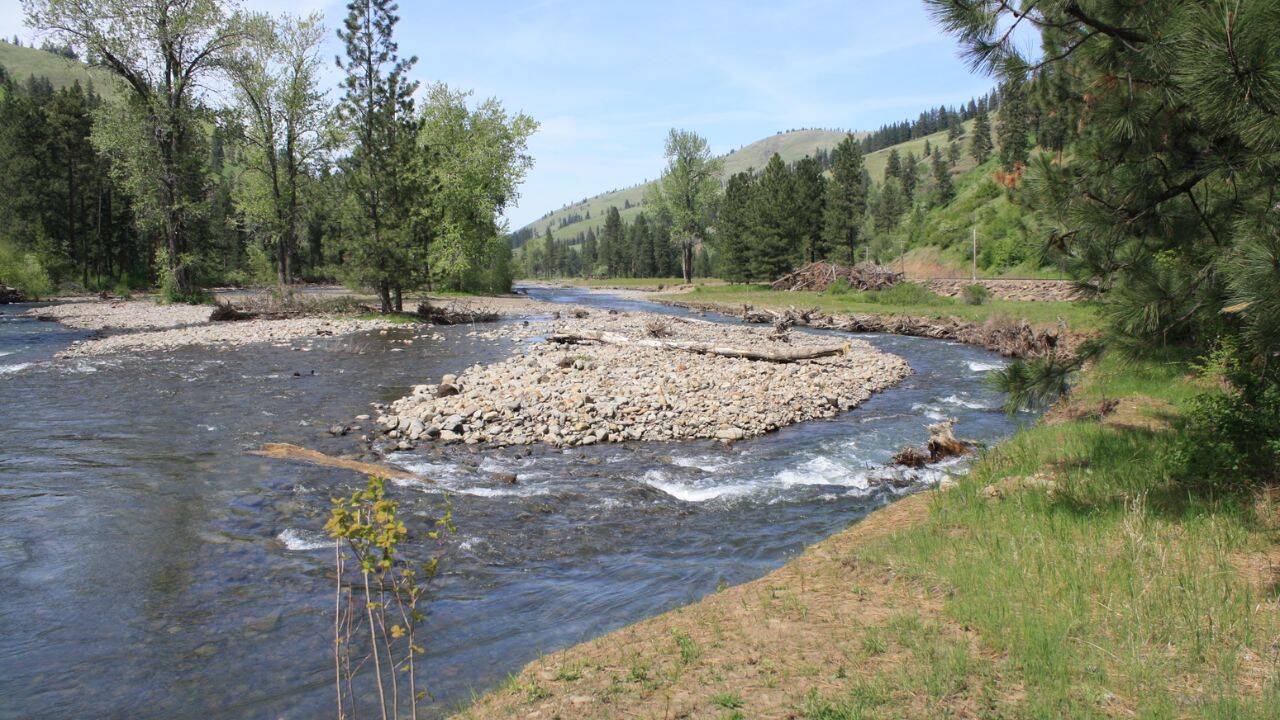
Crews started by physically breaching and removing twenty-five levees along the project area. That single move instantly reconnected the main river channel to its historical floodplain. When the next high water event hit, the river didn't punch straight through town. It spread out. It wandered. It filled old oxbows and marshy side channels that had been dry for decades.
Next came the wood. Workers hauled in roughly thirty-seven hundred pieces of large wood—entire trees with root wads still attached—and anchored them into the water.
If you've never watched a river flow over a pile of massive logs, it looks chaotic. But that chaos is pure gold for aquatic life. The wood forces the water to carve out deep, cool pools for resting fish. It traps gravel where insects thrive and female salmon lay their eggs. It creates complex hiding spots where a baby chinook can dodge a hungry blue heron.
Nature doesn't need our help to be neat. It needs our help to be messy again.
Why salmon need this more than ever
Pacific salmon face a gauntlet. They hatch in mountain streams, migrate down to the ocean where they spend years dodging commercial fishing fleets and warming waters, and then swim all the way back upstream to spawn and die.
Along the way, they run into dams, polluted runoff, and urban sprawl. But freshwater habitat degradation remains one of the quietest killers. If juvenile salmon don't find calm, cool water with plenty of food during their first weeks out of the gravel, mortality rates skyrocket.
Projects that restore historical river complexity give these fish a fighting chance. When you add thousands of wood pieces and open up side channels, you multiply the available living space. Survival rates go up. Populations stabilize.
You can't just throw fish into a sterile concrete ditch and expect a thriving population. You have to fix the house they live in.
What we can learn from Oregon's gamble
This isn't just an isolated local story. It's a blueprint for how we need to approach environmental management everywhere. For a long time, conservation meant putting a fence around a piece of land and walking away. We now know that passive protection isn't enough when the underlying system is broken.
Active restoration takes guts. It means admitting that past generations made mistakes, spending real money to undo them, and sometimes accepting that human infrastructure has to move back to give water room to breathe.
If you own property near a waterway or vote on local land-use policies, pay attention to these projects. They prove that we can step back, let rivers reclaim their historical footprint, and watch ecosystems bounce back faster than anyone expects. The fish are waiting to see what we do next.