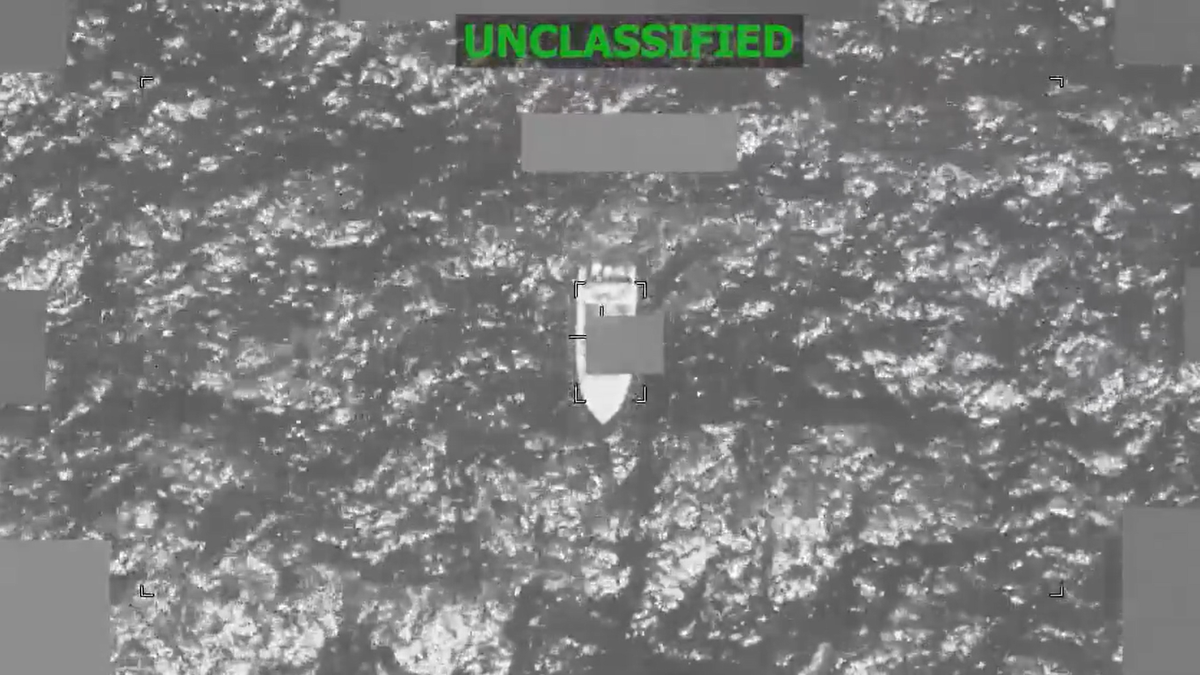
The headlines follow a tired, predictable script. A U.S. Coast Guard cutter spots a low-profile vessel in the Eastern Pacific. Orders are ignored. Warning shots are fired. Engines are disabled. In the chaos, four people end up dead. The official narrative frames this as a win for the "Thin Blue Line" at sea—a necessary kinetic intervention to stop the poison flowing into American streets.
It is a lie. Not necessarily a lie of intent, but a lie of impact.
We are watching a multi-billion-dollar game of Whac-A-Mole played with high-caliber rifles and MQ-9 Reaper drones. Every time the Department of Defense or the Coast Guard "neutralizes" a suspected drug boat, they aren't denting the supply chain. They are performing an expensive, lethal piece of theater that ignores the fundamental physics of global logistics.
The Myth of Interdiction Efficacy
The "lazy consensus" among policymakers is that increasing the risk for smugglers will eventually reach a breaking point where the trade becomes unviable. This assumes the cartels operate like a traditional Fortune 500 company concerned with quarterly risk mitigation. They don't.
In the Eastern Pacific, a "Go-Fast" boat or a semi-submersible is a disposable asset. The cost of the hull, the outboard motors, and the lives of the four men on board is rounded down to zero on the cartel’s balance sheet. When a U.S. strike kills those four people, the organization has already replaced them before the bodies are cold.
We have spent decades perfecting the art of tactical engagement while failing the math of strategic containment. According to the United Nations Office on Drugs and Crime (UNODC), global cocaine production has reached record highs. If interdiction worked, we would see a corresponding spike in street prices and a drop in purity. Instead, purity remains high and prices are stable. We are killing people in the middle of the ocean for a statistical rounding error.
The Darwinian Trap
Here is the nuance the standard news reports miss: Kinetic intervention doesn't stop smuggling; it breeds better smugglers.
When the Coast Guard gets better at spotting traditional speedboats, the cartels pivot to Self-Propelled Semi-Submersibles (SPSS). When we deploy better sonar and satellite tracking, they move to fully submersible "narco-subs" that are almost impossible to detect without a lucky break. By killing the "dumb" smugglers, we are effectively acting as a selective pressure agent. We are the ones forced-evolving the cartels into sophisticated paramilitary logistical firms.
I have seen the internal metrics used to justify these deployments. They focus on "kilos seized" and "vessels disrupted." These are vanity metrics. They measure activity, not results. If you seize ten tons but the market demand is for a thousand, you haven't solved a drug problem—you’ve just created a job opening for a more competent smuggler.
The Jurisdiction Gray Zone
These strikes often occur in international waters, thousands of miles from the U.S. border. The legal framework relies on "right of visit" and bilateral agreements that are stretched to their absolute limit.
When a strike results in deaths, we enter a moral and legal quagmire that the competitor’s article conveniently ignores. Who determines the "suspicion" was accurate when the evidence is at the bottom of the ocean? The ocean is deep. Evidence sinks. Dead men don’t testify. We are operating a shoot-to-kill policy in a maritime Wild West, justified by a "War on Drugs" that has been declared a failure by almost every objective metric for twenty years.
The Logistics of Futility
Consider the geography. The Eastern Pacific is a massive, featureless expanse. Patrolling it is like trying to find a specific grain of sand in a desert using a magnifying glass.
- Cost of a Coast Guard National Security Cutter: Roughly $700 million to build, millions more to operate annually.
- Cost of a "Go-Fast" boat: $50,000.
- Cost of the cargo: A few million in production, worth a hundred million at the destination.
The math is broken. We are burning jet fuel and risking the lives of American sailors to intercept a vessel that costs less than the missile used to disable it. It is a massive transfer of taxpayer wealth to the defense industry to achieve a net-zero impact on public health.
People Also Ask: Why can't we just block the routes?
This question is flawed because it treats the ocean like a highway with checkpoints. It’s not. It’s a volume problem. You cannot "block" the Pacific. Every time you squeeze one corridor, the flow shifts 200 miles west. You aren't stopping the water; you're just moving the leak.
People Also Ask: Isn't it better to catch them at sea than in our cities?
Brutally honest answer: It doesn't matter where you catch them if the volume behind them is infinite. Catching four guys and a ton of product in the Pacific provides a great photo op for a press release, but it does nothing to address the fentanyl and meth crisis fueled by chemical precursors coming through legitimate ports of entry. The maritime "interception" is a distraction from the reality that our borders are porous by design to facilitate trade.
The Hard Pivot Nobody Wants to Discuss
If the goal is actually to stop the violence and the flow of narcotics, the solution isn't more MQ-9 drones. It’s the total destruction of the profit motive.
As long as the "risk premium" makes a single successful voyage worth more than a lifetime of honest labor, there will be four more men willing to die in the next boat. We are treating a symptom of global economic inequality and domestic demand with 25mm chain guns. It is the equivalent of trying to put out a forest fire with a water pistol while someone else is pouring gasoline on the trees.
The downside to admitting this? It requires a total overhaul of foreign policy and domestic drug laws. It means admitting that the billions spent on maritime interdiction have been a waste. It means acknowledging that those four deaths in the Pacific didn't make a single kid in Ohio safer.
Stop cheering for the "successful strike." It’s a funeral for common sense.
The cartels aren't losing. They’re just waiting for the next ship to clear the horizon.
Burn the playbook. End the theater. Stop the killing.