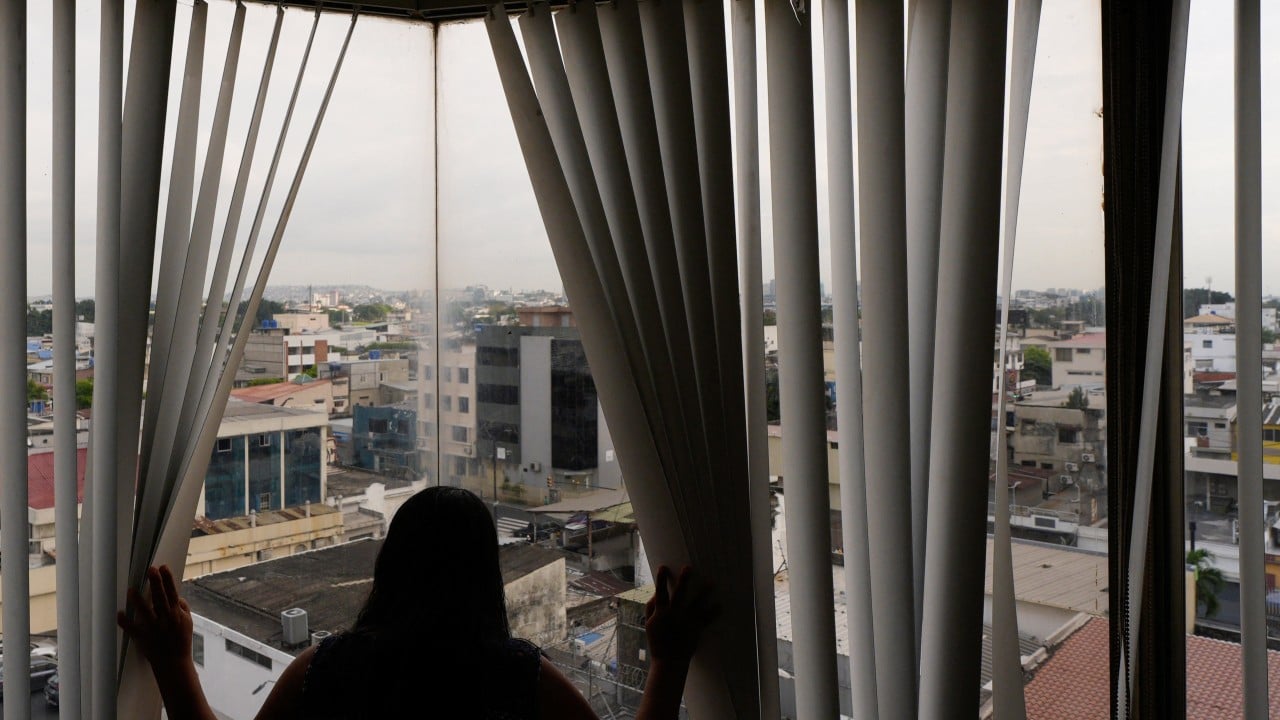
The coffee cup is still half-full on the laminate table, a skin of grey dust already settling on the dark liquid. Nobody is coming back to drink it.
When Mateo zipped his worn canvas suitcase this morning, he did not pack his photo albums. He did not pack his winter coats or the mahogany framed diploma that took five years of double shifts and exhausted train rides to earn. He packed three changes of clothes, a plastic bag containing his mother’s gold earrings, and every single dollar he had managed to hide beneath floorboards over a decade of running a small hardware store.
He left the iron gate unlatched. There was no point in locking it. Locks imply that someone intends to return.
Mateo is not alone on this road. Across Ecuador right now, a quiet, devastating migration is underway. From the humid coastal sprawl of Guayaquil to the mountain streets of Esmeraldas, families are turning keys in doors they never expected to abandon. They are joining thousands of their countrymen who have decided that surviving the night is worth losing everything else.
To understand why a nation bleeds out in daylight, you have to look past the cold arithmetic of international headlines. You have to look at the grocery store owner who received a text message containing a photograph of his daughter walking home from school. You have to look at the neighborhood bakery that shuttered its metal shutters forever after the third time an armed man demanded a weekly tax for the right to sell bread.
This is not a sudden storm. It is a slow-motion structural collapse, decades in the making, born from the convergence of transnational cartels finding new highway corridors, institutional corruption rotting the state from the inside out, and an economy gasping for air.
Consider how a country shifts from stability to terror. It does not happen overnight. It begins with whispers in corner stores. Then come the burning cars on street corners. Then the prisons, once meant to hold the lawless, transform into command centers where cartel kingpins rule from air-conditioned cells with smuggled Wi-Fi routers. And finally, the violence spills over the prison walls and floods the avenues where children play soccer.
By the time the state declared a state of internal armed conflict, the shadow government was already well established. Neighborhoods carved out invisible borders. Crossing the wrong street meant facing a tribunal of teenagers holding automatic weapons bought with drug profits.
Fear is an efficient architect. It redesigns cities without tearing down a single building. It draws invisible lines across map coordinates, turning alleyways into dead zones and porches into watchtowers.
Mateo walked down his street for the last time with his eyes fixed straight ahead. A neighbor stood by a parked truck, loading mattresses onto a rusty flatbed. They didn't embrace. They didn't cry. They exchanged the quick, sharp nod of two people sharing an emergency lifeboat.
The statistics tell a story of numbers, but numbers have no pulse. They tell us that homicide rates skyrocketed to some of the highest in Latin America. They tell us that tens of thousands have been displaced, fleeing toward the borders or packing into rickety boats bound for distant shores, trading the certainty of violence for the terrifying gamble of the Darien Gap.
Yet, the true weight of this crisis lives in the small, agonizing choices. Do you pay the extortion fee and watch your life’s savings bleed out penny by penny, or do you pack what you can carry and walk away into a future that has no map?
When the state recedes, the vacuum fills with blood. That is the hard, unyielding lesson unfolding on the streets of Ecuador. The gangs did not just conquer territory; they conquered the daily rhythm of ordinary life. They made buying milk a gamble. They made staying home a death sentence.
And so, the roads are full.
Not with armies marching to battle, but with families carrying backpacks, holding the small, sticky hands of tired children, walking past shuttered storefronts and peeling election posters. They are looking for a place where the rule of law is not a negotiated truce between politicians and executioners.
Mateo reached the bus terminal just as the midday heat began to shimmer off the asphalt. The air smelled of diesel exhaust and fried plantains. All around him, faces mirrored his own: a mixture of profound exhaustion and the terrifying clarity of the displaced.
He climbed the steps, paid his fare with shaking fingers, and found a window seat toward the back. As the engine sputtered to life and the bus lurched forward, he pressed his forehead against the cool, vibrating glass. He watched his city slide away—the colorful concrete houses climbing the hills, the tangled electrical wires, the corner where he used to buy his morning paper.
He did not look back. There was nothing left behind him now except ghosts, and memory is a heavy enough suitcase to carry across a border.