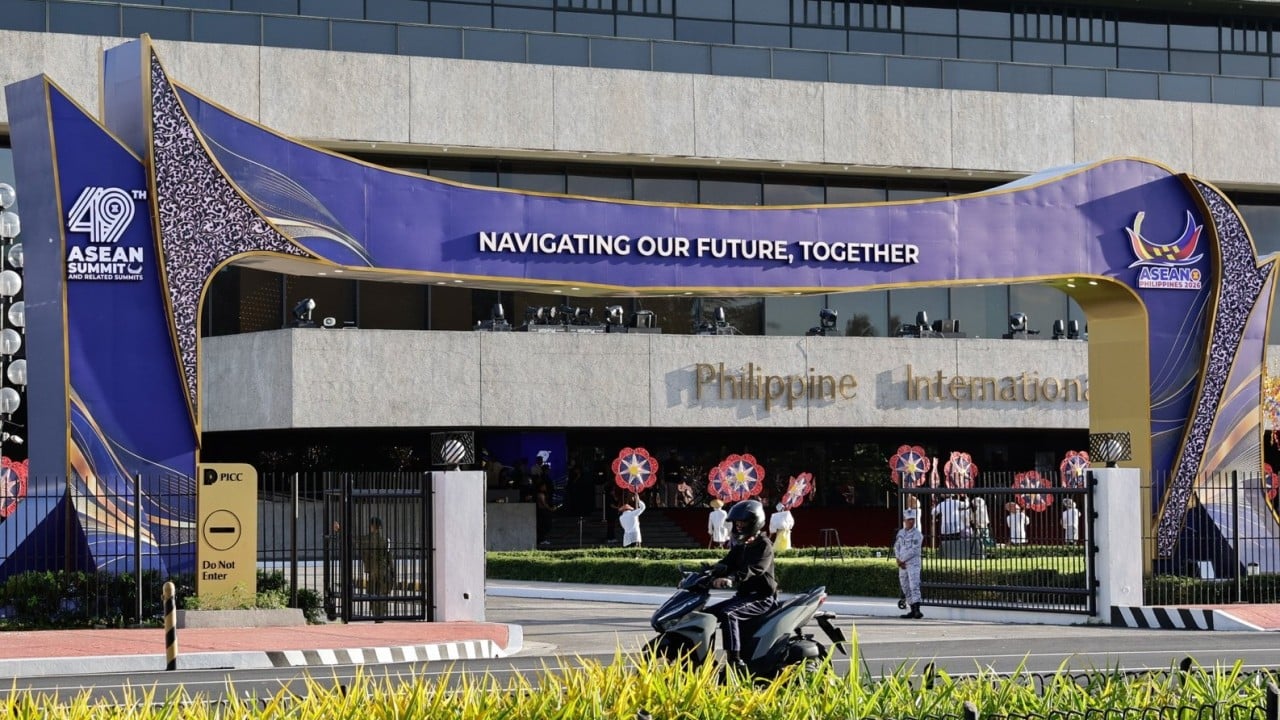
Paint dries fast in the Manila heat, yet it never actually covers up a structural housing crisis. Whenever regional diplomats fly into the Philippine capital for a high-stakes gathering, the same predictable choreography plays out along the main thoroughfares from Ninoy Aquino International Airport to the convention centers along Manila Bay. Freshly painted concrete barriers appear overnight. Bright murals suddenly bloom across corrugated metal fences. And right behind those colorful facades sit the exact same informal settlements that were there the week before.
Critics of President Ferdinand Marcos Jr. have pointed directly at this familiar pattern ahead of ASEAN summit preparations in Metro Manila. The core accusation isn't just about bad urban aesthetics or wasted public works budgets. Activist groups, urban poor coalitions, and everyday commuters argue that the administration is using public art and beautification projects to screen off visible poverty from visiting heads of state rather than confronting why hundreds of thousands of families still live in precarious conditions along major roadways and waterways.
To understand why this controversy hits such a raw nerve in the Philippines, you have to look beyond a single summit or a single administration. Manila has a long, documented history of what urban planners and human rights advocates call "cosmetic governance" during major international events. Whether the occasion is a papal visit, an Asia-Pacific Economic Cooperation gathering, or an ASEAN summit, temporary walls and fresh coats of paint consistently arrive right before the motorcades do.
The Anatomy of Summit Beautification in Metro Manila
Drive down Roxas Boulevard or EDSA during a normal week and you see a sprawling, unfiltered metropolis. Jeepneys weave through heavy traffic, street vendors set up carts along crowded sidewalks, and makeshift dwellings cluster near drainage canals and under elevated expressways. Drive down those same routes right before foreign delegations arrive and the visual contrast feels jarring.
During ASEAN summit preparations under the Marcos Jr. administration, public works crews and local government units focused heavily on major transit corridors. Concrete walls and sheet-metal barriers along key routes received bright murals celebrating Filipino heritage, regional unity, and environmental themes. On paper, these projects fall under routine urban renewal and public art initiatives meant to showcase local talent and civic pride.
In practice, the placement of those walls tells a very different story. Many of the newly decorated barriers stand directly in front of dense informal communities, crumbling infrastructure, and stretches of road where unhoused residents typically sleep. Critics quickly dubbed these installations "art walls" designed less for the people living in Manila and more for the cameras following visiting dignitaries.
The pushback gained traction because the contrast between the polished exterior and the reality behind it is impossible to miss if you actually live in the city. A vibrant mural painted on galvanized iron doesn't bring running water to the families living three feet behind it. It doesn't fix flooded alleyways during monsoon season, and it certainly doesn't provide secure land tenure.
Why Critics Call It Performative Governance
Urban poor advocates, including groups like Kalipunan ng Damayang Mahihirap and various church-based social action networks, have consistently challenged the logic of pre-summit cleanups. Their argument rests on a simple observation. When governments treat poverty as an eyesore to be hidden rather than a policy failure to be solved, the people experiencing that poverty become collateral damage.
The Problem With Temporary Fixes
There's a massive difference between genuine public art and strategic concealment. Real urban art revitalizes neglected public spaces so residents can enjoy their own neighborhoods. Summit beautification does the exact opposite. It prioritizes the gaze of temporary visitors over the daily dignity of permanent citizens.
Consider how public funds get allocated during these windows. While local budgets are stretched thin on basic health centers and public housing backlogs, money suddenly materializes for quick-turnaround visual upgrades along diplomatic routes. Even when private sponsors or civic organizations contribute paint and labor, the municipal coordination required to erect barriers and clear sidewalks reflects clear political priorities.
Street Clearing and Quiet Displacements
The murals are usually only half the story. Alongside physical barriers, pre-summit operations routinely involve aggressive street-clearing drives conducted by metropolitan authorities and local barangay officials. Street vendors lose days or weeks of income when sidewalks along motorcade routes are swept clean. Unhoused individuals and families living in pushcarts are frequently rounded up and transported to temporary holding centers outside the immediate view of convention venues.
Once the foreign delegations fly home and the security perimeters come down, those temporary shelters empty out. Vendors return to the curbs. Families move back to the same sidewalks and underpasses because nothing about their economic reality changed during the three days diplomats spent inside air-conditioned ballrooms.
Manila's Long History of Hiding Poverty From VIPs
If you feel like you've read this exact headline before, your memory isn't playing tricks on you. Marcos Jr. didn't invent this playbook, though critics argue his administration has leaned into a remarkably familiar family tradition.
Back in the 1970s, during the presidency of his father, Ferdinand Marcos Sr., First Lady Imelda Marcos famously ordered the construction of whitewashed walls along roads leading from the airport into central Manila ahead of major international gatherings, including the 1976 International Monetary Fund and World Bank annual meetings. Those walls became an enduring symbol of authoritarian image-making—an attempt to project rapid modernization to foreign lenders while concealing sprawling slums just meters away.
Subsequent democratic administrations proved no less tempted by the quick cosmetic fix.
- 1996 APEC Summit: Authorities erected fences and cleared informal settlements along key corridors in Metro Manila and Subic Bay to present a polished investment climate to Pacific Rim leaders.
- 2015 Papal Visit and APEC Meetings: Government agencies drew sharp criticism from international media and local advocates after reports surfaced that homeless families, including young children, were rounded up and held in facilities during Pope Francis's visit and later before APEC leaders arrived.
- 2017 ASEAN Summit: Under President Rodrigo Duterte, authorities again faced scrutiny over street-clearing sweeps and temporary barriers erected along routes connecting Clark, Pampanga, and Metro Manila.
Each time, officials offered the same explanations. They cited security protocols for visiting heads of state, traffic management along designated ASEAN lanes, and routine city maintenance. And each time, residents pointed out that security perimeters somehow always managed to align neatly with the exact boundaries of Manila's poorest neighborhoods.
What the Government Says Versus What Residents Experience
Defenders of the beautification efforts argue that critics are reading cynical motives into standard host-city preparations. Every nation hosting a major diplomatic summit cleans its streets, repairs potholes, upgrades street lighting, and commissions public art. Leaving major thoroughfares covered in grime or blank concrete walls before welcoming regional partners would invite a different kind of criticism—that the host country failed to prepare properly.
Local officials and supporters also note that hiring Filipino artists to paint large-scale murals gives creative workers paid commissions and turns bleak urban concrete into something visually uplifting for daily commuters. From this perspective, painting a wall isn't an act of cruelty; it's basic municipal housekeeping combined with cultural promotion.
That defense holds up right until you ask a basic question about proportions and permanence.
Nobody objects to clean streets or public murals. People object when fresh paint arrives weeks before a summit while long-term housing programs stall for years. According to data from the Philippine Statistics Authority and housing agencies, the Philippines continues to face a massive housing backlog running into the millions of units, with Metro Manila carrying a disproportionate share of informal settler families living in danger zones like esteros, rail tracks, and coastal areas.
When a family has waited years for a promised relocation site with actual jobs and utilities nearby, watching crews rush to paint a cheerful mural on the wall blocking their shanty from diplomatic motorcades feels less like civic pride and more like an insult.
The Deeper Urban Reality Behind Manila's Walls
Why do informal settlements keep growing along Manila's main roads in the first place? You can't understand the politics of summit walls without understanding why people live behind them.
Metro Manila remains the economic engine of the Philippines, generating roughly a third of the country's gross domestic product. That concentration of wealth, universities, ports, and service jobs draws millions of workers from rural provinces where agricultural wages remain low and climate disasters frequently wipe out harvests.
Once workers arrive in the capital, they hit an immediate wall of housing unaffordability. Formal rentals near job centers cost far more than a minimum-wage earner or informal service worker can afford. Government relocation sites, meanwhile, have historically been built on cheap land in outlying provinces like Bulacan, Cavite, or Rizal—miles away from steady employment, hospitals, and schools.
Faced with a choice between a remote relocation house with no livelihood and a makeshift room near construction sites, markets, and Jeepney routes in Manila, families rationally choose survival. They build where the work is.
No mural on Roxas Boulevard addresses that economic equation. Until affordable in-city housing, reliable mass transit, and decent regional wages become real priorities, informal communities will remain a permanent feature of the capital's landscape regardless of how many coats of paint cover the perimeter fences.
How to Spot Performative Urban Renewal Anywhere
The controversy surrounding the ASEAN summit in Manila offers a useful lens for evaluating urban development projects in any rapidly growing city. Governments everywhere love visible, fast-acting projects that photograph well before big events. Knowing how to separate real civic investment from temporary window dressing makes it much easier to hold local leaders accountable.
Look closely at three concrete indicators whenever a city announces sudden beautification drives ahead of major conferences or sporting events:
- Follow the maintenance timeline. Genuine urban upgrades come with multi-year maintenance budgets and community stewardship plans. Performative projects use cheap materials designed to last through the closing ceremony before peeling away in the next rainy season.
- Check who gets displaced. Real neighborhood improvement includes residents in the planning process and keeps local vendors and families integrated into the upgraded space. Cosmetic cleanups rely on sudden enforcement sweeps, barricades, and temporary relocations that vanish once VIPs leave.
- Compare capital spending against social spending. Look at municipal budget breakdowns. When spending on facade treatments, ceremonial arches, and temporary barriers spikes while funding for water access, sanitation, and in-city social housing stagnates, priorities are inverted.
If you're following coverage of ASEAN meetings in Manila or researching urban policy in Southeast Asia, look past the press releases about cultural showcases and diplomatic hospitality. Track what happens along those exact same corridors six months after the motorcades are gone—because the real measure of leadership in Manila isn't what visiting leaders see through tinted limousine windows, it's whether the people living behind the walls are still waiting for basic dignity.