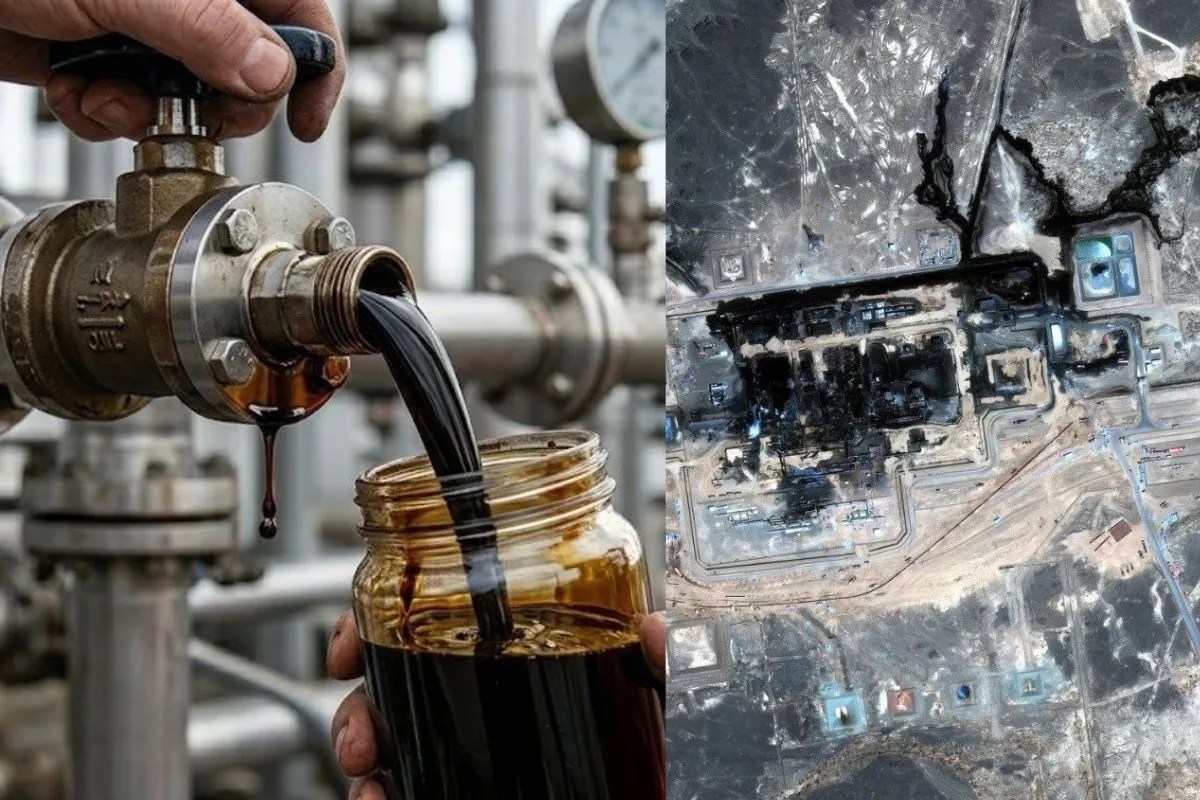
Every time a drone buzzes a petroleum installation in the Arabian Peninsula, financial media outlets lose their collective minds. Headlines blare about crude oil breaching one hundred and ten dollars a barrel, apocalyptic supply crunches, and the imminent collapse of global mobility. Commentators hyperventilate over pipeline vulnerabilities, treating every localized security incident as an extinction-level event for industrial civilization.
It is a lazy, theatrical narrative designed to generate clicks, feed algorithmic panic, and mask a much more resilient global energy architecture. The prevailing consensus argues that a physical strike on extraction or transport infrastructure instantly chokes off the planetary blood supply, sending prices spiraling out of control.
That analysis is fundamentally broken. It ignores how modern commodity markets price risk, how secondary supply routes absorb shocks, and why high-cost marginal barrels change the math entirely.
The Myth of the Fragile Monolith
The core fallacy of the permanent crisis model is the assumption of absolute rigidity. Media reports treat Saudi Aramco and Gulf energy networks like delicate porcelain. When an interceptor debris field or a localized strike rattles a facility near Shaybah, analysts draw a straight line to catastrophic supply shortages.
They forget that the global crude market is a massive, multi-nodal liquid network, not a fragile garden hose.
I have watched desks panic over geopolitical headlines for years, executing knee-jerk trades that ignore the invisible shock absorbers built into modern logistics. Physical flow data routinely proves that brief interruptions cause regional friction, not permanent deficits. Storage inventories across Organisation for Economic Co-operation and Development nations sit as multi-layered buffers. When spot prices spike past one hundred and ten dollars, it is almost entirely a risk premium—paper money pricing fear—rather than an acute physical evaporation of black gold.
The Economics of the Risk Premium
Understand what you are actually paying for when Brent touches three digits. You are paying for insurance, psychological theater, and speculative positioning.
When a pipeline pump station faces a security threat, traders price in worst-case scenarios where the entire corridor stays offline for quarters. Yet reality moves faster than bureaucratic panic. State-backed operators reroute flows, alternate export terminals ramp up capacity, and floating storage in international waters begins to move.
[Geopolitical Headline] ──> [Speculative Panic & Paper Trading] ──> [Temporary Price Spike ($110+)]
                                                                           │
                                                                           ▼
[Physical Reality Check]  <── [Rerouting & Strategic Inventory Drawdown] ◄─┘
The market overshoots because fear is cheap to manufacture and expensive to unwind. By the time analysts finish updating their spreadsheets, the physical crude is already finding alternative paths to coastal tankers.
The Shale Counterweight Everyone Ignores
There is another structural flaw in the doomsday oil thesis: the elastic response of non-O
Stop Panicking About Crude Oil Prices Crossing 110 Dollars
business
news
Every time a drone crosses a patch of Middle Eastern airspace, the financial media loses its collective mind. Headlines scream about surging barrels, pipelines on fire, and a looming global energy catastrophe. The lazy consensus dictates that a temporary disruption to a single Saudi artery means your cost of living is about to skyrocket, supply chains will shatter, and inflation will claw its way back to a double-digit nightmare.
It is lazy, it is panicked, and it is fundamentally wrong.
I have spent the better part of two decades watching markets overreact to localized geopolitical theater while ignoring the structural plumbing that actually keeps the global machinery running. When crude breaches one hundred and ten dollars a barrel on supply scare narratives, the amateur trader panics and buys futures. The professional trader looks at demand destruction, strategic reserve cushions, and structural fuel-switching capabilities, and starts selling the panic.
Let us dismantle the fiction piece by piece.
The Myth of the Fragile Pipeline
The core argument of the doom-mongers rests on a fragile premise: that oil is a delicate, linear hose. Cut one section in the desert, and the whole world starves. This view ignores how modern global trade actually adapts.
Physical crude is not like data packets on a fiber optic line. It is a massive, fungible, highly liquid commodity. When a specific pipeline or processing facility takes a hit, it creates a headline shock, but the physical redirection of tankers happens almost before the smoke clears. Traders re-route cargoes on the water while the facility is still smoldering.
Furthermore, spare production capacity globally has evolved. For years, cartel quotas masked a reality of untapped supply waiting for the right price signal. When prices spike past one hundred dollars, high-cost producers and shale operators do not sit on their hands; they turn the taps back on with ruthless efficiency. The market heals itself through price elasticity faster than any bureaucratic agency can draft an emergency response memo.
Why 110 Dollars Breaks Demand Faster Than Supply
The consensus assumes that high oil prices are an unmitigated disaster for the consumer and a permanent windfall for producers. This is economic illiteracy.
High prices contain the seeds of their own destruction. At one hundred and ten dollars a barrel, industrial demand does not just slow down; it aggressively rationalizes. Refineries throttle back margins because end-users simply stop buying refined products at those price points. Airlines hedge, shipping fleets slow down to conserve bunker fuel, and chemical plants substitute feedstocks.
When you artificially inflate energy costs past a certain economic threshold, you trigger demand destruction. Producers know this. A prolonged period of extreme prices destroys their long-term customer base by accelerating electrification, EV adoption, and alternative energy investments. Saudi Arabia and other major exporters do not want runaway hundred-and-fifty-dollar oil any more than you do; they want a stable band that funds their state budgets without forcing the world to permanently code-switch away from hydrocarbons.
The Real Risk Nobody Is Talking About
If the drone attacks and headline panics are not the real threat, what is?
The real danger lies in the knee-jerk monetary policy reactions of central banks. When central bankers see headline inflation tick up because of a temporary energy spike, their historical reflex is to slam the brakes on the broader economy with interest rate hikes. They treat a supply-chain headline shock as an overheating demand problem.
That is the policy error that actually wrecks economies. Choking off an entire domestic economy with tight credit because a drone hit a pipeline thousands of miles away is like shooting yourself in the foot because your neighbor's roof is leaking.
Stop buying the narrative that a single supply disruption spells doom for the global economy. Markets are resilient, adaptive, and far more cynical than the morning news anchors.
The next time a headline flashes a triple-digit crude price, do not look at the flames in the desert. Look at the balance sheets, look at the freight rates, and watch how fast the invisible hand of global trade routes around the noise.


