Mainstream financial media loves a clean villain. A corrupt president. A collapsing banking sector. A righteous legislative body stepping in to restore order.
That narrative is comforting, cinematic, and completely divorced from how emerging market financial crises actually operate.
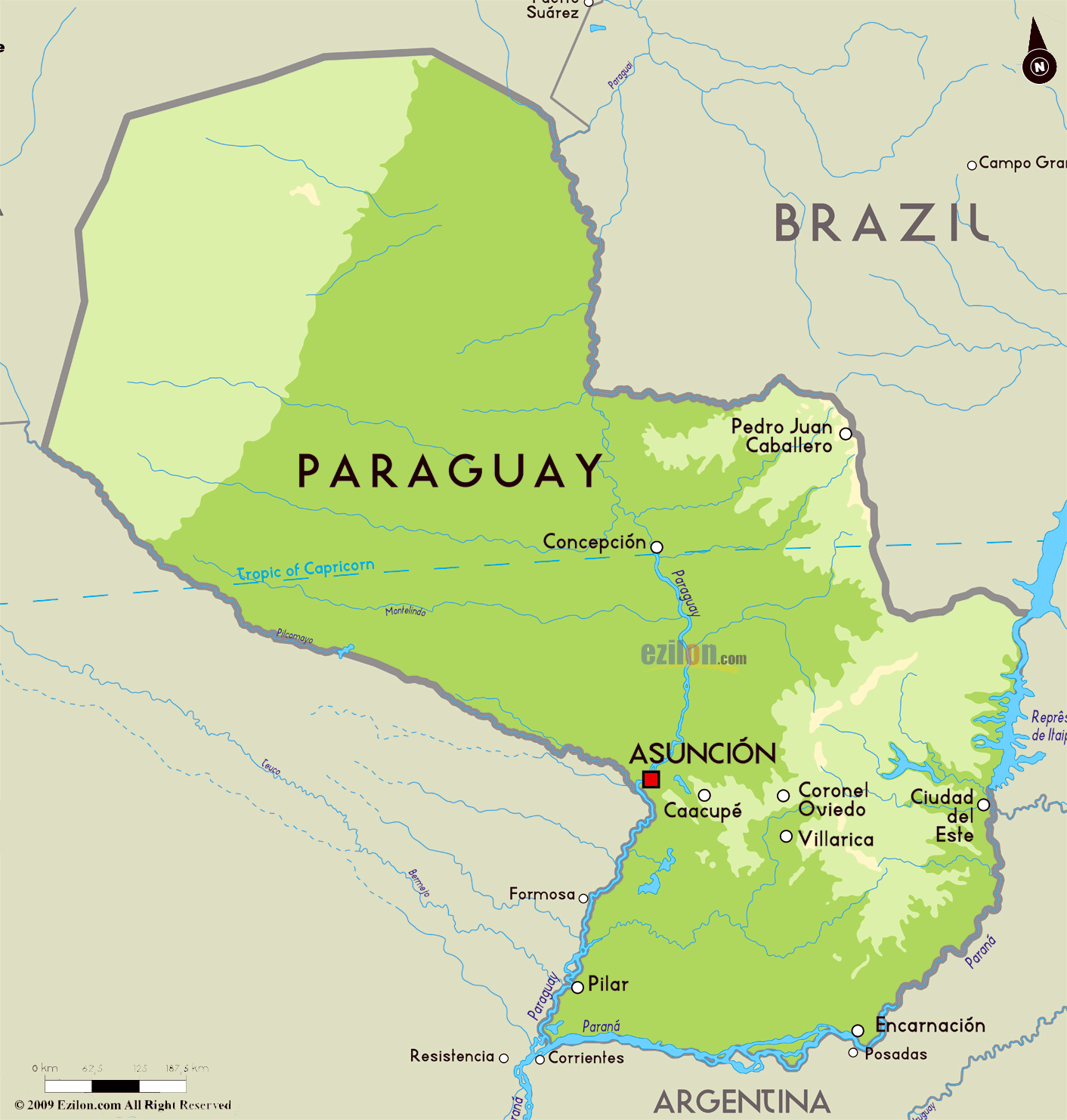
When coverage reduces a sovereign political upheaval like Paraguay’s impeachment crisis to a simple morality play about bad leadership causing bank failures, it misses the structural machinery underneath. Look at Paraguay’s historic banking implosions—specifically the devastating 1995-1998 financial crisis that wiped out more than half of the country’s domestic banks, or the political firestorms surrounding Raúl Cubas Grau in 1999 and Fernando Lugo in 2012. In every single instance, international observers treat the impeachment as the cure for institutional rot.
It isn't. Impeachment in a fragile financial system is almost always an elite asset-protection maneuver disguised as constitutional accountability.
The Lazy Consensus Around Emerging Market Bank Runs
Read any standard wire report on a Latin American banking collapse and you will find the exact same formula. First, identify a sudden liquidity crunch. Second, point to executive overreach or regulatory neglect. Third, frame the removal of the head of state as the necessary reset button to restore investor confidence.
This framing gets the sequence of events entirely backward.
In emerging economies with shallow capital markets and high dollarization, bank collapses rarely start with a single rogue president signing a bad decree. They start with maturity mismatches, connected lending, and regulatory forbearance that span multiple administrations. By the time depositors line up outside branch doors, the insolvency is already years old.
I have sat across from sovereign risk analysts in Asunción, São Paulo, and New York who spent millions building early-warning models based on executive approval ratings. Every single one of those models failed when real stress hit. Why? Because they measured political noise instead of balance-sheet plumbing.
When a banking system fractures, the political class does not suddenly discover a passion for fiduciary duty. Instead, rival power blocs use the constitutional mechanism of impeachment—specifically juicio político under Article 225 of the Paraguayan Constitution—to decide who gets stuck holding the toxic liabilities and whose allied institutions receive central bank lifelines.
What Actually Happens Inside a Collapsing Financial System
To understand why impeachment headlines obscure the truth, you have to look at the mechanics of a systemic bank failure without the political theater.
1. Connected Lending Is the Real Disease
In tightly concentrated economies, the line between commercial banking, agricultural conglomerates, and political patronage is practically invisible. Banks routinely funnel depositor funds into affiliated shell companies or politically favored real estate and agribusiness ventures. When commodity prices dip or interest rates tighten, those loans go non-performing simultaneously.
2. Regulatory Forbearance Delays the Reckoning
Central banks and banking superintendents rarely pull the plug on an insolvent institution early. Closing a major domestic lender triggers immediate panic. Instead, regulators allow zombie banks to stay open, masking bad debt through creative accounting and emergency liquidity injections from the Banco Central del Paraguay (BCP).
3. The Political Scapegoat Trade
Once the central bank’s foreign reserves begin bleeding out to prop up dead institutions, the bill comes due. Someone has to take the fall so that the surviving financial elites can negotiate a clean bailout with multilateral lenders like the International Monetary Fund (IMF). Removing the president creates the illusion of a clean break without forcing the underlying banking oligopoly to liquidate its private holdings.
"In emerging market crises, constitutional crises are rarely the cause of capital flight; they are the settlement mechanism used by domestic factions to allocate the losses."
Dismantling the Questions Everyone Asks Wrong
Whenever a Latin American head of state faces removal during a financial meltdown, search engines flood with the exact same predictable queries. Every one of them rests on a flawed premise.
Does impeaching a president stop a bank run?
No. Impeachment accelerates deposit flight in the short term. Depositors do not care about constitutional purity when their life savings are locked behind shuttered teller windows. They care about deposit insurance coverage and central bank liquidity. When lawmakers spend weeks locked in impeachment proceedings, emergency fiscal transfers stall, legal certainty evaporates, and domestic currency holders immediately convert guaraníes into physical US dollars.
Is the banking collapse caused by presidential corruption?
Corruption acts as an accelerant, never the primary fuel. You can have rampant political graft alongside a stable banking sector if capital adequacy ratios are strictly enforced and foreign reserve buffers remain high. Conversely, you can install a squeaky-clean technocrat in the Palacio de los López, and if domestic banks are carrying 40 percent unhedged foreign-currency liabilities when the local currency devalues, the banks will still collapse. Blaming the president alone lets the bank boards and external auditors walk away unscathed.
Will a new administration restore foreign investor confidence?
Foreign institutional investors do not underwrite sovereign debt based on press releases about anti-corruption crusades. As economists Carmen Reinhart and Kenneth Rogoff documented extensively in This Time Is Different, capital flows return only after two concrete events occur: explicit recognition of banking sector losses and recapitalization of the central bank's balance sheet. Until those two numbers clear, a new president is just a fresh face presiding over the same insolvent ledger.
The Structural Trap Nobody Wants to Admit
Let’s run a clear thought experiment.
Imagine a mid-sized economy where three of the top five commercial banks hold massive portfolios of non-performing loans tied to politically connected conglomerates. The central bank quietly extends emergency credit lines equal to 6 percent of GDP to keep the ATMs dispensing cash. Meanwhile, inflation spikes, the currency slides, and street protests erupt.
If the legislature impeaches the president on Friday afternoon, what changes on Monday morning?
- The bad loans on those three bank balance sheets are still worthless.
- The central bank’s balance sheet is still impaired by uncollectible emergency loans.
- The state’s fiscal deficit is still widening because tax revenues collapse during credit freezes.
The only thing that changed over the weekend is that the opposition—or a rival faction within the ruling Colorado Party—now controls the appointment of the next central bank president and the finance minister. That control determines which banks get absorbed into state-backed rescues and which banks get liquidated.
| What Media Headlines Claim | What Actually Happens Behind Closed Doors |
|---|---|
| Impeachment restores rule of law and market trust. | Rival factions seize control of central bank liquidity allocation. |
| Presidential mismanagement caused the bank failures. | Years of connected lending and weak supervision finally hit a liquidity wall. |
| Removal of the executive protects ordinary depositors. | Bailout costs are socialized onto taxpayers while bank owners shield offshore assets. |
| New leadership signals a fresh economic start. | The incoming administration negotiates an IMF package using the ousted president as political cover. |
How to Actually Read a Sovereign Banking Crisis
If you allocate capital, manage cross-border supply chains, or analyze geopolitical risk in South America, relying on standard political journalism will get you wiped out. You have to invert your analytical framework.
- Track Central Bank Net International Reserves, Not Poll Numbers. Watch the weekly reserve data published by the central bank. When reserves drop sharply without a corresponding trade deficit shock, the central bank is covertly financing a domestic bank run. That is your real exit signal.
- Monitor Interbank Lending Rates. Before any bank closes its doors, healthy banks stop lending to weak banks overnight. A sudden spike in the local interbank rate tells you insolvency is spreading faster than any legislative motion can move.
- Audit the Deposit Guarantee Fund. Check the actual liquid assets held by the country’s deposit insurance agency (Fondo de Garantía de Depósitos in Paraguay) relative to total insured deposits. In most emerging markets, the fund holds less than 2 percent of total system deposits—meaning the moment two mid-sized banks fail simultaneously, the guarantee becomes a mathematical fiction.
- Watch Where the Bailout Burden Lands. Follow the post-impeachment legislation. If the new government issues sovereign bonds to recapitalize private banks without wiping out existing shareholders first, you are witnessing a wealth transfer, not a reform.
The Honest Downside of the Contrarian View
Looking strictly at balance-sheet plumbing and elite incentives has one major blind spot: it underestimates the speed of street-level contagion.
Even when an impeachment is purely an elite power play, the public theater matters. Mass demonstrations, transport strikes, and violent clashes outside Congress disrupt physical commerce, freeze customs clearance, and trigger immediate downgrades from credit rating agencies like Moody’s and S&P. Even a structurally sound bank can be brought to its knees if panic causes 30 percent of its retail depositors to demand physical cash within 48 hours. Ignoring political psychology entirely is just as dangerous as worshipping it.
Still, confusing the spark with the powder keg is an amateur mistake.
The next time a headline declares that a president has been impeached amid a banking collapse, stop reading the speeches from the Senate floor. Open the central bank’s monetary base report, look at the non-performing loan ratios buried in the annex, and trace which families own the banks that survived. The impeachment wasn't the cure for the crisis—it was the closing bell on the heist.