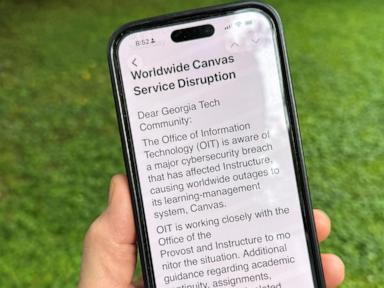
The headlines are bleeding with moral outrage. "Canvas Educational Platform Pays Hackers to Delete Data." The critics are already lining up to chant the same tired script: You never negotiate with terrorists. You’re funding the next hit. You’re incentivizing crime.
It is a beautiful, naive sentiment. It is also a dangerous delusion that prioritizes high-minded ego over the actual lives of students and educators. If you liked this post, you might want to read: this related article.
The industry consensus says paying a ransom is a failure of security. I say refusing to pay when the data is already out the door is a failure of duty. If your house is on fire and you refuse to pay the only person with a hose because you don't like their business model, you aren't a hero. You're just the guy standing in the ashes of everyone else’s belongings.
The Myth of the "Deletion Guarantee"
The first thing the "experts" tell you is that you can’t trust a hacker to delete data. "They'll just sell it anyway," the skeptics sneer. For another perspective on this event, see the latest coverage from ZDNet.
This fundamentally misunderstands the economics of the dark web. Ransomware groups are not chaotic agents of destruction; they are service providers in a criminal marketplace. Their business model relies entirely on a perverse form of brand equity. If a group like LockBit or BlackCat gains a reputation for leaking data even after a payment is made, their "conversion rate" on future victims drops to zero.
Why would a university or a corporation pay $5 million if they knew the data would hit BreachForums the next day anyway? They wouldn’t. The hackers know this. In the cold math of illicit commerce, a "proof of deletion" is a product. I have seen negotiations where these groups provide video logs of the wipe process. Is it a 100% guarantee? No. But in a world of zero-sum choices, a 90% chance of deletion is infinitely better than the 100% certainty of a public leak.
Why Encryption Is No Longer the Problem
The old-school cybersecurity playbook focused on "system uptime." The goal was to get the servers back online. If you had backups, you told the hackers to pound sand.
That era is dead. We are now in the age of double extortion.
The hackers don't care if you have backups. They aren't just locking your front door; they are stealing your diary and threatening to read it at the town hall. For an educational platform like Canvas, the "uptime" isn't the asset. The asset is the sensitive, FERPA-protected data of millions of minors and researchers.
When a competitor’s article suggests that the deal reached with these hackers is a "shameful compromise," they are ignoring the reality of the damage. We are talking about:
- Student mental health records.
- Home addresses of faculty members.
- Proprietary research worth billions in grants.
- Financial aid data that acts as a blueprint for identity theft.
Refusing to pay out of "principle" when these items are on the line is an act of corporate vanity. You are sacrificing the privacy of a 19-year-old student to maintain a "tough on crime" PR stance. That isn't leadership. It’s a dereliction of fiduciary responsibility.
The Insurance Paradox
Let's talk about the money. Critics act like these companies are pulling gold bars out of a vault to hand over to hooded figures. In reality, this is a choreographed dance between cyber-insurance firms and specialized "ransomware negotiators."
The "lazy consensus" argues that insurance is the problem—that it fuels the fire. But look at the alternative. Without insurance-backed settlements, a mid-sized EdTech provider or a public school district would simply go bankrupt. The data would still be stolen, the hackers would still have it, and now the students have no platform to learn on.
The industry needs to stop pretending that "stronger firewalls" are the silver bullet. I’ve been in rooms where companies spent $10 million on "robust" security stacks only to have a single intern click on a phishing link for a "Free Starbucks Voucher."
Human error is a constant. If your strategy relies on 100% prevention, you have already lost. The only metric that matters is blast radius mitigation. Payment is often the most effective tool for shrinking that radius.
The Logic of the Lesser Evil
Imagine a scenario where a platform refuses to pay a $2 million ransom. The hackers, feeling slighted, dump the entire database. Within 48 hours, those records are indexed by every malicious actor on the planet. Credit scores are ruined. Harassment campaigns begin. The class-action lawsuits that follow will cost the company $50 million in legal fees and settlements—25 times the original ransom.
Was the "moral high ground" worth the $48 million deficit and the ruined lives of the users?
We need to stop treating ransomware as a moral crusade and start treating it as a catastrophic insurance claim.
The Dirty Truth About "Incentivizing Crime"
The loudest argument against paying is that it funds the next attack. This is true. It’s also irrelevant to the victim.
A CEO’s job is not to solve global cybercrime. A CEO’s job is to protect their specific users, their specific employees, and their specific data. If the US government wants to stop the incentive, they should be the ones hunting down the server farms in Eastern Europe or sanctioning the crypto-exchanges that facilitate the transfers.
Expecting an educational platform to act as a frontline infantry unit in a global cyber-war is absurd. They are a school tool, not the NSA. When you demand they "don't pay" to save the "ecosystem," you are asking them to set themselves on fire to keep the rest of the neighborhood warm.
The Real Failure Isn't the Payment
The actual scandal isn't that a deal was reached. The scandal is the Data Hoarding.
EdTech companies collect way more than they need. They keep logs for years that should be purged in weeks. They track metrics that serve no pedagogical purpose. If the data isn't there, it can't be stolen.
Instead of crucifying companies for paying ransoms, we should be eviscerating them for the "data debt" they accrue. We should be demanding:
- Aggressive Data Minimization: If the student graduated five years ago, why do you still have their SSN?
- Mandatory Encryption at Rest: Not just the "industry standard," but tiered access that makes a full dump impossible.
- Zero-Knowledge Architecture: Systems where the platform itself can't even see the most sensitive data.
Until those things are the norm, hackers will keep winning. And as long as they have the data, paying them to delete it remains the only rational, empathetic choice.
Stop blaming the victim for buying their way out of a hostage situation. Start blaming the architects who built a glass house and filled it with everyone else's secrets.
The deal isn't a defeat. It’s a settlement for a war that was lost the moment the data was collected in the first place.