Everyone keeps talking about Alibaba's T-Head filing a Hong Kong IPO plan like it's just another routine corporate spin-off. It isn't. If you look closely at why Alibaba is moving its semiconductor unit toward the public markets right now, you'll see a massive strategic gamble forced by export controls, brutal capital expenditure demands, and China's aggressive push for AI self-sufficiency.
Most financial commentators treat this move like a simple cash-grab or a standard valuation unlock for Alibaba Group. That's a surface-level reading. When you've spent years watching how semiconductor foundries and fabless design houses survive geopolitical chokepoints, you realize T-Head needs independent capital and political insulation far more than Alibaba's balance sheet needs a one-time cash injection.
Why T-Head Matters More Than Alibaba's E-Commerce Business
Let's get one thing straight. T-Head—known in Chinese as Pingtouge—was never meant to stay hidden inside a retail giant's R&D budget forever. Founded in 2018 after Alibaba acquired C-Sky Microsystems and merged it with its internal DAMO Academy chip team, T-Head quickly became one of China's most serious domestic silicon designers.
They don't just make vaporware. They actually ship silicon.
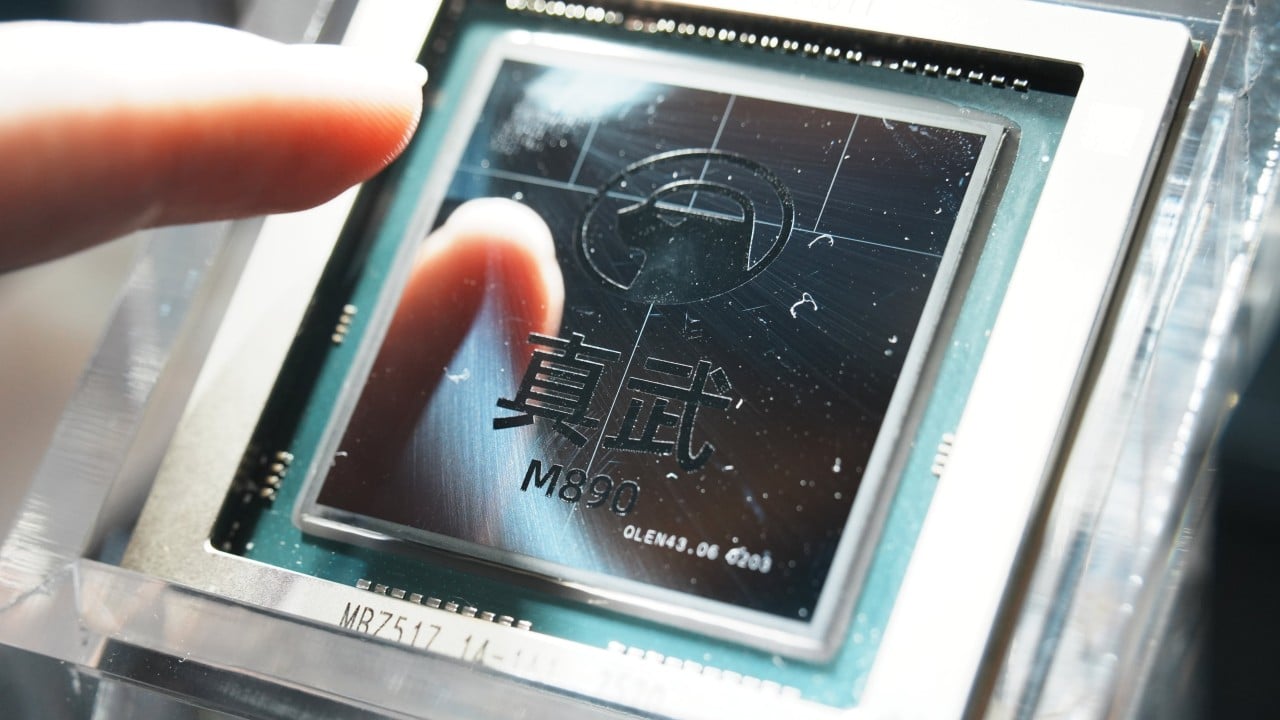
Look at their product lineup over the last few years. You have the Hanguang 800, an AI inference chip that proved Alibaba could handle massive internal cloud workloads without leaning entirely on foreign accelerators. Then came the Yitian 710, a 5-nanometer server processor built on Arm architecture that gave Alibaba Cloud genuine hardware differentiation. And perhaps most importantly for the long term, T-Head went all-in on RISC-V, rolling out the XuanTie processor series that powers everything from edge IoT devices to experimental Linux workstations.
Why does this matter for a Hong Kong listing? Because designing advanced chips burns cash at an alarming rate. Tape-outs at advanced nodes, EDA software licenses, and retaining top verification engineers cost billions before a single commercial wafer generates profit. Inside Alibaba, T-Head always had to compete for capital against Taobao, Tmall, Cainiao logistics, and international commerce.
Spinning T-Head toward an IPO in Hong Kong changes the math completely. It gives the unit direct access to institutional capital, domestic state-backed tech funds, and public equity investors who are hungry for pure-play Chinese semiconductor exposure.
The Geopolitical Reality Behind China's AI Self-Sufficiency Push
You can't separate T-Head's Hong Kong listing plans from Washington's export control regime. Since the U.S. Commerce Department tightened restrictions on high-end GPUs—blocking Nvidia's A100, H100, and even tailored variants like the A800 and H800 from reaching mainland data centers—Chinese hyperscalers hit a wall.
Alibaba Cloud felt that sting immediately. You can build the smartest large language models in the world, like Alibaba's Qwen family, but without compute clusters to train and serve them, your cloud margins collapse.
Beijing's response has been unambiguous. Domestic tech giants have to build, buy, and scale homegrown silicon. Period.
Here's where things get tricky for Alibaba. As long as T-Head sits wholly inside Alibaba Group, selling T-Head chips to rival cloud providers or state-owned telecoms is an uphill battle. Would Tencent Cloud or China Telecom happily hand over their core infrastructure roadmap to a wholly owned subsidiary of their fiercest cloud competitor? Of course not. Nobody wants to fund their rival's R&D while handing them visibility into their own data center capacity.
Taking T-Head public on the Hong Kong Stock Exchange creates structural separation. It transforms T-Head from an internal captive vendor into an independent merchant silicon supplier. Suddenly, other Chinese enterprises, state-affiliated data centers, and AI startups can buy T-Head accelerators and XuanTie RISC-V cores without feeling like they're feeding Alibaba's e-commerce war chest.
The RISC-V Factor Nobody Is Pricing In
If you're evaluating T-Head purely as an Nvidia challenger, you're missing half the story. In the high-end AI training market, Huawei's Ascend series currently holds the pole position inside China, backed by deep hardware-software integration and strong state procurement ties.
T-Head's real asymmetric weapon is RISC-V.
Unlike x86, which is locked down by Intel and AMD, or Arm, which faces licensing uncertainties under shifting export regulations, RISC-V is an open-standard instruction set architecture. Nobody owns it. No single government can easily revoke a license to use the base specification.
T-Head recognized this early. They became one of the most active contributors to the global RISC-V ecosystem, open-sourcing several XuanTie cores and pushing Linux and Android compatibility forward. By listing in Hong Kong, T-Head can pitch itself to global and Asian institutional investors not just as a "China AI backup plan," but as the premier commercial leader in open-source processor architecture. That's a narrative international funds in Hong Kong actually understand and buy into.
Why Hong Kong Instead of Shanghai's STAR Market
You might wonder why T-Head chose Hong Kong over Shanghai's STAR Market, which was specifically built to host China's hard-tech and semiconductor champions. On paper, mainland exchanges often reward chipmakers with sky-high valuation multiples driven by retail enthusiasm and state-guided liquidity.
In practice, listing on the STAR Market comes with serious friction right now.
First, mainland IPO approvals have tightened dramatically. Regulators in Beijing have slowed the pace of new listings to protect secondary market liquidity, creating a massive backlog that can trap companies in regulatory limbo for years. Second, Alibaba already has a primary listing in Hong Kong alongside New York. Its corporate governance, legal teams, and institutional investor base are deeply anchored in Hong Kong's financial ecosystem.
Hong Kong's Chapter 18C listing rules—specifically designed for specialist technology companies that haven't yet hit traditional profit thresholds—offer a much faster, cleaner runway. For a capital-intensive chip unit where R&D expenses routinely dwarf near-term net income, Chapter 18C is practically tailor-made.
Still, Hong Kong brings its own headaches. Valuations there tend to be much more grounded—sometimes brutally so—compared to mainland exchanges. International investors in Hong Kong will scrutinize T-Head's gross margins, customer concentration, and foundry supply risks without the patriotic premium you'd see in Shanghai.
The Hard Truths Investors Need to Watch
Let's be honest about the risks here. Buying into a Chinese fabless chip IPO isn't a guaranteed win just because Beijing wants self-sufficiency. If you're looking at T-Head as an investor, a competitor, or a supply chain analyst, three massive bottlenecks stand right in front of them.
1. Foundry Access Is Still the Chokepoint
T-Head is a fabless designer. They write the RTL code, verify the architecture, and hand off the GDSII files to a foundry to print the actual silicon. They don't own fabs.
When T-Head designed the Yitian 710 at 5nm, they relied on TSMC. Under current U.S. export rules, TSMC cannot manufacture advanced AI chips or cutting-edge processors for mainland Chinese designers without strict licenses that Washington rarely grants. That leaves domestic foundries like SMIC, which face their own equipment bottlenecks—specifically the lack of Extreme Ultraviolet (EUV) lithography machines from ASML.
Can SMIC produce capable chips using multi-patterning Deep Ultraviolet (DUV) lithography? Yes, we've seen it happen. Is it expensive, lower-yielding, and capacity-constrained? Absolutely. Every wafer T-Head gets from a domestic fab is fought over by Huawei, Biren, Moore Threads, and dozens of other domestic players.
2. Software Ecosystems Make or Break AI Chips
Hardware specs on a slide deck mean nothing if developers hate writing code for your silicon. Nvidia's real moat isn't just its tensor cores; it's CUDA. Fifteen years of libraries, compiler optimizations, and developer muscle memory keep AI engineers locked into Nvidia's stack.
T-Head has made solid progress with its Hanguang software stack and compiler tools for Qwen models, especially for inference workloads where latency and cost per token matter most. Training massive foundation models from scratch is a completely different beast. If T-Head wants to win external customers beyond Alibaba Cloud, they have to prove their software stack doesn't require an army of PhDs just to debug a simple distributed training run.
3. Revenue Dependence on Alibaba Cloud
In its initial IPO filings, expect to see a massive chunk of T-Head's revenue coming straight from Alibaba Group. That's normal for a spin-off, but public market investors hate single-customer concentration.
If 70% or 80% of T-Head's silicon goes into Alibaba's own data centers, skeptics will argue it's just an accounting transfer rather than a competitive commercial business. T-Head will have to show real traction with external enterprise buyers, automotive manufacturers using their RISC-V chips, and third-party cloud operators to earn a premium multiple.
How This Reshapes China's Semiconductor Landscape
Alibaba's decision to push T-Head toward a Hong Kong IPO signals the end of an era where Chinese internet giants tried to build closed, proprietary hardware ecosystems entirely in-house. Earlier restructuring efforts at Alibaba—like the aborted spin-off of the entire Cloud Intelligence Group—showed that massive conglomerate breakups are messy and politically sensitive.
Carving out T-Head is smarter and more surgical. It aligns directly with national industrial policy while solving a practical capital allocation problem for Alibaba's management team, Eddie Wu and Joe Tsai. Instead of trying to explain complex silicon R&D amortization to e-commerce analysts, Alibaba lets public tech investors value T-Head on its own merits while keeping a controlling or major strategic stake.
Watch what happens next among Alibaba's peers. Baidu has already spun out its Kunlunxin chip unit through private funding rounds. ByteDance and Tencent have kept their custom silicon efforts mostly internal—focused on video transcoding and inference ASICs—but if T-Head pulls off a strong Hong Kong debut, pressure will mount on every major Chinese tech firm to unlock their own hardware divisions.
What You Should Do With This Information
If you're tracking the semiconductor sector, managing a tech portfolio, or making enterprise infrastructure decisions in Asia, don't just read the headlines and move on. Take three concrete steps right now:
- Scrutinize the prospectus revenue breakdown: When the formal Hong Kong listing documents drop, skip the hype and go straight to the related-party transactions section. Look at the exact percentage of revenue coming from external customers versus Alibaba Cloud over the last three fiscal years.
- Track RISC-V commercial adoption metrics: Watch how many XuanTie cores are shipping into industrial, automotive, and edge AI products. High-margin, high-volume embedded shipments often provide the steady cash flow that funds risky data center AI chip tape-outs.
- Compare foundry commentary across peers: Cross-reference T-Head's risk disclosures on wafer supply and packaging capacity (like CoWoS equivalents) against public filings from SMIC and other listed Chinese fabless firms like Cambricon. That's where you'll spot real supply bottlenecks before they hit quarterly earnings.
Alibaba isn't listing T-Head because the chip war is over. They're doing it because the fight for domestic compute has just entered its most expensive phase, and nobody can afford to fund it alone anymore.