Canada is clamping down on its borders again, and if you feel a sudden wave of deja vu, you aren't alone.
Starting Saturday, May 30, the federal government will enforce a mandatory 21-day isolation period for anyone entering the country who has been to Ebola-affected areas within the previous three weeks. The policy targets travellers coming from the Democratic Republic of Congo (DRC), Uganda, and South Sudan, where a rare strain of Ebola is currently outpacing global response efforts.
But don't confuse this with the sweeping travel bans of yesteryear. You don't need to panic about airport shutdowns, and the risk to the general public isn't suddenly sky-high. Public health officials are explicit that the risk to Canadians remains low.
Instead, this move is a highly calculated, bureaucratic preemptive strike designed to protect the country ahead of a massive summer influx of international visitors. Here is exactly what is happening, why the government is taking this stance, and what it actually means for travelers.
The Reality Behind the 21-Day Isolation Mandate
The new rules, triggered under the Quarantine Act, dictate that all asymptomatic travelers who have visited the DRC, Uganda, or South Sudan in the past 21 days must isolate for three weeks upon arrival. The policy runs until August 29.
If you show up at a Canadian airport with actual symptoms, you aren't going to a self-isolation spot. You will be immediately transferred to a hospital for formal medical assessment.
For those who are asymptomatic but lack a suitable place to spend 21 days in isolation, the government claims it will provide designated locations. Interestingly, federal officials are refusing to disclose where these sites are located, citing safety and security concerns.
This isn't just about a 21-day quarantine, though. The broader strategy includes a major immigration clampdown. The government is executing a 90-day pause on processing final decisions for immigration applications from the DRC, Uganda, and South Sudan. This freeze hits hard across the board, impacting:
- Permanent residence visas
- Temporary resident visas
- Electronic travel authorizations (eTAs)
- Study permits
- Work permits
Immigration officials are adamant that this is a temporary pause rather than an outright ban. If you're already mid-travel or currently inside Canada, your application processing won't be frozen.
The Real Catalyst Nobody Wants to Talk About
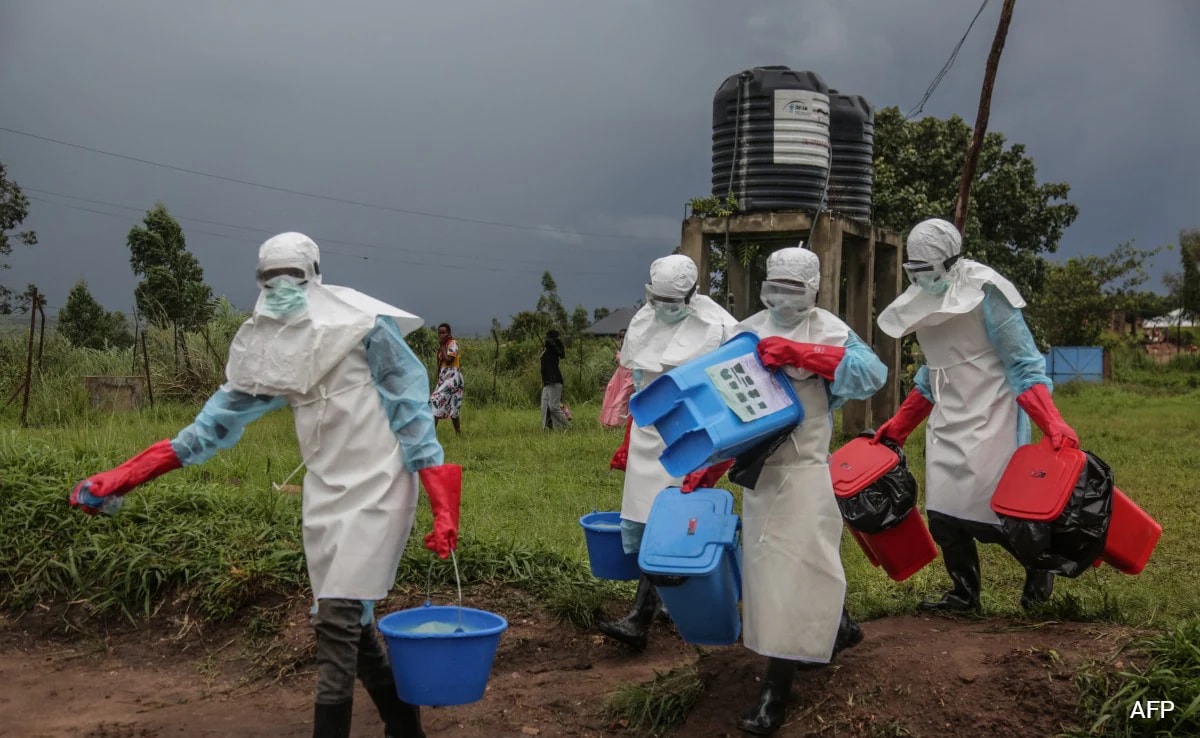
Why the sudden aggression from Ottawa? The World Health Organization (WHO) reported more than 900 suspected cases and over 220 deaths in central Africa, noting that the virus is moving faster than containment efforts.
But there's an elephant in the room that explains the timing of Canada's drastic policy shift. It's the FIFA World Cup.
The mega-tournament kicks off on June 11, with Toronto hosting its first match on June 12. Millions of global travelers are about to converge on North America. Health Minister Majorie Michel openly admitted that the upcoming summer travel surge and the World Cup are elevating the potential transmission risks.
Ottawa is essentially building a legal firewall. On average, about 350 people arrive in Canada from the DRC, Uganda, and South Sudan every week. Roughly 60 percent are Canadian citizens or permanent residents, while 40 percent are foreign nationals. Most of these travelers land in Toronto, Montreal, or Vancouver. By forcing isolation and pausing new visa approvals now, the government expects to drastically curb travel volume from the hot zone before the World Cup crowds overwhelm border screening.
Continental Alignment and the First Test of Bill C-12
Canada isn't acting in a vacuum. The decision closely aligns with aggressive actions taken by its neighbors. The U.S. Centers for Disease Control and Prevention (CDC) previously suspended entry for most foreign travelers from these same three African nations. Mexico swiftly enacted its own travel restrictions too.
While the WHO traditionally discourages blanket travel restrictions because they can drive outbreaks underground and hurt local economies, Canada chose continental uniformity over WHO guidance. Health and immigration officials argued that coordinating with the U.S. and Mexico is vital for continental security, especially since the three nations are co-hosting the World Cup.
This crisis also marks the very first time the federal government is flexing its muscles using new powers under Bill C-12. Passed just months ago in March, this legislation overhauled Canada's immigration laws, giving Ottawa the explicit power to mass-pause or cancel visas during a crisis. We are watching a brand-new legislative tool get field-tested in real-time.
Why This Is Nothing Like the COVID Era
It's easy to look at a 21-day quarantine mandate and spiral into anxieties about 2020-style lockdowns. But epidemiologically, Ebola is a completely different beast than a respiratory virus like COVID-19.
Ebola doesn't travel through the air. You can't catch it because someone coughed two aisles over from you on a plane. Transmission requires direct contact with the bodily fluids of an infected person who is actively showing symptoms. Asymptomatic individuals do not spread the virus.
Canada's top doctor, Dr. Joss Reimer, pointed out that because the virus requires close, prolonged contact with symptomatic patients, the likelihood of a widespread community outbreak in a country with modern sanitation and infection control is incredibly low. There has never been an imported case of Ebola in Canadian history, and there are currently zero cases in North America.
The enhanced screening kiosks already running at major Canadian airports are designed to catch symptomatic individuals immediately. The 21-day isolation period simply acts as a safety net for the incubation period, ensuring that if an exposed person does become sick, they are already isolated from the public.
Navigating the New Rules Safely
If you or a family member have upcoming travel plans involving central Africa, navigating these shifting regulations requires immediate action.
First, expect significant delays at Canadian customs. Enhanced airport screening kiosks are asking targeted questions about travel history. Additional quarantine officers have been deployed to major hubs, meaning your transit time through the airport will take longer than usual.
Second, if you're a foreign national from the DRC, Uganda, or South Sudan hoping to secure a Canadian visa or permit this summer, put those plans on hold. The 90-day processing pause means your application will sit in limbo until late August at the earliest.
Finally, if you're a Canadian citizen returning from the affected region, make your isolation arrangements before you board your flight. While the government says it will provide facilities for those who genuinely have nowhere else to go, relying on an undisclosed federal isolation site should be your absolute last resort. Secure a private space, arrange for grocery deliveries ahead of time, and prepare for a strict three weeks at home.