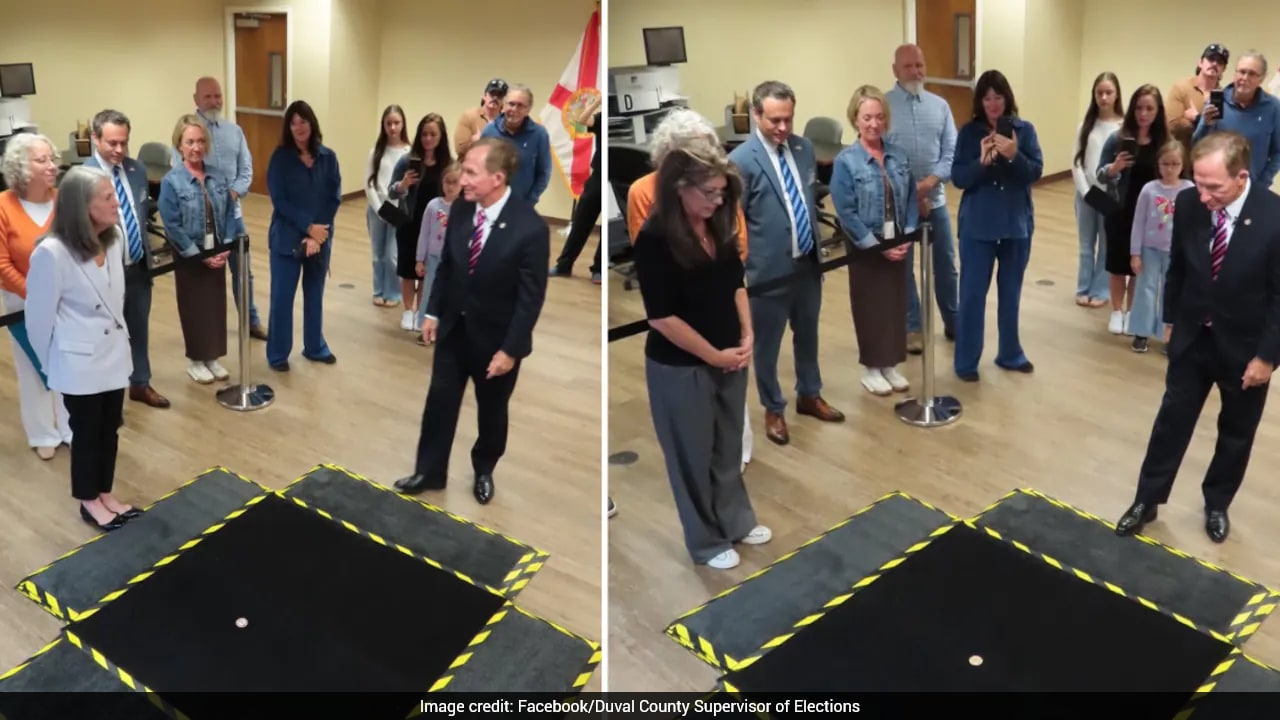
Imagine spending months knocking on doors, raising campaign cash, and stressing over every single ballot, only to watch your entire political future come down to a piece of metal spinning in the air for twenty seconds. That's not a scene from a low-budget political comedy. It actually happened in Florida, where a local candidate won her seat after a dead-even vote forced officials to break the tie with a coin toss.
Most headlines treat this story like a quirky viral novelty. They focus on the spectacle of a Florida woman winning an election via coin flip against her rival in a twenty-second showdown, completely missing the bigger picture. When you look closely at how local democracy operates in the United States, tie-breaking rules aren't some bizarre Florida anomaly. They are written directly into state election statutes across the country because local races are decided by razor-thin margins far more often than most voters realize.
Why Florida Uses a Coin Toss to Decide Tied Elections
People hear "coin toss" and immediately assume local officials just made up a rule on the spot because they wanted to go home early. Nothing could be further from the truth. Under Florida Statutes Section 100.181, drawing lots is the mandatory, legally binding mechanism for resolving a tied vote after a recount confirms an exact deadlock.
Think about the alternative for a second. Running a special runoff election for a city council seat, a neighborhood board, or a local district office costs taxpayers tens of thousands of dollars. It requires printing new ballots, staffing precincts, verifying mail-in votes, and waiting weeks while a seat sits vacant. When turnout in local municipal elections regularly hovers below twenty percent, holding a do-over election just to settle a tie between two candidates with a few hundred votes each makes zero financial or logistical sense.
So state lawmakers built a final backstop into the law. Once every provisional ballot is reviewed, every mail-in signature is cured, and the mandatory machine and manual recounts confirm that both candidates have the exact same number of votes, the canvassing board steps in. Someone pulls out a coin, assigns heads to one candidate and tails to the other, and flips it. Twenty seconds later, the race is officially over.
The Anatomy of a 20-Second Election Showdown
If you've never watched an official canvassing board break a tie, the atmosphere in the room is tense enough to cut with a knife. There's no stadium crowd, no dramatic campaign music, and no cable news pundits breaking down exit polls. You're usually standing inside a fluorescent-lit county supervisor of elections office surrounded by local reporters, a handful of exhausted campaign volunteers, and three canvassing board members who look like they haven't slept in three days.
Here is how the process actually unfolds when a Florida race ends in a tie:
- The initial tally triggers an automatic recount. Under Florida law, any race separated by half a percentage point or less goes straight to a machine recount. If that margin shrinks to a quarter of a percent or less, election workers conduct a manual recount of overvotes and undervotes.
- The canvassing board certifies the dead heat. Once every valid ballot has been scrutinized under strict statutory guidelines, the board formally declares that neither candidate holds a numerical advantage.
- The lot-drawing method is confirmed. While "drawing lots" can technically mean pulling names from a container or drawing straws, Florida canvassing boards almost universally use a coin flip because it's transparent, fast, and easy to capture on local news cameras.
- The flip happens in front of witnesses. A board member holds up the coin, confirms who has heads and who has tails, and tosses it into the air. By the time it hits the table or gets caught, months of campaigning evaporate into a fifty-fifty probability.
In the viral Florida showdown that grabbed national attention, the entire decisive moment took roughly twenty seconds from the announcement of the rules to the declaration of the winner. One candidate walked out as an elected official, and the other walked out wondering which single neighbor stayed home on Election Day.
Why Your Vote Actually Matters in Local Races
We hear the cliché "every vote counts" every two years during presidential cycles, and honestly, most people tune it out. If you live in a safely red or safely blue state, your individual ballot won't swing the Electoral College. That cynicism is understandable at the federal level, yet it becomes completely dangerous when you apply it to local politics.
Local elections routinely come down to single digits. In small municipalities, town commissions, and soil and water conservation districts, a handful of votes separates victory from defeat. When a race ends in a literal tie, every single person who decided to skip voting because they were tired after work directly caused that coin toss.
Look at the math behind local turnout. In many Florida municipal elections, fewer than a thousand people cast ballots. If two candidates finish with 412 votes each, just one extra voter showing up at the precinct before 7:00 PM would have prevented the entire coin-flip spectacle. Even worse, plenty of voters fill out the top of their ballot for governor or senator and leave the local nonpartisan races completely blank—a phenomenon political scientists call ballot roll-off. Those blank lines are literally the reason local candidates end up praying for heads or tails.
Other Times Coin Flips Decided American Politics
Florida gets all the internet jokes whenever something unusual happens at the ballot box, largely because the state's Sunshine Laws make every public proceeding immediately accessible to reporters. Yet Florida isn't even close to being the only state where games of chance decide elections.
Across the United States, more than thirty states use some form of drawing lots to break deadlocked races:
- Virginia House of Delegates (2017): Control of the entire state legislature hung in the balance when Democrat Shelly Simonds and Republican David Yancey tied at 11,608 votes each after a contentious recount dispute. Officials placed both names inside film canisters, dropped them into a ceramic bowl, and pulled Yancey's name out, handing Republicans a 51-49 majority.
- Iowa Democratic Caucuses (2016 and 2020): In precinct-level caucuses where delegate math ended in a tie, precinct chairs repeatedly pulled out quarters and flipped them on gymnasium floors to award state delegate equivalents.
- New Mexico and Texas Municipal Races: Both states explicitly authorize coin tosses or drawing names from a hat when local school board or city council races finish in an exact tie after a canvass.
- North Dakota and Ohio Local Offices: State laws in both jurisdictions direct election boards to determine tied local contests by lot, with numerous documented cases of mayors and township trustees winning their seats via a single coin flip.
The reality is that American democracy relies heavily on random chance whenever voter turnout produces a mathematical stalemate. It feels jarring because we like to believe elections reflect the clear will of the electorate, yet when the electorate splits straight down the middle, a coin is the only completely unbiased arbiter left.
What Happens After a Coin-Toss Victory
Winning an election by a coin toss creates an immediate political headache for the victor. You don't get a traditional mandate when half the voters picked your opponent and a quarter decided the tiebreaker.
First, the losing candidate still retains the right to file an election contest in circuit court under Florida Statutes Section 102.168 if they believe illegal votes were cast or legal votes were improperly rejected. Courts set an extraordinarily high bar for overturning certified results, meaning the coin toss almost always stands, though the legal threat can linger for weeks.
Second, the winner has to govern a deeply divided constituency right out of the gate. Smart local officials who win via tiebreaker immediately reach out to their opponent's supporters, attend neighborhood meetings in precincts they lost, and focus on uncontroversial bread-and-butter issues like road repairs, drainage, and zoning transparency. If you act like you won in a landslide after winning a coin flip, voters will remember it at the next election cycle.
How to Make Sure Your Local Election Never Comes Down to Chance
You don't need to run for office yourself to keep your community's leadership out of the hands of a twenty-second coin toss. A few practical habits before the next local election cycle will give you outsized influence over who runs your city or county:
- Check your sample ballot a week before Election Day. Download your county supervisor of elections sample ballot early so you aren't staring at unfamiliar names for local boards and judicial retention races while standing inside the voting booth.
- Vote all the way down the ballot. Don't stop after the federal or state races. The decisions made by city commissioners, school board members, and local district supervisors affect your property taxes, local infrastructure, and daily life far more directly than anything happening in Washington.
- Verify your mail-in ballot status online. If you vote by mail, use your county's ballot-tracking portal to confirm your signature wasn't flagged for a mismatch. Rejected mail-in ballots are one of the leading causes of razor-thin margins and ties in local races.
- Bring two neighbors to the polls. In a local race decided by a handful of votes, convincing two friends or family members to show up on a Tuesday morning carries more political weight than donating money to a national campaign.
The next time you see a headline about a Florida candidate winning an election in a twenty-second coin toss, don't just laugh at the absurdity of it. Look up when your next municipal election is scheduled, mark it on your calendar, and make sure your town's future isn't decided by pocket change.


