When the final whistle blew in Budapest, the narrative machine immediately started spinning. Paris Saint-Germain had just defeated Arsenal 4-3 on penalties after a grueling, suffocating 1-1 draw at the Puskas Arena. On paper, it looks like the ultimate validation of a project. They became only the second club in the modern Champions League era to retain the trophy.
But if you listen to the critics, they'll tell you this was just a victory for a massive wage bill. They'll say a club with an €837 million revenue stream simply outmuscled a brave Arsenal side.
They're dead wrong.
This final wasn't a showcase of glittering, individual superstar power. Honestly, it was the exact opposite. It was a triumph of absolute tactical stubbornness, a collective refusal to panic, and a fan base that dragged their team through 120 minutes of pure anxiety. If you think this back-to-back European title feels the same as their 5-0 demolition of Inter Milan last year, you weren't watching the same game.
The Myth of the Superstar Savior
For years, the blueprint in Paris was simple. You buy Lionel Messi, you buy Neymar, you keep Kylian Mbappé, and you hope the sheer weight of their talent breaks Europe. It never worked. The pivot away from that model is precisely why Marquinhos was lifting the trophy in Hungary.
By replacing individual egos with ultra-talented system players like Khvicha Kvaratskhelia and Désiré Doué, Luis Enrique built a machine that doesn't break when things go sideways.
And things went sideways incredibly fast.
In the sixth minute, a cruel ricochet near the halfway line caught the Parisian defense flat-footed. Kai Havertz pounced, advanced on goal, and rifled a brilliant finish into the back of the net. Suddenly, Mikel Arteta's Arsenal had exactly what they wanted. A 1-0 lead and permission to park the bus.
What followed was a masterclass in defensive suffocating. Arsenal sat incredibly deep. They comfortable soaked up everything. William Saliba and Gabriel Magalhães looked entirely unbreakable in the heart of the Gunners' defense.
Look at the possession metric. PSG ended the night with an astounding 75.3% possession. According to Opta, that is the highest ever recorded in a Champions League final since records began in 2004. Arsenal was left with just 24.7%.
Champions League Final Possession Breakdown
===========================================
Paris Saint-Germain: 75.3%
Arsenal:             24.7%
But for the entire first half, that possession was completely empty. It was sideways passing. It was sideways movement. It was a team looking entirely short of ideas on a hot Budapest evening. In the old days, the superstars would have started throwing their hands up in frustration. The team would have splintered.
Instead, the modern PSG just kept moving the ball. They kept believing in the structure.
How the Final Was Actually Swung
The turning point didn't come from a moment of magical individual brilliance. It came from relentless, systematic pressure on the flanks. Around the hour mark, Luis Enrique's side started tilting the pitch.
A clever, quick-fire one-two combination on the left wing finally unpicked the lock. Kvaratskhelia, a constant menace, drove into the penalty area and forced a clumsy challenge from Cristhian Mosquera. Referee Daniel Siebert didn't hesitate. Penalty.
The pressure on Ousmane Dembélé in that moment was unimaginable. Step up, look at David Raya, and realize that the entire season hinges on a single kick. The Ballon d'Or holder didn't blink. He sent Raya the wrong way, burying a low, precise strike into the left corner.
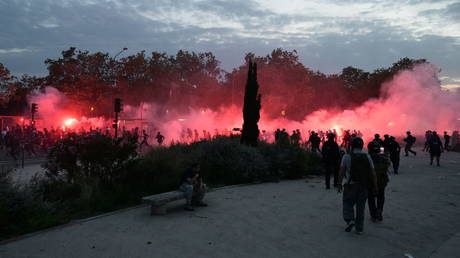
Red flares ignited in the PSG end. It wasn't just celebration; it was a massive, collective release of tension.
PSG had chances to kill the match in normal time. Kvaratskhelia rattled the post in the 77th minute after a devastating breakaway. Right at the death of regulation, substitute Bradley Barcola found himself with a golden opportunity but dragged his shot wide.
When the game crawled into extra time—the first Champions League final to do so in a decade—the physical toll became obvious. Players were cramping. The passing became heavier. Arsenal, despite chasing shadows for two hours, refused to give an inch.
The Penalty Drama and the Technical Reality
People think penalty shootouts are a lottery. They aren't. They are a test of psychological endurance, and Arsenal became the first English club in history to lose a European Cup or Champions League final shootout to a foreign opponent.
It started poorly for the Gunners when Eberechi Eze missed his spot-kick. But just when Paris thought they had the upper hand, David Raya produced a spectacular save to deny Nuno Mendes. The tension inside the Puskas Arena was thick enough to cut with a knife.
Lucas Beraldo stepped up and coolly dispatched PSG's fifth penalty. That put all the weight of the world onto Gabriel Magalhães. The Brazilian defender, who had been a titan for 120 minutes, ran up and fired his strike completely over the crossbar.
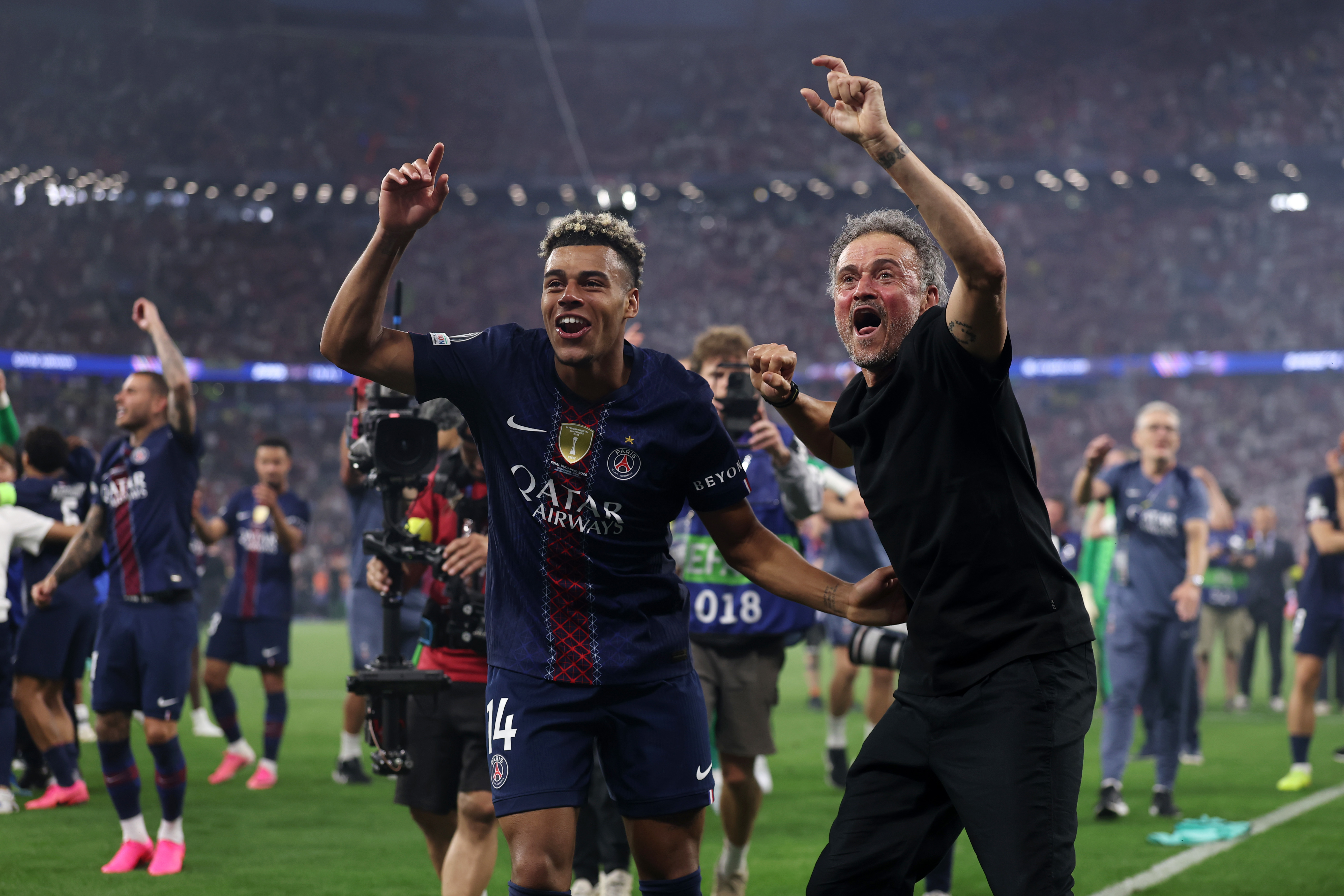
Game over. Back-to-back champions.
With this victory, Luis Enrique joins an incredibly elite group. He is now tied for the second-most European Cup titles in history, sitting alongside Bob Paisley, Zinedine Zidane, and Pep Guardiola with three trophies. More importantly, he achieved the back-to-back feat that Guardiola could never quite manage at Barcelona or Manchester City.
The Long-Term Play for Paris
So, where does this leave the club? This win completely changes the financial and cultural landscape for PSG. French television rights revenues have taken a massive hit recently, but this European campaign will bring in roughly €146 million from UEFA alone.
Football finance experts note that PSG has done a brilliant job of transforming its brand into something cultural, focusing on lifestyle, fashion, and making Paris feel like the capital of cool. Winning consecutive Champions Leagues validates that strategy on the pitch.
If you want to understand why they won, you have to look at the fans who flooded Budapest. The Collectif Ultras Paris and thousands of supporters didn't stop singing when Havertz scored. They didn't turn on the team when the first-half possession yielded zero shots on target. The players felt that stability.
If you're looking to replicate this kind of success in sports management or team building, the blueprint is clear:
- Stop chasing individual saviors who don't fit your tactical system.
- Build a culture where a 1-0 deficit in a major final doesn't spark a structural panic.
- Trust the data, keep the ball, and wear the opposition down until they make a mistake.
Paris Saint-Germain is no longer an expensive experiment. They are the benchmark of European football.