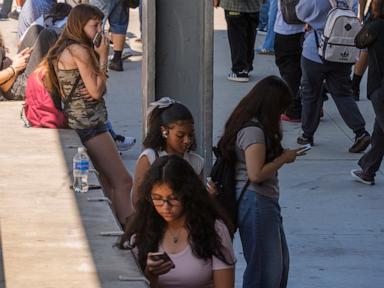
Locking phones in magnetic pouches won't magically turn a struggling school into a high-performing one.
Every parent and school board member wants a silver bullet right now. Test scores dropped after the pandemic, teenage anxiety is spiking, and teachers are burning out at record rates. So districts across the country spent millions on lockable Yondr pouches and passed sweeping bell-to-bell bans, expecting grades to shoot up overnight. They didn't. When researchers actually looked at the data on school phone bans and student learning, the academic gains turned out to be surprisingly modest.
Honestly, that makes total sense if you've spent five minutes inside a modern classroom.
The Real Data Behind School Phone Bans
Let's look at what the research actually says instead of what politicians claim at school board meetings.
One of the most cited studies comes from the London School of Economics, where researchers Richard Murphy and Louis-Philippe Beland examined high schools across four English cities. After schools banned mobile phones, test scores improved by about 6.4% of a standard deviation. That's roughly equivalent to adding an extra hour of instruction per week, or five extra days to the school year. Good news, right? Sure. Except almost all of those gains went to the lowest-achieving students. High-achieving kids saw virtually zero change in their grades.
More recent studies tell an even murkier story. A large-scale Norwegian study by Sara Abrahamsson tracked middle schools that implemented strict smartphone bans. She found notable drops in bullying and fewer doctor visits for psychological symptoms among girls, alongside modest GPA bumps. Yet other researchers, including teams looking at data from Sweden and parts of the United States, have found almost no measurable impact on standardized test scores at all.
Why the gap between public hype and actual results? Because removing a distraction isn't the same thing as teaching well.
Why Taking Away Phones Doesn't Automatically Raise Grades
If you take a phone out of a teenager's hand during fifth-period algebra, they don't suddenly fall in love with quadratic equations. They just stare at the ceiling, doodle on their notebook, or mess around on their school-issued Chromebook.
That last part is the elephant in every single classroom. Most school districts handed out laptops or tablets to every student years ago. You can lock every iPhone in a steel vault at 8:00 AM, and kids will still spend half the class playing browser games, messaging friends through shared Google Docs, or watching YouTube tutorials on their school laptops. Without strong classroom management and decent web filtering, a phone ban just shifts the screen from a five-inch display to an eleven-inch one.
There's also the curriculum problem. Phones didn't write boring lesson plans. They didn't cause chronic teacher shortages or overcrowded classrooms with thirty-five kids crammed into twenty-eight desks. When a district treats a phone policy as its primary academic intervention, it's basically putting a bandage on a broken leg.
Where Phone Bans Actually Make a Huge Difference
Even if test scores only budge slightly, calling school phone bans a failure misses the point completely. Walk into a cafeteria where phones are banned, and you'll hear something bizarre. Noise. Actual human voices. Kids talking, laughing, arguing, and making terrible jokes face-to-face instead of sitting six inches apart in dead silence while scrolling TikTok.
Teachers feel the difference immediately. Before strict bans, managing phones ate up huge chunks of instructional time. Teachers had to play constant police officer—asking kids to put devices away, arguing over whether a parent was texting them, writing referrals, and losing their train of thought every three minutes. When the rule is absolute and enforced by the administration rather than individual teachers, that daily friction evaporates.
Here is where the real wins show up:
- Faster recovery from distractions. Research from the University of Texas at Austin shows that even having a phone sitting face-down on your desk reduces available cognitive capacity. Your brain spends energy actively ignoring it. Getting devices completely out of sight frees up working memory.
- Less hallway drama. A massive percentage of high school fights and bullying incidents start on Snapchat or Instagram during passing periods, get filmed on phones, and spread across the building before the next bell rings. Cutting off daytime access starves that cycle of oxygen.
- Better sleep habits. Some students report feeling genuine relief when their phones are locked up. They don't have to keep up with group chats or worry about someone taking an unflattering photo of them while they're trying to eat lunch.
The Enforcement Trap Most Schools Fall Into
If your local district is thinking about banning phones—or already has one that isn't working—the problem almost always comes down to enforcement. Half-measures fail every single time.
Policies that tell students to "keep phones in your backpack on silent" are practically useless. Every kid knows their phone is buzzing in their bag, and teachers end up spending half the period patrolling rows of desks. Worse, strict teachers enforce the rule while relaxed teachers ignore it, which makes students resent the teachers who actually follow district policy.
The schools seeing real cultural shifts follow three non-negotiable rules:
- Bell-to-bell means bell-to-bell. Allowing phones during lunch or between classes guarantees kids will sneak them into classrooms afterward. It also ruins the social benefits during unstructured time.
- Off the body entirely. Whether it's a locked pouch, a classroom caddy, or a locker requirement, the device cannot stay in a pocket. Physical separation is what stops the constant urge to check notifications.
- Administrators handle confiscations. Teachers should never be stuck arguing with a defiant teenager over property. If a phone comes out, an administrator picks it up, logs it, and deals with the parent at the end of the day.
What Parents and School Boards Need to Do Next
Stop expecting a phone ban to fix reading comprehension scores on its own. If you're a parent pushing for a ban at your kid's school, keep pushing—just push for the right reasons. Frame it around mental health, teacher retention, and basic classroom sanity rather than promising miraculous jumps in standardized testing.
If you're an administrator or school board member rolling out a new policy this year, pair the ban with actual instructional support. Lock down the browser extensions and unblocked game sites on school Chromebooks at the exact same time you lock up the phones. Train teachers on how to use the newly reclaimed classroom minutes for active discussion and hands-on work instead of passive worksheets. And give parents a clear, reliable front-office phone line so they stop texting their kids in the middle of math class just to ask what they want for dinner.
Take the phones out of the room, fix the laptop distractions next, and let teachers get back to doing their actual jobs.


