Everyone is celebrating the spectacle, and almost everyone is missing the trap.
When Ukrainian President Volodymyr Zelenskyy announced that seven domestically built sea drones had struck and sunk the Russian corvette Merkury inside Libya's Benghazi naval base, the headlines wrote themselves. A warship commissioned in 2023, one of Moscow's newest Black Sea Fleet vessels, blown up roughly 2,400 kilometers away from the front lines in Ukraine. Along with a destroyed Ka-27 combat helicopter and a hit on the sanctioned weapons-transport vessel MV Angara, Kyiv delivered a massive psychological blow to the Kremlin.
It looks like pure tactical brilliance. Look closer at the Mediterranean chessboard, though, and a completely different picture emerges.
While wire reports focus on the explosions and the distance traveled, the real story isn't just about Ukraine's expanding reach. It's about a severe diplomatic rift opening with European allies, a thorny violation of maritime neutrality laws, and a proxy war quietly igniting across a divided North African state. If you only read the surface-level coverage of the Benghazi raid, you're missing the blowback that's already hitting Kyiv.
What Actually Happened at the Benghazi Naval Base
Let's separate verified facts from wartime spin, because the competing claims out of Kyiv, Benghazi, and Moscow tell very different stories about the physical damage.
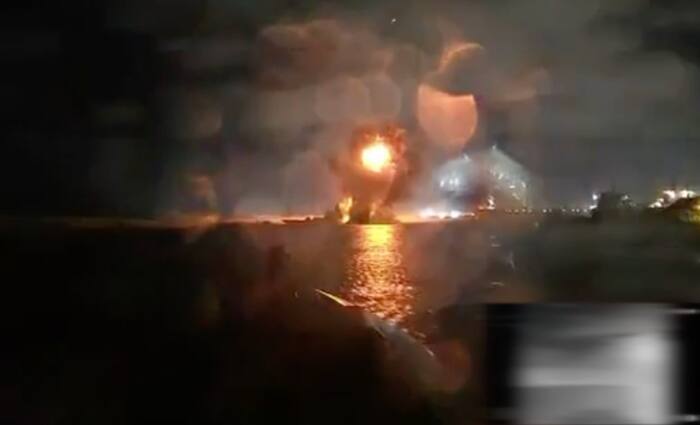
On Sunday, November 22, 2026, operatives from the Security Service of Ukraine (SBU) and Ukrainian defense forces launched seven explosive-laden sea drones against Russian maritime assets in eastern Libya. Zelenskyy posted dramatic video footage on social media showing unmanned surface vessels slamming into the side of the Merkury, declaring the ship sunk and calling the mission "exemplary". According to Kyiv's account, the operation also wiped out a Ka-27 military helicopter and struck the MV Angara, a dry cargo ship long accused by Western intelligence of ferrying weapons along Moscow's supply routes between Russia, Syria, and Libya.
Officials on the ground in eastern Libya tell a slightly more complicated version of events.
Anonymous military sources tied to General Khalifa Haftar's self-styled Libyan National Army (LNA) told The Associated Press that their defenses actually intercepted at least four of the incoming drones, while two got through to strike the corvette. Rather than confirming the ship sank completely to the harbor floor, eastern Libyan officials insisted the Merkury was heavily damaged, though maritime risk intelligence firm Ambrey noted that secondary blasts at the base likely came from ammunition detonating on board. Even worse for local optics, at least 10 people—including both Russian and Libyan nationals—were wounded in the assault, and two Libyan naval officers reportedly died from their injuries.
Hours later, chaos spilled into the shipping lanes just outside the harbor when a separate sea drone struck a Maltese-flagged commercial vessel sailing off Benghazi, according to the Libyan coast guard. Moscow, predictably, kept quiet. Kremlin spokesman Dmitry Peskov refused to comment directly, leaving the Defense Ministry to stay silent rather than admit another high-profile naval humiliation.
How Ukraine Pulled Off a Strike 1,500 Miles From Home
You don't simply steer a small, explosive-filled drone boat from Odesa through the Bosphorus Strait, across the Aegean, and all the way to North Africa without someone noticing. Turkey closed the straits to belligerent warships years ago, and a small unmanned craft lacks the fuel range and satellite-link stability to make a 1,500-mile solo run from the Black Sea.
So how did seven Ukrainian sea drones show up in Benghazi?
There are two competing explanations floating around defense circles, and both point to a covert footprint that stretches far beyond Eastern Europe:
- The "mother ship" theory: Analysts at Just Security noted SBU indications that the drones were transported into the central Mediterranean and launched from a disguised commercial or auxiliary mother ship operating off the coast.
- The western Libya launchpad: Two Libyan officials briefed on the initial investigation told AP that the drones were actually launched from a base operated by Ukrainian drone specialists inside western Libya.
Honestly, that second detail is huge, and most casual readers gloss right over it. Libya has been split for years between the U.N.-recognized Government of National Unity (GNU) in Tripoli and Haftar's eastern administration in Benghazi. Earlier in 2026, Libyan officials revealed that Ukrainian drone operators had been operating out of military facilities in western Libya—specifically around Misrata, Tripoli, and Zawiya—under a covert arrangement backed by Western partners. Those same teams allegedly used Libyan territory in March 2026 to hit a Russian tanker in the Mediterranean.
By turning Libya's internal east-west divide into an extension of the Russo-Ukrainian war, Kyiv found a way to hunt Russian logistics where Moscow thought it was untouchable. The Merkury wasn't just taking a scenic cruise. While eastern Libyan authorities claimed the corvette had simply stopped to refuel and take on supplies under a bilateral maritime deal, other intelligence accounts indicate it had arrived days earlier escorting Russian vessels delivering weapons to Haftar's forces.
Why Rome Is Furious With Kyiv
Here is where the tactical victory turns into a strategic headache.
On Friday following the raid, Italian Prime Minister Giorgia Meloni got on the phone with Zelenskyy—and the diplomatic fallout was immediate. Rome isn't just an observer in the central Mediterranean; Libya sits directly across the water from Sicily, and Italy has spent decades managing migration flows, energy pipelines, and fragile ceasefires across the Libyan coast.
Italy hadn't been warned. Not a heads-up, not a backchannel whisper.
In a rare public admission of friction with a key European backer, Zelenskyy posted on X after the call that he had confirmed to Meloni that the Benghazi operation was carried out "without prior coordination with our European partners". Rome sharply criticized the strike and warned Kyiv against dragging the conflict with Moscow into the Mediterranean. Think about what happens when stray sea drones start hitting Maltese-flagged merchant vessels off the Libyan coast hours after a raid. Commercial shipping insurance spikes, European naval patrols face new asymmetric threats, and fragile political compromises in North Africa start unraveling.
Zelenskyy had to promise Meloni that Ukrainian authorities would improve information-sharing and maintain "direct, regular, and effective communication" moving forward. That's polite diplomatic speak for don't ever blindside us in our own backyard again.
The International Law Problem Nobody Wants to Talk About
If you want to understand why Western diplomats are nervous behind closed doors, look at the legal mess surrounding the Benghazi harbor.
Just one day before the strike, British Defense Secretary Wes Streeting visited Kyiv and compared Zelenskyy to Winston Churchill. As Politico columnist Jamie Dettmer pointed out, there is a sharp irony in that timing. During World War II, Churchill famously refused to let the Royal Navy attack the damaged German cruiser Admiral Graf Spee while it sat docked in the neutral port of Montevideo, Uruguay, respecting the strict boundaries of maritime neutrality.
Ukraine took the exact opposite path in Benghazi.
Under customary international law—largely reflected in the 1907 Hague Convention XIII—belligerent states are strictly forbidden from committing acts of hostility inside neutral ports or territorial waters. Legal scholars writing for Just Security and Politico wasted no time flagging the problem:
- Neutrality rules still apply: Even though Libya isn't a formal party to the 1907 convention, major naval warfare manuals treat the ban on attacking enemy ships inside a neutral harbor as binding customary law.
- Collateral casualties complicate self-defense: Kyiv framed the operation as legitimate self-defense against Russian military targets, arguing that Moscow's fleet has no safe haven. Yet killing Libyan naval personnel inside a Libyan port makes it much harder to claim the strike stayed cleanly confined to Russian forces.
- Precedent cuts both ways: Ukraine relies heavily on international law to rally global support against Russian aggression and war crimes. Bending maritime neutrality rules gives Moscow—and skeptical governments in the Global South—fresh ammunition to accuse Kyiv of ignoring international norms when convenient.
Eastern Libya's administration immediately demanded a United Nations investigation into the attack. While Haftar's Russia-aligned authorities carry limited diplomatic weight at the U.N. compared to Tripoli's government, the legal precedent itself has rattled international lawyers across Washington and Brussels.
What This Means for Global Shipping and the War's Next Phase
Combine the Benghazi strike with the mysterious drone attack on a Kaliningrad-bound Russian cargo ship in the Gulf of Finland just one day earlier, and a clear pattern locks into place. Ukraine is no longer fighting a regional war contained to Eastern Europe and the Black Sea. Kyiv is systematically hunting Russia's shadow fleet, weapons smugglers, and naval logistics from the Baltic to North Africa.
That strategy makes complete military sense for an outnumbered defender trying to bleed Moscow's war economy and disrupt arms pipelines to Africa. Every Russian warship forced to hide in port or divert escort resources is one less platform launching cruise missiles at Ukrainian cities—a reality underscored the very same week when Russian strikes killed civilians in an apartment block near Kyiv and a hospital in Zaporizhzhia.
Still, expanding a maritime drone war into busy international waters carries real risks you shouldn't ignore. When low-cost unmanned surface vessels operate thousands of miles from active war zones without allied coordination, miscalculation becomes almost inevitable. Commercial ships get misidentified, local militias get pulled into proxy clashes, and key European partners start questioning whether Kyiv's tactical audacity outpaces its strategic discipline.
If you're tracking how the Russia-Ukraine war evolves from here, stop looking exclusively at trench lines in the Donbas. Watch maritime insurance premiums in the central Mediterranean, track whether Rome and Brussels tighten oversight on Western-backed intelligence operations in Tripoli, and pay close attention to how Russia reroutes its African supply lines now that Benghazi is no longer a safe harbor.