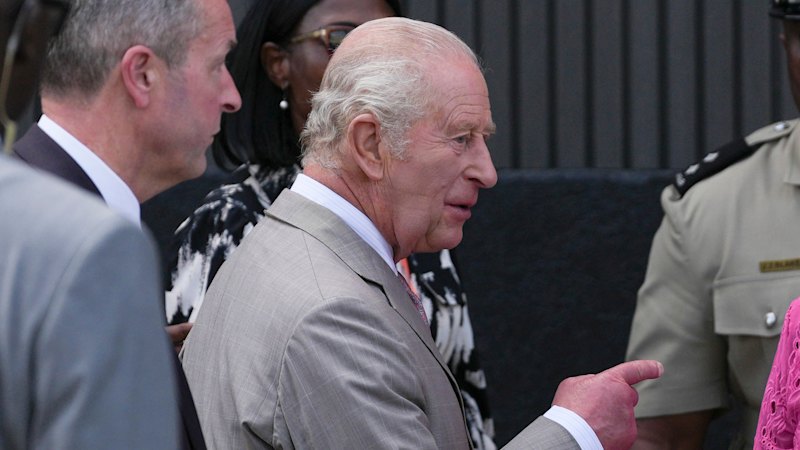
Saying something "fills my heart with horror" sounds heavy. Coming from a British monarch, it sounds historic. Yet when King Charles III uttered those exact words about the transatlantic slave trade during a June 2022 Commonwealth Heads of Government Meeting in Kigali, Rwanda, the reaction across the Caribbean and Britain wasn't uniform applause. It was frustration.
Why? Because sorrow isn't a policy.
If you've followed the royal family's shifting language around the British Empire over the last few years, you already know the pattern. Every few months, a senior royal expresses "profound sorrow" or "deep regret" during an overseas tour. Headlines flare up for forty-eight hours. Then nothing actually changes on the ground.
Let's look closely at what King Charles actually said, what the British monarchy's historical ties to slavery look like in the archives, and why the gap between royal regret and formal apologies keeps widening.
What King Charles Actually Said in Kigali
Back in June 2022, months before Queen Elizabeth II passed away, then-Prince Charles stood before leaders of the Commonwealth in Rwanda. He didn't dodge the elephant in the room. He explicitly acknowledged that the roots of the modern Commonwealth association run straight through one of the darkest periods of human history.
"I cannot describe the depths of my personal sorrow at the suffering of so many, as I continue to deepen my own understanding of slavery's enduring impact," he told the room. He went on to say that the forced transportation of millions of people across the Atlantic "fills my heart with horror."
That phrasing mattered. Previous royal statements had been colder, heavily filtered through palace lawyers who treat liability like radioactive waste. By calling it a personal horror, Charles stepped slightly outside the standard Buckingham Palace script. He also encouraged Commonwealth nations to have open conversations about their shared past, even acknowledging that some countries were actively considering dropping the British monarch as their head of state.
Barbados had already done exactly that in November 2021. Charles attended the ceremony in Bridgetown where Dame Sandra Mason was sworn in as the country's first president, watching the Royal Standard come down while still praising the island's resilience.
Yet in Kigali, one word remained completely absent from his speech. Apology.
Why Sorrow Isn't an Apology
You might think arguing over "sorrow" versus "apology" is just diplomatic hair-splitting. It isn't. In international law and Commonwealth politics, the difference between expressing sorrow and issuing a formal apology is measured in billions of dollars and centuries of accountability.
When a head of state expresses sorrow, they're stating an emotional reaction to a tragedy. Anyone can feel sad about an earthquake or a historical atrocity. An apology, by contrast, admits institutional responsibility. Once the Crown formally apologizes for state-sanctioned chattel slavery, the door swings wide open for formal reparations claims, debt restructuring, and legal restitution.
Caribbean leaders know this. British government lawyers know this too.
Under the UK's constitutional monarchy, the King doesn't freelance on foreign policy or state apologies. Every major public address touching on historical accountability is vetted by Downing Street and the Foreign, Commonwealth and Development Office. When UK Prime Ministers—from Tony Blair to Rishi Sunak and Keir Starmer—have repeatedly rejected calls for reparations or formal apologies, the monarch's hands are tied by constitutional convention.
So Charles walks a tightrope. He signals personal empathy to keep the 56-nation Commonwealth from fracturing, while stopping just short of anything that commits the British government to financial liability.
The Royal Family's Direct Ties to the Slave Trade
Part of the reason King Charles's words hit a nerve is that the British monarchy wasn't a passive bystander during the transatlantic slave trade. The Crown was an active investor, promoter, and beneficiary.
In April 2023, The Guardian published findings from an archival document uncovered by historian Dr. Brooke Newman of Virginia Commonwealth University. The 1689 document showed the transfer of £1,000 worth of shares in the Royal African Company from Edward Colston—the notorious Bristol slave trader—directly to King William III.
Let's put that into historical context:
- 1660: King Charles II and his brother, the Duke of York (later King James II), helped establish the Company of Royal Adventurers Trading into Africa.
- 1672: The company was restructured and granted a royal charter as the Royal African Company, holding a legal monopoly over English trade along the West African coast.
- 1672 to 1731: According to historical estimates from the Trans-Atlantic Slave Trade Database and researchers studying the company's ledgers, the Royal African Company transported more enslaved Africans to the Americas than any other single institution in the history of the transatlantic trade—roughly 150,000 people, with tens of thousands dying during the Middle Passage.
- Branding: Enslaved people captured by the company were literally branded on the chest with the letters "DY" for the Duke of York.
This isn't fringe theory. It's documented in the UK National Archives.
Following the 2023 revelations, Buckingham Palace did something unprecedented. A spokesperson confirmed that King Charles takes the issue "profoundly seriously" and announced that the Royal Household was supporting an independent research project—co-sponsored by Historic Royal Palaces and the University of Manchester—to examine the monarchy's historical links to slavery during the 17th and 18th centuries. Charles also granted researchers full access to the Royal Collection and the Royal Archives at Windsor Castle.
The findings of that research project are expected to be published in 2026, making this entire conversation far from over.
How Other Royal Statements Compare
Charles isn't the only member of the Windsor family who has tried—and sometimes stumbled—to address this history. Watching the public missteps of other royals helps explain why Charles's Kigali speech received mixed reviews.
Prince William's 2022 Caribbean Tour
Three months before Charles spoke in Rwanda, Prince William and Catherine, Princess of Wales, embarked on a week-long tour of Belize, Jamaica, and the Bahamas to mark Queen Elizabeth II's Platinum Jubilee. It was a public relations disaster.
In Kingston, Jamaica, protesters gathered outside the British High Commission demanding an apology and reparations. During a state dinner hosted by Jamaica's Governor-General, William echoed his father's earlier language from Barbados, stating that slavery was "abhorrent" and "should never have happened," while expressing his "profound sorrow."
Again, no apology. Worse, the optics of the tour—William and Kate shaking hands with Jamaican children through a wire-link fence in Trench Town, and riding in the back of an open-top Land Rover used by Queen Elizabeth in the 1950s—looked tone-deaf to millions watching around the world. Jamaican Prime Minister Andrew Holness stood right next to William on camera and bluntly told him that Jamaica was "moving on" and intended to become an independent republic.
Prince Edward in the Caribbean
In April 2022, Prince Edward and Sophie, Countess of Wessex, faced similar pushback during visits to Antigua and Barbuda, Saint Lucia, and Saint Vincent and the Grenadines. Antigua and Barbuda's Prime Minister, Gaston Browne, urged the royal couple to use their influence to push for "reparatory justice" rather than relying on polite diplomatic phrasing.
The pattern is obvious. Whenever a royal visits the Caribbean, local leaders use the cameras to demand tangible action, and the palace responds with carefully calibrated expressions of personal sadness.
What Caribbean Leaders Are Actually Asking For
If you only read tabloid headlines, you might assume the reparations debate is just about the King writing a giant personal check. That's a massive oversimplification.
The CARICOM Reparations Commission (CRC), established by Caribbean Community governments in 2013, laid out a specific Ten-Point Action Plan. It isn't a vague wish list. It's a structured framework aimed at former European colonial powers, including the United Kingdom, France, Spain, the Netherlands, and Portugal.
Here's what's actually on that list:
- A full formal apology—not just expressions of regret or sorrow.
- Repatriation programs for descendants of enslaved Africans who wish to resettle in Africa.
- Indigenous peoples development programs to address the near-extermination of native Caribbean populations.
- Cultural institutions such as museums and research centers in the Caribbean, since most historical artifacts are currently held in European institutions.
- Public health crisis intervention, targeting high rates of hypertension and chronic illnesses linked to generational poverty and colonial-era dietary shifts.
- Illiteracy eradication through direct educational investment.
- African knowledge programs to rebuild cultural and historical ties severed by the slave trade.
- Psychological rehabilitation acknowledging generational trauma.
- Technology transfer to help developing Caribbean economies modernize.
- Debt cancellation, addressing the crippling national debts many Caribbean nations took on immediately after independence to build basic infrastructure that colonial powers never funded.
Notice how practical most of those points are. Debt relief, public health funding, and educational infrastructure aren't radical fantasies. They're standard tools of international development—except CARICOM insists they be framed as a moral and historical obligation rather than charity.
The Counterarguments You'll Hear in Britain
To understand why King Charles hasn't gone further, you also have to look at the political reality inside the United Kingdom. Public opinion in Britain is deeply divided on royal apologies and reparations.
Critics of formal apologies and financial reparations usually raise three main points:
- Generational distance: Many British taxpayers argue that living citizens shouldn't be held financially responsible for crimes committed two or three hundred years ago by aristocratic elites and private trading companies.
- Britain's abolitionist role: Defenders of British history frequently point to the Abolition of the Slave Trade Act of 1807, the Slavery Abolition Act of 1833, and the Royal Navy's West Africa Squadron, which intercepted slave ships in the 19th century. (Critics quickly counter that Britain didn't compensate the enslaved—instead, the British government borrowed £20 million in 1833 to compensate slave owners for their lost "property," a debt British taxpayers only finished paying off in 2015.)
- Constitutional neutrality: Constitutional experts warn that if King Charles makes a unilateral political statement on reparations without government backing, he violates the core rule of modern British monarchy—staying strictly above partisan politics.
Honestly, both sides have a point about the King's constitutional limits. Charles literally cannot commit the UK Treasury to paying reparations. Only Parliament can do that.
What Charles can control, however, is his own private estate and the transparency of the Crown's archives.
What the King Can Actually Do Without Parliament
People often confuse the British government's money with the royal family's private wealth. They're separate.
King Charles personally controls the Duchy of Lancaster, a private portfolio of land, property, and financial assets held in trust for the Sovereign that generated over £27 million in net surplus in the 2023–2024 financial year alone. Prince William controls the Duchy of Cornwall, which brings in roughly £23 million annually.
Because these estates are private rather than taxpayer-funded Sovereign Grant money, the King has far more freedom over how those funds are used and how the monarchy's own history is handled. Several concrete steps sit well within his authority right now:
- Full publication of the University of Manchester study: Releasing the complete, unredacted findings of the Royal Archives slavery research—without palace PR sanitizing the conclusions—will test whether Buckingham Palace is serious about transparency.
- Direct philanthropy from Duchy revenues: Other British institutions with historical ties to slavery—including the Church of England (which pledged £100 million toward a healing and investment fund after uncovering links to Queen Anne's Bounty) and the Guardian newspaper's Scott Trust—have already committed private funds to descendant communities without waiting for Parliament.
- Educational fellowships and museum loans: Returning or loaning colonial-era artifacts held in the Royal Collection to Caribbean museums, alongside funding scholarships for Caribbean historians to access Windsor's archives, requires zero parliamentary approval.
How to Follow This Story Without Falling for Clickbait
Whenever a royal comment on slavery goes viral, social media turns into a shouting match between people claiming the King just admitted guilt for everything and people claiming he's bowing to "woke" pressure. Both takes miss the point.
If you want to evaluate what actually happens next with King Charles and the British monarchy's colonial reckoning, watch three specific indicators rather than soundbites:
First, pay attention to exact vocabulary in official speeches. "Sorrow" and "regret" mean the palace is maintaining its legal firewall. The first time a British monarch uses the word "apologize" or "atonement," you'll know Downing Street's legal posture has fundamentally shifted.
Second, track the University of Manchester and Historic Royal Palaces research report. Look at whether the report quantifies the financial gains the Crown received from the Royal African Company and South Sea Company, and whether Buckingham Palace responds with concrete funding rather than another press statement.
Third, watch Commonwealth republic referendums in countries like Jamaica, Belize, and Antigua and Barbuda. Every time a Caribbean nation votes to remove the British monarch as head of state, the pressure on Buckingham Palace to move beyond expressions of personal sorrow grows sharper. Words opened this conversation in Kigali, but actions—or the continued lack of them—will decide whether the Crown keeps its role across the Commonwealth.