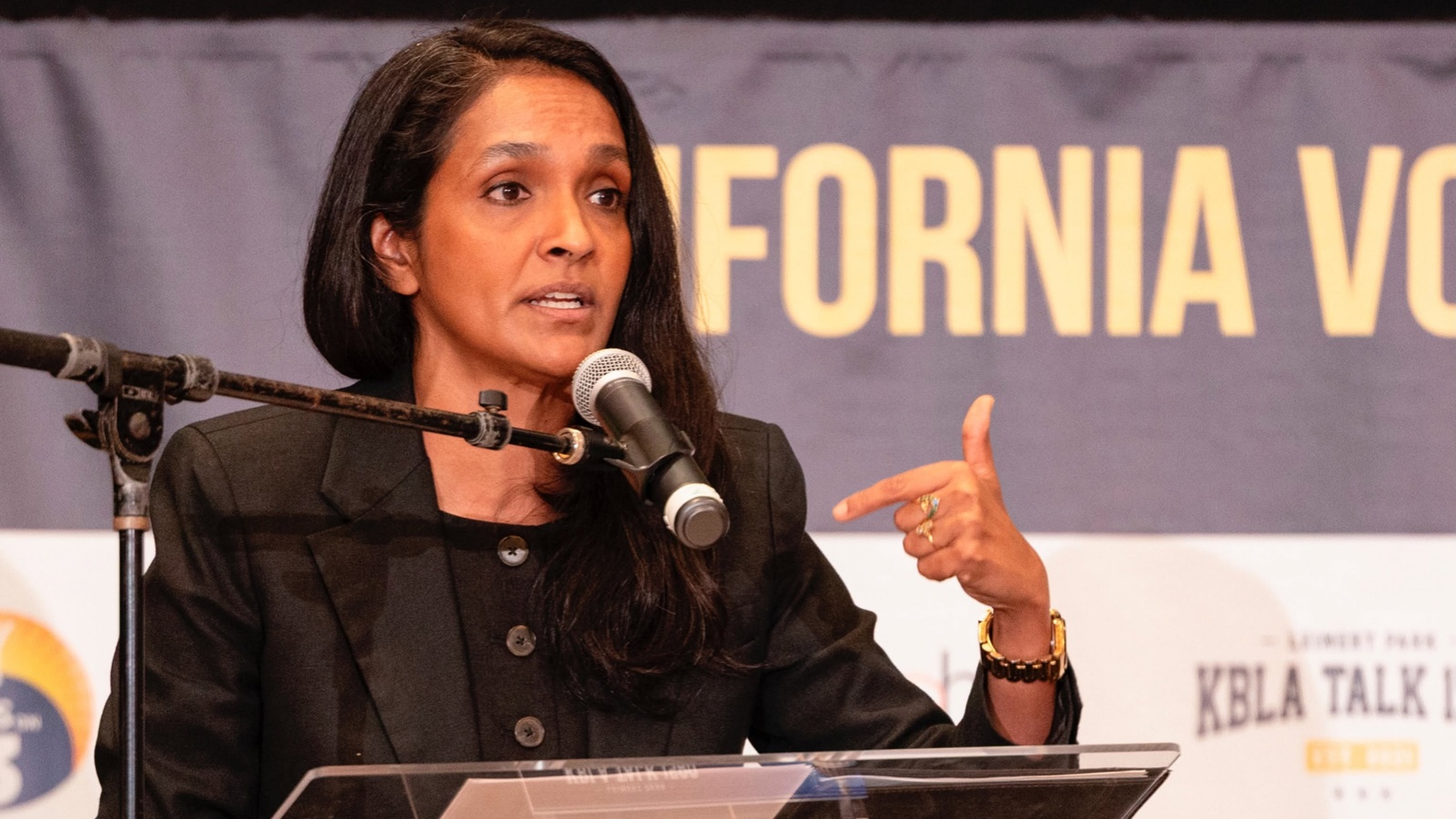
Nithya Raman didn't just win a tough runoff. She toppled a sitting Los Angeles mayor.
When ballots finished tallying from the November 3, 2026 election, Raman secured 54.9% of the vote (615,264 ballots) against incumbent Mayor Karen Bass's 45.1% (504,959 ballots), setting up her swearing-in on December 14, 2026. If you've only seen headlines calling her a "Kerala-born challenger" or a "democratic socialist," you're missing the real story. Raman isn't a protest candidate shouting from the sidelines. She's an urban planner who spent years mapping sanitation pipes on foot in India, running a grassroots homelessness outreach group in Los Angeles, and fighting zoning battles inside City Hall.
Her victory makes her the first Asian-American, Indian-American, and Hindu mayor in Los Angeles history, as well as only the second woman elected to the city's top job. More importantly, it reshapes how the country's second-largest city tackles housing, homelessness, policing, and the looming 2028 Olympics.
From Thrissur and Chennai to Los Angeles City Hall
Born Nithya Varsha Raman on July 28, 1981, in Thrissur, Kerala, she grew up in a family where public service and technical problem-solving sat close to home. Her father, Venkataraman "Venkit" Raman, worked as an engineer at KELTRON, and her mother, Sudha Kechery, worked in banking at Indian Overseas Bank.
Her academic path ran through Ivy League and engineering heavyweights—earning a bachelor's degree from Harvard University and a master's in city planning from MIT. She became a naturalized U.S. citizen at 22, then headed back to India at 23.
That return to India matters way more than most political bios let on. Between 2010 and 2013, Raman led Transparent Chennai under the Centre for Development Finance. Instead of publishing policy briefs from an air-conditioned office, she and her team walked neighborhoods with GPS devices and notebooks to document real sanitation gaps. If you've ever watched a city government promise sweeping reforms without knowing where the pipes or shelters actually sit, you understand why that unglamorous fieldwork shaped her politics.
After moving to Los Angeles in 2013, she worked for the city administrative officer before co-founding and leading the SELAH Neighborhood Homeless Coalition in 2017. She also served as executive director of Time's Up Entertainment. When she first ran for the 4th District City Council seat in 2020 against incumbent David Ryu, volunteers knocked on more than 83,000 doors. She pulled off a major upset then, won re-election in 2024, and held assistant council president pro tempore duties before jumping into the 2026 mayoral race just hours before the filing deadline.
Why Voters Turned Against Karen Bass in 2026
Incumbents in Los Angeles don't lose by nearly ten percentage points by accident. Bass entered the 2026 cycle as a known figure with deep ties across L.A. politics, while Raman entered late to give progressive and frustrated voters an alternative to both the establishment and runaway challenger Spencer Pratt (who placed third in the June primary with 25.5% behind Bass's 34.3% and Raman's 29.0%).
Honestly, voters were tired of waiting for big promises to turn into visible street-level progress. Raman framed Bass around "pay-to-play" politics and special-interest influence—pointing to campaign spending from police unions, business groups, and Airbnb—while arguing that basic city functions like street and sidewalk repairs, apartment construction, and local film production had stalled.
Frustration also spilled over from major crises during Bass's term, including scrutiny over her handling of the Palisades Fire and debates over city spending and execution. Even though Bass outraised Raman in direct campaign donations ($3.25 million to roughly $1.02 million through mid-October filings, with both receiving $1.257 million in matching funds), money couldn't close the gap once turnout shifted in November.
How Nithya Raman Approaches L.A.'s Biggest Crises
People love slapping labels on candidates, especially when the Democratic Socialists of America are involved. Here's the catch: governing a city of nearly four million people forces trade-offs between ideological purity and municipal math. Raman's record shows a mix of aggressive tenant protections and planner-style zoning and permitting fixes.
Housing and Renter Protections
Housing isn't a side issue in Los Angeles—it's the whole ballgame. During her time in Council District 4, Raman backed strong tenant protections, including expanded Just Cause eviction rules, faster eviction-filing notices, right-to-counsel efforts, stricter short-term rental rules, and a dedicated council team for tenant casework.
At the same time, she pushed for more housing supply, pointing to over 1,000 housing units added in her district, the Hollywood Community Plan Update, and citywide housing capacity work. Her mayoral platform pledges to triple annual housing construction and embrace denser housing near transit rather than stalling state density laws like Senate Bill 79. Critics on the right worry heavy tenant rules spook small landlords and developers; critics on her left sometimes watch closely to see how aggressive market-rate density aligns with socialist housing goals. That tension is going to define her first year.
Homelessness Before the 2028 Olympics
Raman has been blunt about Bass's signature Inside Safe hotel-and-motel program, arguing that relying on expensive temporary rooms isn't a sustainable long-term model. On the campaign trail, she pointed to nearly 50% reductions in homelessness in her district even as citywide numbers climbed, and she set a massive benchmark: cutting street homelessness by 50% ahead of the summer 2028 Olympics.
That timeline is brutal. Getting into City Hall in mid-December 2026 leaves roughly a year and a half before the Games arrive. Any mayor who promises a 50% drop in visible street homelessness in 18 months invites immediate skepticism—because interim shelter without permanent supportive housing and mental health beds can easily stall out.
Policing, Immigration, and LAPD Leadership
Public safety was one of the sharpest fault lines in the race. Raman campaigned on shifting non-violent calls away from armed officers when appropriate, expanding community violence intervention, fixing uneven 911 and LAPD response times, and making L.A. a stronger sanctuary city against federal immigration overreach.
She also pledged during the campaign to replace LAPD Chief Jim McDonnell, criticizing how the department handled federal immigration enforcement. Yet by mid-November 2026—after winning the election—she hadn't locked in a timeline, while McDonnell told reporters he hopes to stay through the 2028 Olympics and argued a change beforehand would be problematic. Watch this space closely. If Raman keeps McDonnell, progressive activists will push back; if she removes him right before Olympic security planning peaks, opponents will blame her for instability.
Film Jobs and LA28 Finances
Two quieter issues could test her executive chops just as fast:
- Hollywood and local production: Raman proposed creating a dedicated LA Film Office inside the Mayor's Office staffed by industry veterans, cutting fees for smaller shoots, and speeding up permits across city and county lines to stop runaway production.
- Olympic accountability: She has taken a skeptical look at LA28 organizing committee finances, signaling she won't treat Olympic boosters as untouchable.
Common Misconceptions About Her Rise
First, people sometimes assume Raman's win means the LAPD is getting defunded overnight. Under Los Angeles's charter, the mayor operates within a strong-mayor and 15-member City Council system alongside police commissions and budget constraints—meaning sweeping structural shifts take council votes, union negotiations, and time.
Second, some observers treat her background in Kerala and Chennai as purely symbolic. In reality, her data-driven work on urban infrastructure and public services is central to how she talks about broken permitting and city departments.
Third, don't assume her victory guarantees smooth sailing with the city's broader political establishment. Analysts and local commentators have already noted how her win rattled entrenched coalitions in L.A. politics—which means she'll need coalition-building skills even as she challenges old power brokers.
What to Watch and Do Next
If you're following Los Angeles politics—or living, renting, building, or working in the city—don't judge her administration by victory speeches. Track concrete deliverables over the next six months.
- Read her official transition and policy details on the Nithya Raman for Mayor campaign site and follow verified election tallies and municipal governance coverage on Ballotpedia and LAist.
- Watch her first 100 days after December 14, 2026, specifically her decisions on LAPD leadership, housing permitting reforms, and how she restructures homelessness spending away from hotel-only models.
- If you're a renter, homeowner, or small producer in L.A., check how upcoming housing element rules, transit-oriented zoning plans, and film permitting updates affect your neighborhood or business—policy shifts at City Hall hit fastest at the permit counter and housing board level.