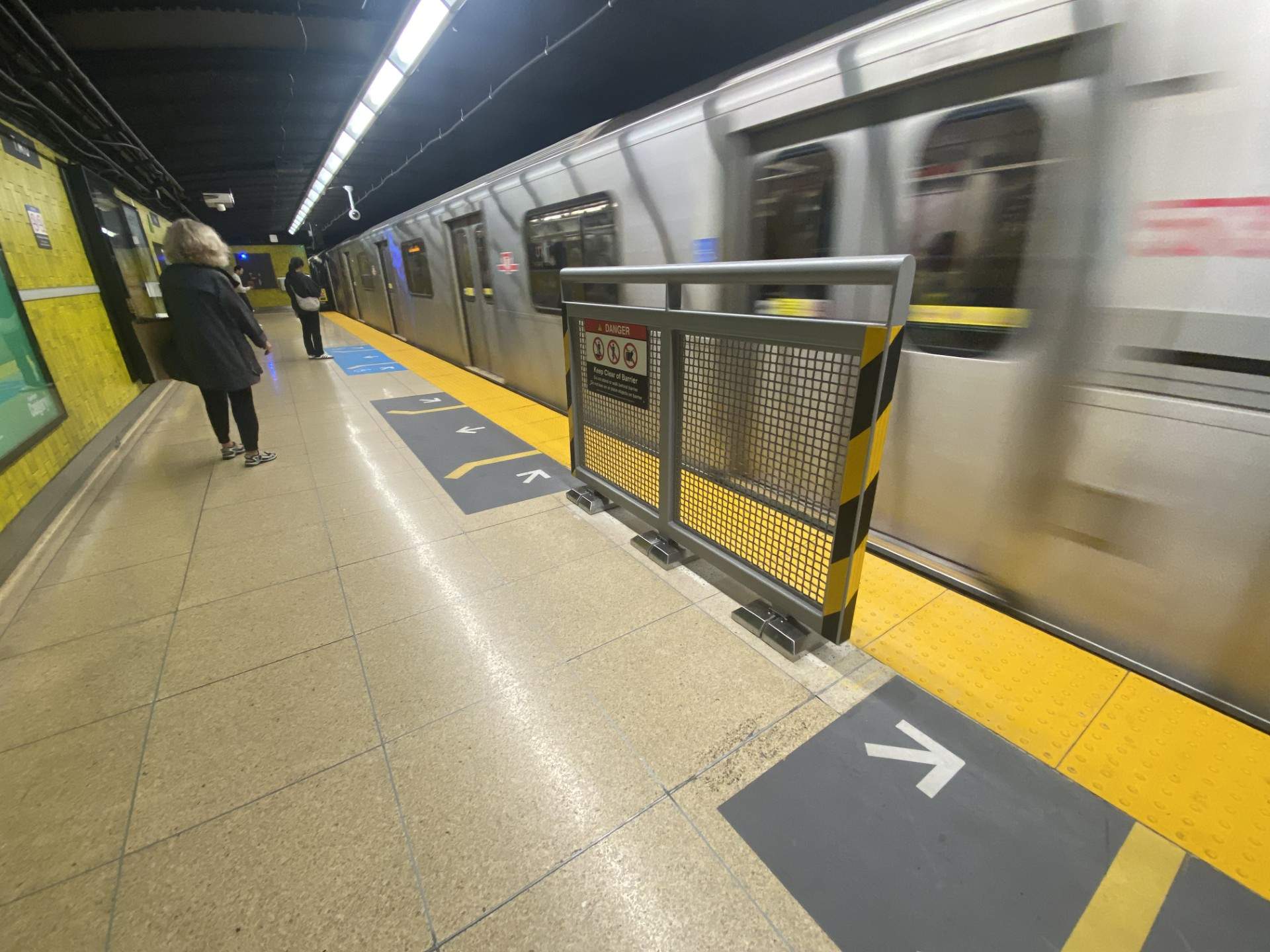
The Toronto Transit Commission finally erected its first subway platform edge barrier at Bloor-Yonge station, and the immediate reaction was entirely predictable. Critics emerged from every corner of the municipal peanut gallery to decry the project as an exercise in fiscal vanity. They pointed to the staggering price tag, the multi-year timelines, and the painful operational disruptions plaguing a transit network already stretched to its absolute breaking point.
They are missing the entire plot.
Platform edge barriers are not merely aesthetic upgrades or luxury transit accessories meant to dress up aging concrete boxes. They are the baseline standard of modern urban rail safety, implemented decades ago across major global hubs from Hong Kong to Paris. The resistance in Toronto highlights a broader, uniquely North American pathology. We treat foundational safety infrastructure as a discretionary debate while treating the human cost of inaction as an acceptable line item in the annual ledger.
To understand why this installation sparked such intense controversy, we have to look past the press releases and examine the structural realities of a subway system built for a mid-century city that no longer exists.
The Anatomy of Delay
Bloor-Yonge station handles crowd volumes that would have seemed absurd to the planners who drew up the original blueprints in the 1950s. During morning rush hours, the platforms transform into tightly packed holding pens where thousands of commuters edge precariously close to unprotected drop-offs. The installation of barrier walls and automatic platform gates at this specific choke point is a massive engineering undertaking, not a weekend DIY project.
Retrofitting legacy transit networks is notoriously difficult. Unlike systems designed from day one with platform screen doors in mind, older stations suffer from uneven track alignment, shifting structural foundations, and wildly varying train door placements across rolling stock generations.
- Old signaling systems cannot reliably stop trains within centimeters of a fixed gate.
- Power distribution networks require massive overhauls to support automated door mechanisms.
- Service shutdowns must happen during fragile weekend windows to avoid paralyzing the city.
Every single one of these variables costs money and eats up months of scheduling. Critics fixate on these delays as proof of administrative incompetence. In reality, they represent the complex tax of deferred maintenance. When you wait half a century to modernize a critical public utility, the bill comes due all at once with punitive interest rates.
The Human Toll and the Economic Fallacy
Transit agencies live in constant terror of public liability, yet they routinely underfund the physical barriers that prevent preventable tragedies. Every year, dozens of people fall or are pushed onto TTC tracks. Some incidents result in catastrophic injuries or fatalities. Others trigger system-wide shutdowns that strand hundreds of thousands of riders, costing the local economy millions of dollars in lost productivity.
When accountants argue that platform edge barriers are too expensive, they engage in a bizarre form of financial illiteracy. They calculate the capital expenditure required for steel, glass, and electrical integration while assigning zero economic value to human life or schedule reliability.
Consider the ripple effects of a single track-level incident. First responders deploy. Power gets cut across entire zones. Shuttle buses fail to bridge the capacity gap because surface traffic is already gridlocked. Tens of thousands of workers arrive late. Trust in public transit erodes a little more. Multiply that disruption by the frequency of track intrusions across a major metropolitan network, and the cost of doing nothing quickly eclipses the price of construction.
The Global Standard We Refuse to Meet
Travel to almost any major Asian or European transit system, and open subway drops are a relic of the past. Tokyo, Seoul, Singapore, London, and Paris realized long ago that high-capacity rail requires physical separation between passengers and moving steel.
North American cities remain uniquely stubborn outliers. We treat transit security as a matter of individual vigilance rather than systemic environmental design. We erect signs telling people to stay behind the yellow line, as if a painted strip of rubber flooring can stop a medical episode, a sudden shove, or a moment of profound despair.
The TTC project at Bloor-Yonge is a pilot, a cautious toe dipped into a pool of modernization that other global transit authorities swam across twenty years ago. The fact that this modest installation generated ferocious pushback demonstrates how conditioned we have become to infrastructural mediocrity. We accept crowded platforms, crumbling tunnels, and avoidable tragedies as the normal cost of urban living.
Fixing transit requires spending capital on projects that do not immediately increase speed or expand geographic reach. It requires investing in boring, unsexy physical barriers that keep people alive. Until our transit authorities and municipal politicians find the political courage to treat passenger safety as a non-negotiable engineering baseline rather than a budget item ripe for cuts, our subway platforms will remain monuments to institutional paralysis.
The first barrier is up. Thousands more are needed before the system enters the modern era.