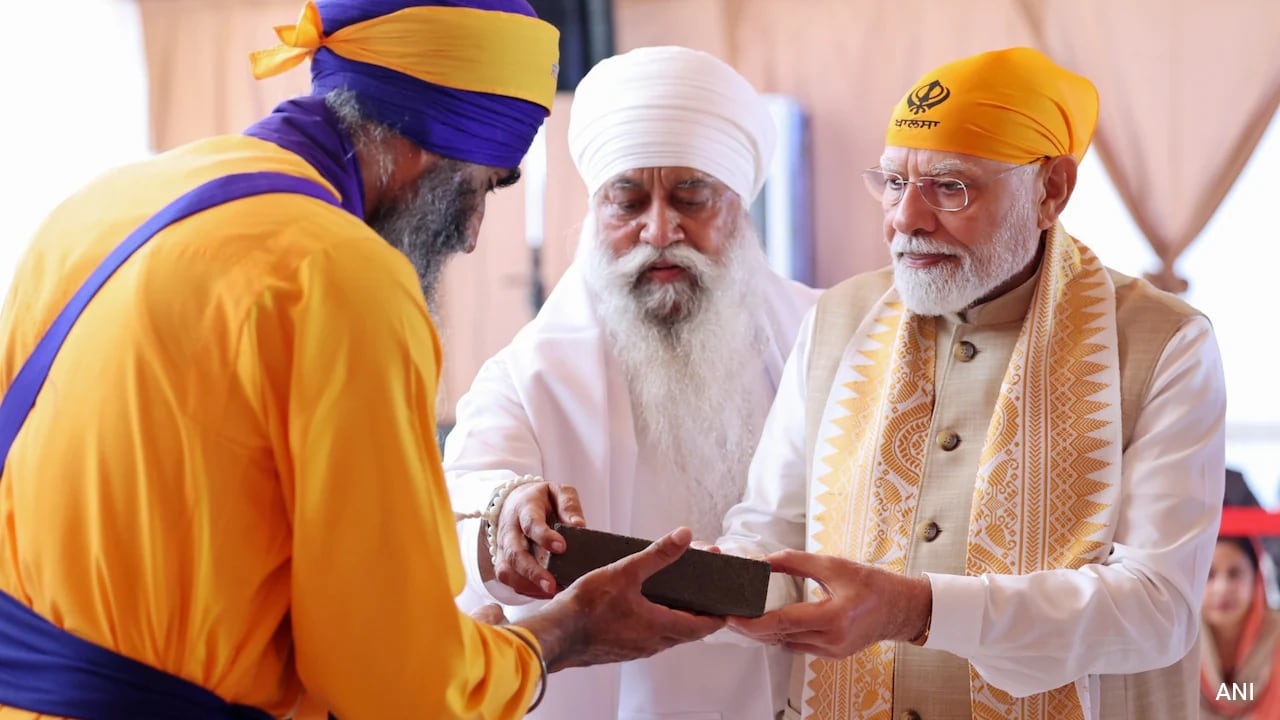
Indian Prime Minister Narendra Modi laid the foundation stone for the redevelopment of Khalsa Diwan Indian Sikh Temple in Paco, Manila, marking a major milestone in India-Philippines bilateral relations. Built in 1924, this house of worship is the oldest Gurudwara in the Philippines and serves as the spiritual anchor for the country's Sikh community. The redevelopment project signals a deliberate expansion of New Delhi's cultural diplomacy across Southeast Asia, transforming a century-old diaspora landmark into a modern geopolitical bridge between two rapidly aligning Indo-Pacific nations.
Most diplomatic coverage treats ceremonial foundation stones as routine photo opportunities. That misses the larger operational reality. When a head of state steps onto the grounds of a century-old community institution in a foreign capital, the architecture is rarely the main event. Building on this topic, you can find more in: La doctrine géopolitique de Marine Le Pen face à la guerre en Ukraine.
The Architecture of Diaspora Diplomacy
For decades, Indian foreign policy viewed overseas communities primarily through the lens of remittances and consular welfare. That calculus has shifted dramatically over the last ten years. Today, heritage sites like the Paco Gurudwara function as strategic nodes in India's broader Act East Policy, projecting soft power into regions where traditional hard-power alliances take years to build.
The Khalsa Diwan Indian Sikh Temple has stood in Manila's Paco district since 1924. At the time of its founding, the Philippines was an American territory, and early Punjabi migrants were navigating strict immigration quotas, unfamiliar legal systems, and deep economic uncertainty. They pooled meager earnings from peddling goods and working port jobs to buy land and erect a permanent sanctuary. Experts at The New York Times have shared their thoughts on this trend.
Over the next hundred years, the building survived the devastation of World War II—including the brutal 1945 Battle of Manila that leveled much of the surrounding district—as well as decades of urban sprawl and tropical wear. By the 2020s, the physical structure was showing its age. Rising groundwater, aging plumbing, and cramped communal dining halls made modernization unavoidable.
The redevelopment plan goes far beyond fresh paint and reinforced concrete. Community leaders and Indian diplomatic officials designed the upgraded complex to expand langar (community kitchen) capacity, modernize administrative offices, and create dedicated spaces for interfaith outreach and charitable medical clinics.
Why Manila Matters Now
Timing is everything in international relations. A ceremonial visit to a Gurudwara in Manila does not happen in a vacuum; it sits directly alongside defense procurement deals, maritime security dialogues, and trade negotiations between India and the Philippines.
Consider the broader strategic picture in the South China Sea and the wider Indo-Pacific:
- Defense alignment: The Philippines became the first foreign buyer of India's BrahMos supersonic cruise missile system, a landmark transaction that signaled Manila's willingness to diversify its security partnerships away from traditional Western suppliers.
- Maritime cooperation: Both nations share acute concerns over unilateral maritime claims and freedom of navigation, prompting joint coast guard exercises and intelligence sharing.
- Economic corridors: Bilateral trade has steadily climbed, driven by Indian pharmaceutical exports, IT services, and agricultural imports, alongside growing Philippine interest in Indian digital public infrastructure.
Against this backdrop, investing political capital into the Filipino-Indian community strengthens the domestic constituency for closer bilateral ties. Politicians in Manila notice when an Indian Prime Minister commands massive, organized crowds and directs philanthropic resources into local neighborhoods.
Inside the Paco Community's Century-Long Footprint
To understand why this specific building carries so much weight, you have to look at how the Sikh community integrated into Philippine society. Unlike diaspora populations in some Western countries that clustered into isolated industrial towns, early Punjabi immigrants in the Philippines dispersed across the archipelago—from Luzon down to Mindanao—working as small-scale merchants and lenders.
That geographic spread created a unique social dynamic. Local Filipinos came to know Sikh neighbors personally, often referring to them colloquially as "Bombay," a historical misnomer rooted in the port city from which many early migrants departed British India. Despite occasional cultural friction and stereotypes tied to informal lending practices, the community built deep reservoirs of goodwill through relentless charitable work.
The Paco Gurudwara served as the central nervous system for this dispersed network. Whenever a typhoon struck the archipelago, volunteers mobilized out of Paco to cook thousands of hot meals for displaced families, regardless of religion or background. During the COVID-19 lockdowns, the temple's kitchens operated around the clock, distributing food packets to stranded workers and frontline hospital staff across Metro Manila.
Structural Realities of the Rebuild
Redeveloping an active religious site in a dense urban neighborhood like Paco presents serious logistical headaches. Manila's high water table and vulnerability to earthquakes mean any modern multi-story structure requires deep piling and strict seismic engineering.
Local zoning regulations in Manila also restrict height and footprint expansion in older districts. Builders cannot simply knock down walls and expand outward; they have to build smarter within existing property boundaries while keeping daily prayer services and community kitchens running without interruption.
Funding mechanisms add another layer of complexity. While diplomatic backing provides prestige and bureaucratic momentum, the financial heavy lifting for Gurudwara redevelopments traditionally relies on community donations, transnational diaspora networks, and local charitable trusts. Balancing architectural ambition with long-term maintenance budgets remains an ongoing challenge for temple management committees worldwide.
The Geopolitical Counter-Argument
Not everyone views high-profile diaspora outreach through an uncritical lens. Foreign policy analysts point out that cultural diplomacy has clear limits when stacked against hard economic and military realities.
First, domestic politics in both countries can complicate symbolic gestures. In India, government engagement with Sikh diaspora institutions overseas is closely scrutinized against the backdrop of domestic agricultural protests and separatist rhetoric in Western countries like Canada and the United Kingdom. By highlighting a harmonious, charitable, and deeply integrated Sikh community in Southeast Asia, New Delhi projects a counter-narrative of constructive diaspora partnership.
Second, soft power alone does not close trade deficits or speed up bureaucratic approvals. Philippine infrastructure projects are notorious for regulatory delays, land-title disputes, and shifting local government priorities. A foundation stone ceremony generates headlines for forty-eight hours, yet sustained bilateral growth depends on unglamorous work: customs harmonization, visa liberalization, and predictable tax regimes.
Third, some local observers note that visible foreign backing for minority religious institutions can occasionally draw unwanted scrutiny from populist critics, though the Philippines' largely tolerant religious environment minimizes this risk compared to other regional neighbors.
What the Redevelopment Actually Changes
Strip away the diplomatic speeches, and the physical transformation of the Khalsa Diwan Indian Sikh Temple delivers tangible operational upgrades for Manila's urban fabric.
- Disaster response capacity: Modernized industrial kitchens and cold-storage facilities allow the Gurudwara to scale emergency food production rapidly during monsoon floods and typhoons.
- Healthcare access: Dedicated clinic rooms provide space for regular eye camps, dental checkups, and primary care consultations serving low-income residents in Paco and neighboring districts.
- Cultural preservation: Archival spaces preserve a century of migration records, photographs, and artifacts documenting the South Asian presence in the Philippines since the early twentieth century.
- Interfaith dialogue: Expanded multipurpose halls make it easier to host civic leaders, academic forums, and interreligious gatherings that demystify Sikh traditions for the broader Filipino public.
Beyond the Ceremony
History moves slowly in brick and mortar. When those early Punjabi migrants laid the original foundations in Paco back in 1924, they were focused on survival, worship, and mutual aid in a distant land. A hundred years later, their descendants stand at the intersection of Indo-Pacific strategy and urban renewal.
The scaffolding rising over Paco will eventually come down, leaving behind reinforced concrete, marble floors, and larger cooking vats. Whether this redevelopment becomes a lasting monument to India-Philippines partnership will not be decided by the politicians who posed with shovels at the groundbreaking, but by the volunteers who show up at four in the morning to light the stoves when the next storm hits Manila Bay.



