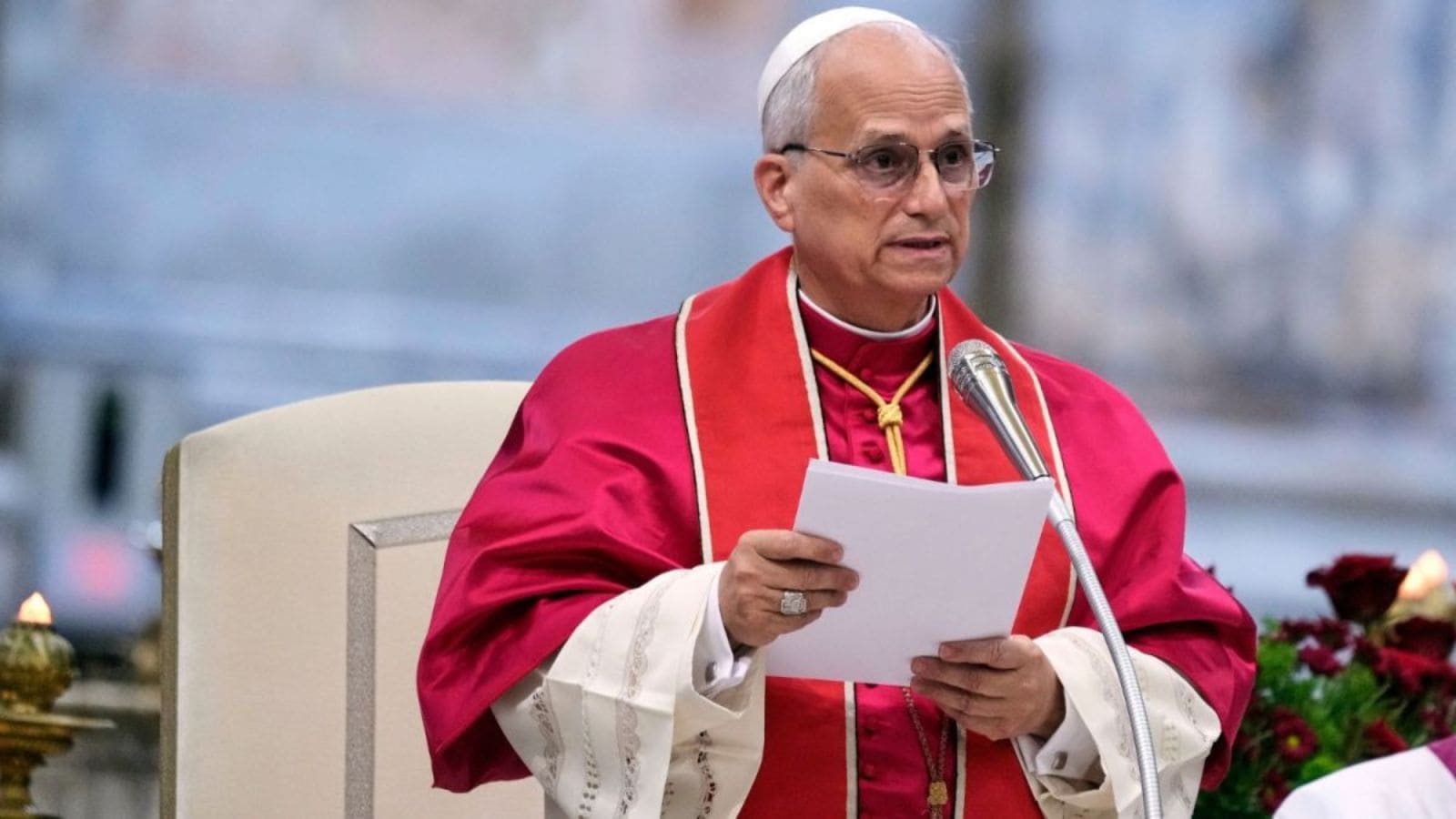
The Vatican just threw down a massive moral gauntlet, and it isn't directed at theological minutiae. It's directed at Silicon Valley and global military complexes. Pope Leo XIV released his highly anticipated first encyclical, Magnifica Humanitas (Magnificent Humanity), a sprawling 43,000-word manifesto that tackles the unchecked rise of artificial intelligence. If you think the Vatican weighing in on algorithms is just a quaint symbolic gesture, you're missing the real story.
The first American pope isn't just asking tech executives to be nicer. He's demanding a total rethink of how we build, fund, and deploy automated systems, specifically warning that the current trajectory risks trapping the world in a state of unending war. Read more on a related topic: this related article.
The core intent behind this monumental document is clear. Pope Leo is attempting to dismantle the corporate and political complacency that treats rapid technological acceleration as an inevitability. He's stepping directly into a fierce geopolitical battleground, challenging everything from the current deployment of AI-enhanced military systems to the corporate concentration of data wealth.
The Outdated Reality of Just War
For centuries, the Catholic Church relied on the "just war" doctrine to evaluate the morality of military conflict. Pope Leo just tore up that rulebook. In Magnifica Humanitas, he explicitly declares that the theory is obsolete in an age where algorithms can automate slaughter. Additional journalism by The Guardian highlights comparable perspectives on this issue.
The timing of this critique isn't accidental. It lands right in the middle of severe friction between the Vatican and the administration of US President Donald Trump. White House officials like Vice President JD Vance and Defense Secretary Pete Hegseth have actively used traditional Christian just war theory to defend the administration's military campaign in Iran. Pope Leo explicitly rejected that justification, taking a direct shot at Washington's stance.
He states flatly that it's entirely impermissible to hand over lethal or irreversible decisions to artificial systems. When a strike becomes automated or opaque, human responsibility evaporates. The Pope is arguing that we cannot let accountability dissolve into a machine. If a system selects a target, there must be a verifiable, self-aware human chain of command holding the ultimate blame.
This isn't a theoretical debate for the distant future. The Pentagon is aggressively pushing to deregulate AI development, seeking unrestricted access to cutting-edge models. By forcing this conversation now, the Vatican is trying to create a hard diplomatic boundary before autonomous weapons systems advance completely beyond human reach.
The Idolatry of Profit and Hidden Exploitation
Tech companies love to talk about AI as an ethereal, magical leap forward for humankind. Pope Leo strips away that marketing gloss, blaming a tech culture driven by what he calls the "idolatry of profit." He reminds readers that nothing about this industry is immaterial.
The encyclical shines a harsh light on the hidden human cost sustaining the computational flow. The Pope points directly to the millions of workers trapped in "new forms of slavery" to keep the tech running. He calls out the content moderators exposed to deeply disturbing material and the children in developing regions crushing rocks to extract rare earth elements for smartphone and computer infrastructure. Their bodies are physically broken so our algorithms can run smoothly.
Furthermore, the document targets the intellectual culture of Silicon Valley itself, specifically naming the transhumanist and posthumanist philosophies championed by billionaires like Peter Thiel and Elon Musk. Leo warns that these ideologies foster a mindset where some human beings are deemed less useful, less desirable, and less worthy of dignity.
When a handful of private companies hold valuations larger than the GDP of entire nations, the concentration of data power becomes an existential threat to public life. The Pope isn't satisfied with tech companies policing themselves. A more moral AI isn't enough if a tiny club of billionaires gets to decide what that morality looks like.
Algorithms Are Never Neutral
A common defense from tech developers is that technology is just a tool, inherently neutral, reflecting whoever uses it. The Vatican rejects this entirely. Pope Leo argues that technology is never neutral because it fundamentally embodies the biases, incentives, and goals of those who design, finance, and regulate it.
The real danger isn't an overnight sci-fi killer robot rebellion. It's the slow, creeping dehumanization of daily life through opaque algorithms. Look at how society already uses automated systems:
- Sorting through job applications and personnel selection
- Deciding who qualifies for credit distribution and loans
- Determining access to public services and opportunities
When these decisions are locked behind closed corporate doors, individuals are reduced to mere digital profiles. You lose the right to contest a decision because the machine's logic is hidden. The encyclical demands absolute transparency, insisting that every automated public decision must be understandable, contestable, and subject to strict human oversight.
The Pope even warns against the psychological traps built into modern consumer tech. He points out that AI tools designed to feign empathy and fake human relationships create a dangerous illusion. If we spend our lives interacting with simulated empathy, we risk losing the actual desire to build messy, genuine human connections. We risk becoming passive consumers of unthought thoughts.
Silicon Valley Goes to Rome
The presence of Chris Olah, the co-founder of Anthropic, at the Vatican launch event reveals how complex this tech battle has become. Anthropic is locked in a massive legal battle with the Trump administration because the company refused to grant the US military unrestricted, guardrail-free use of its Claude AI models.
Olah's appearance shows that some tech leaders are actively looking for moral backing outside of traditional political channels. They know their capabilities are expanding faster than their ethical frameworks. Olah openly agreed with the Pope's warnings, admitting that widespread human labor displacement is a very real possibility and that tech companies need external, independent critics who aren't bound by financial incentives.
The Vatican has spent more than a decade quietly building relationships with tech ethicists, positioning itself as a rare global mediator capable of speaking to human dignity rather than corporate quarterly earnings. Magnifica Humanitas gives Catholic universities, diplomats, and international policymakers a concrete framework to push for hard regulation at the UN, G7, and EU levels.
How to Push Back Against Automated Power
You don't have to be a theologian or a head of state to act on the warnings in this encyclical. The real danger is a sense of fatalism—the belief that the tech is too big, things are moving too fast, and individual choices don't matter.
If you want to push back against the automated erosion of human agency, start with immediate, practical shifts in how you interact with technology:
- Demand Explanations: If you are denied an opportunity, a line of credit, or a job because of an automated screening tool, push back. Exercise your right to demand human review and written justifications.
- Support Algorithmic Transparency Legislation: Pay attention to local and international policies regarding data ownership. Support frameworks modeled after the EU AI Act that mandate clear risk assessments and human-in-the-loop requirements for high-stakes software.
- Audit Your Own Tech Dependencies: Stop outsourcing your critical thinking to large language models. Pay attention to how often you use automated tools to draft your personal communications, write your thoughts, or simulate companionship. Protect your real-world relationships from digital substitution.
- Vigorously Oppose Fully Autonomous Warfare: Call on your political representatives to support an explicit international ban on lethal autonomous weapons systems. Demand clear legislation ensuring that a human being must always retain direct operational control over the deployment of lethal force.
Technology should serve the common good, not just accelerate the bottom lines of defensive contractors and tech oligarchs. It's time to slow down, build independent oversight bodies, and refuse to let automated calculation replace human conscience.