In the sweltering heat of the Arabian Sea, massive tankers slice through the water, their hulls deep with crude oil destined for the colossal refining complex at Jamnagar. On the coast of Gujarat, this vast grid of pipes, flare stacks, and storage tanks operates with quiet, rhythmic precision. It converts heavy, discounted Russian crude into crisp diesel and aviation fuel, which is then loaded right back onto ships bound for ports across Europe and North America.
To a spreadsheet in Washington, this trade looks simple. It looks like a breach of discipline. Read more on a related topic: this related article.
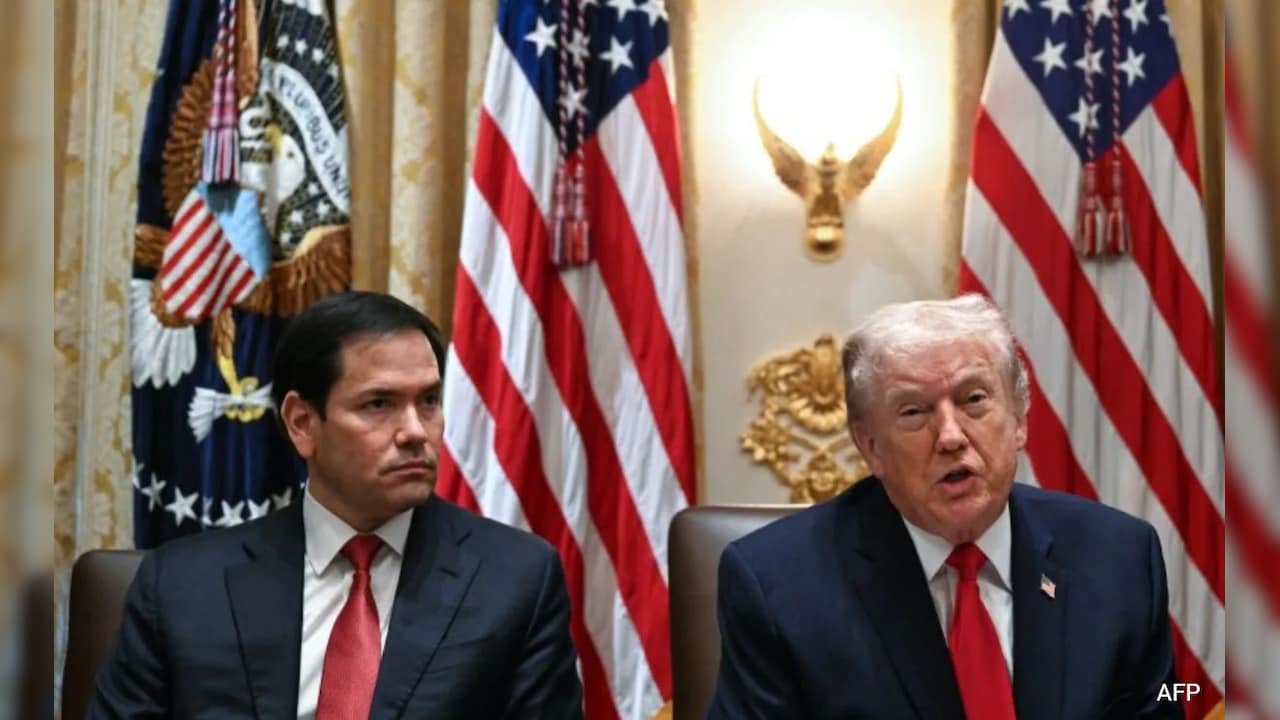
When Marco Rubio and American foreign policy strategists look toward New Delhi, they do not see a sovereign nation managing the energy security of 1.4 billion people. They see an ally that refuses to stay inside the chalk outline drawn for it. The central friction between the United States and India isn't really about barrels of oil or tariff percentages. It is about a fundamental clash of expectations: Washington demands obedience from its security partners, while New Delhi insists on negotiating as an equal.
The Steel and the Smoke
To understand why a refinery on the western edge of India causes blood pressures to spike in the corridors of the U.S. Senate, you have to stand at the perimeter fence of Jamnagar. Additional journalism by TIME explores comparable perspectives on this issue.
Picture a city constructed not for human habitation, but for the appetite of heavy industry. It breathes fire into the night sky. It turns raw, sulfur-heavy crude that standard European plants refuse to process into pristine, ultra-low-sulfur fuel. When Western nations slapped sanctions on Moscow, capping price points and attempting to freeze Russian revenue, they expected the global market to fall in line.
Instead, India saw a arithmetic reality.
A home cook in Ahmedabad or a smallholder farmer in Punjab does not care about geopolitical balance-of-power theories. They care about the cost of fuel for a water pump or a scooter. If New Delhi had cut off access to discounted crude, domestic inflation would have surged. Energy prices would have spiked, dragging millions into economic fragility.
So, Indian state and private refiners bought the oil. They refined it. They sold the processed fuel to Western nations that were eager to buy it, provided it came with a non-Russian bill of lading.
It was legal. It kept global oil prices from skyrocketing past a hundred dollars a barrel. Yet, to observers on Capitol Hill, it felt like defiance.
The Mirage of Alignment
For thirty years, American foreign policy toward Asia has rested on a quiet assumption. The narrative went something like this: if Washington helped build India’s economic and strategic capacity, India would naturally slot into the Western alliance structure. It would serve as a counterweight, a steady partner willing to take cues from the West when global crises erupted.
That assumption was wrong.
Washington builds alliances built on clear hierarchies. NATO works because, when push comes to shove, the ultimate command structure routes back to the Pentagon. Treaties with Tokyo or Seoul are anchored by explicit security guarantees and integrated command structures.
India does not play by those rules.
When Marco Rubio signals a tougher stance on nations that facilitate back-door channels for targeted regimes, he is articulating a worldview where you are either inside the circle of enforcement or outside it. There is no middle ground in a secondary sanction strategy.
But India’s strategic culture was forged in the fire of non-alignment and tempered by decades of self-reliance. Indian diplomats do not view foreign relations as a series of membership agreements. They view them as a perpetual sequence of transactions designed to protect national autonomy.
When Washington says, "Stand with us," New Delhi hears, "Follow us."
And New Delhi does not follow.
The Human Math of Geopolitics
Consider a room in New Delhi where civil servants look at two maps side-by-side.
On the left map is the Line of Actual Control in the Himalayas, where thousands of Indian troops stand nose-to-nose with Chinese forces in freezing temperatures. On the right map is the Indian Ocean, through which the vast majority of the country's energy supplies travel.
To the analyst in that room, national survival is not an abstract concept debated in academic journals. It is immediate. It is structural.
If India surrenders its right to buy cheap energy, its economic growth slows. If its growth slows, its ability to modernize its military weakens. If its military weakens, its northern border becomes even more vulnerable.
Now look at that same equation through the lens of a lawmaker in Washington. To them, every dollar spent on Russian crude helps fund artillery shells fired in Eastern Europe. The moral math seems clean, absolute, and unambiguous.
These two views do not intersect because they are measuring entirely different risks. Washington measures the risk of a broken international rules-based order. New Delhi measures the risk of internal economic instability and territorial encroachment.
When a superpower tells a rising power that its domestic priorities must take a back seat to global security consensus, the answer will always be a quiet, resolute no.
The Illusion of Control
The mistake lies in confusing strategic convergence with obedience.
India and the United States agree on a great deal. They share deep concerns about maritime security in the Indo-Pacific. They share economic interest in securing tech supply chains away from single-source dependencies. Their people-to-people connections are deeper and more vibrant than almost any other bilateral pairing in the world.
Yet, agreement on shared threats is not the same as a pledge of submission.
When Western commentators express outrage that Indian refineries profit while global markets fracture, they miss the broader historical pattern. India has spent decades ensuring that no single foreign power holds a veto over its national decisions. It bought weapons from Moscow when Washington backed Islamabad. It built ties with Tehran while preserving its deep security partnership with Tel Aviv.
It does not act out of malice toward the West. It acts out of a deep-seated refusal to let external powers decide its baseline vulnerabilities.
Jamnagar is not a monument to rebellion. It is a monument to pragmatism. It proves that in a multipolar world, mid-tier and rising powers will leverage every economic variable available to secure their own positions, regardless of who writes the sanctions list.
The Unending Negotiation
Pressure will continue to mount. Statements from Capitol Hill will grow sharper, and headlines will periodically declare that the bilateral relationship has reached a breaking point.
Yet the tankers will keep moving across the Arabian Sea. The refineries at Jamnagar will keep running their midnight shifts, lighting up the Gujarat sky with the orange glow of heavy industrial processing.
The United States wants a partner that follows instructions when the stakes are high. India wants a world where no power has the authority to issue them.
Until Washington realizes that India will never trade its sovereign flexibility for a seat at someone else's table, every policy dispute will feel like a surprise, every act of self-interest will be misread as betrayal, and the quiet machinery along the Gulf of Kutch will keep turning, indifferent to the demands of those who expect obedience over alignment.