The sea does not care about borders.
In the pre-dawn chill of the Aegean, a rusty iron leviathan drifts three miles outside territorial waters. Her name has been painted over three times this month. On her stern, a fresh coat of grey enamel covers the ghost of an old registry in Vladivostok, while her transponder—that electronic pulse meant to keep ships from colliding in the dark—sits wrapped in heavy-duty aluminum foil inside the bridge. Inside the cabin, the air smells of cheap cigarettes, stale diesel, and quiet desperation. The captain, a man whose hands look like cured leather, watches the surface of the water turn the color of a bruised plum.
He is carrying two million barrels of crude oil.
Nobody asks where it came to rest. Nobody asks whose flags it will fly tomorrow when it slips into a port in Asia, its cargo mixed, blended, and laundered through a dozen offshore shell companies until its origin is as untraceable as smoke.
This is how modern empires bleed. Not always through the dramatic thunder of artillery or the flash of missiles tearing through concrete, but through quiet, methodical accounting.
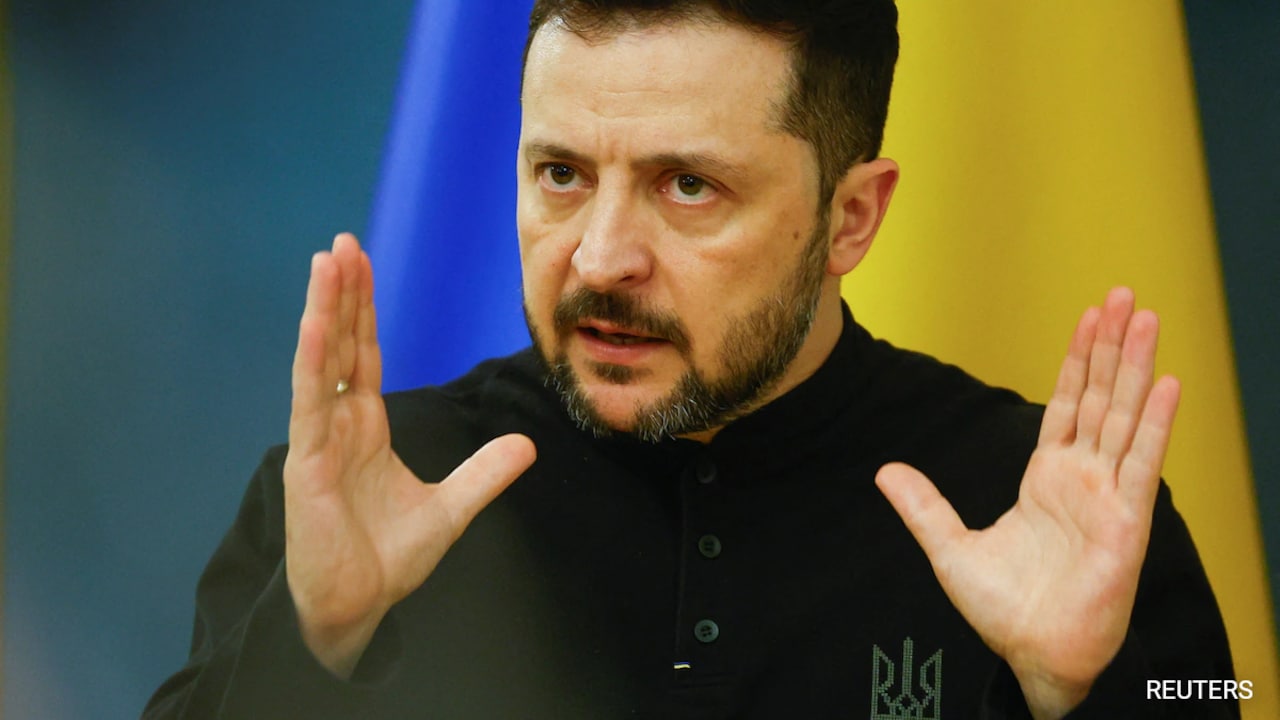
Thousands of miles away, in a room stripped of unnecessary ornamentation, Volodymyr Zelensky leans over a map. His eyes carry the accumulated exhaustion of a thousand sleepless nights. When he speaks to world leaders via secure video links, his message is rarely about the tactical coordinates of a muddy trench in the Donbas or the caliber of a shell. He speaks of ledgers. He speaks of shadow fleets, maritime insurance loopholes, and the invisible arteries of petrodollars that keep the Kremlin's war machine humming.
Stop the money.
It sounds simple. It sounds like a bureaucratic decree that could be signed between morning coffee and a diplomatic handshake. Yet behind that simple plea lies a tangled, terrifying global dependency built over decades of cheap energy and frictionless globalization.
To understand why this war persists, we must look away from the front lines and into the boardrooms of international finance.
Consider a hypothetical citizen—let us call him Mikhail, a middle manager at a state-backed oil refinery in Western Siberia. Mikhail does not hate anyone in Kyiv. He has a daughter who plays the cello and a mortgage on a modest dacha outside Omsk. But every morning when Mikhail logs into his terminal, he is executing transactions that translate directly into high-explosive ordnance. Every barrel of crude pumped from the permafrost, loaded onto an uninspected tanker, and sold above the price cap set by Western coalitions generates the tax revenue that pays for the steel casing of a glide bomb.
Mikhail is an innocent participant in a catastrophic system. The tanker in the Aegean is an anonymous cog. Yet together, they form a lifeline that defies sanctions, diplomatic pressure, and moral outrage.
For the first months of the full-scale invasion, the world watched in horror. Headlines screamed of atrocities. Capitals pledged solidarity in the form of helmets, then artillery, then tanks, then advanced jets. But weapons are defensive medicine. They treat the symptom while the disease spreads unchecked through the banking system.
Zelensky understood this fundamental truth early. You can hand a soldier the finest rifle ever forged, but if the factory producing the enemy's bullets has an endless supply of capital, the rifle will eventually wear out in the soldier's hands. Attrition is a numbers game. And numbers are written in currency.
When Western nations imposed price caps on Russian oil exports—aiming to keep global energy markets supplied while starving Moscow of windfall profits—they believed they had threaded the needle. They believed they could punish aggression without triggering a global economic shockwave that would send inflation soaring and cost politicians their seats.
They miscalculated the ingenuity of greed.
Enter the shadow fleet. Hundreds of aging, uninsured, often decrepit oil tankers bought up by anonymous buyers in Dubai, Hong Kong, and Mumbai. These vessels operate outside the traditional Western maritime insurance grid. They do not use British protection and indemnity clubs. If one of them cracks in half during a winter storm in the North Sea, spilling millions of gallons of crude into pristine fisheries, there is no corporate entity with deep pockets to clean it up. The risk is externalized, dumped onto the global commons, while the profit flows safely back into state coffers in Moscow.
It is a brilliant, ruthless exploitation of international law.
And it is entirely preventable.
When leaders gather in gilded halls in Davos, Brussels, or Washington, they nod gravely at Zelensky’s addresses. They applaud his courage. They issue joint communiqués reaffirming their ironclad commitment to Ukraine’s sovereignty.
Then they look at domestic fuel prices ahead of an election cycle.
Courage has a price tag. For politicians thousands of miles from the frontline sirens, that price is measured in voter approval ratings. For the people of Kharkiv, it is measured in heartbeats.
Let us trace the journey of a single ruble earned from a barrel of sanctioned crude.
It leaves a refinery in Primorsk. It is sold to a trader in the United Arab Emirates who pays in dirhams routed through a small bank in Central Asia. The bank converts the funds, shielded by lax regulatory oversight. The proceeds are wired to a defense manufacturer in Tula. The manufacturer buys microchips smuggled through third-party nations via washing machines and refrigerators. The chips are soldered into the guidance system of a cruise missile.
Forty-eight hours later, that missile slams into a residential apartment building in Dnipro.
This is the cycle. It is an economic circuit as real and continuous as any electrical grid. To end the war, you do not just need to break the missile. You have to trip the circuit breaker at the source.
Why hasn't it happened?
Fear.
The global economy is a delicate, hyper-connected spiderweb. Economists whisper warnings about what happens if millions of barrels of Russian oil are suddenly pulled off the market entirely. Prices spike at the pump. Fertilizer costs soar, threatening harvests across Africa and South America. Industrial production slows in Europe. The shockwaves ripple outward, threatening a global recession.
So the compromise is struck. Sanctions are applied with built-in exceptions. Enforcement is kept lax. The shadow fleet is monitored rather than intercepted. The world chooses a slow, agonizing war of attrition over a sharp, acute economic shock.
It is a trade-off. Convenience traded for blood.
Zelensky’s argument is an indictment of this cowardly calculus. He argues that the longer the war drags on, the greater the ultimate cost to global stability will be. A half-choked adversary does not stop fighting; it adapts. It reorganizes its economy around a permanent war footing. It forms alliances with other isolated regimes, creating an alternative financial ecosystem that becomes harder and harder to dismantle with each passing month.
History offers grim reminders of what happens when aggressors are allowed to finance their ambitions through back channels. Appeasement wears many disguises. Sometimes it wears the mask of military support paired with economic half-measures.
Imagine standing on the embankment of the Dnipro River in Kyiv on a freezing November night. The air is dead silent except for the low hum of distant generators. The streetlights are off to deny silhouettes to nocturnal hunters. In the dark, you cannot see the politics of the energy markets. You cannot see the compliance officers in Geneva turning a blind eye to suspicious vessel transfers, or the shipping executives counting their charter fees in quiet comfort.
You only hear the whistle in the sky.
You wait for the concussions.
And you wonder why the hands holding the levers of global finance are so reluctant to turn the valve.
The solution, according to maritime law experts and economic analysts who have spent years tracking illicit trade routes, is not a mystery. It requires political will. It means boarding vessels in international waters that operate without valid certification. It means penalizing flag states that turn a blind eye to transponder manipulation. It means leaning hard on secondary sanctions against any financial institution clearing trades for shadow fleet operators.
It means risking short-term economic pain for long-term survival.
Yet political cycles rarely look past the horizon of the next vote. This is the structural flaw at the heart of democratic resistance to authoritarian aggression. Democracies plan in terms of quarters and election terms; autocracies plan in terms of decades and historical destiny.
To bridge that gap, leaders must find a voice that cuts through the noise of market forecasts and risk models. That is what Zelensky attempts with every plea. He is trying to force comfortable societies to look past their immediate comfort and recognize the hidden machinery sustaining their own future threats.
The ship in the Aegean continues its silent journey. Its cargo will be unloaded, refined, and burned in internal combustion engines across the globe. The ledger will balance. The accountants will close their books for the day.
Somewhere in the dark, a siren begins to wail.
The ledger and the battlefield are the same place. Until the world has the courage to close the account, the war will continue to write its entries in iron and blood.