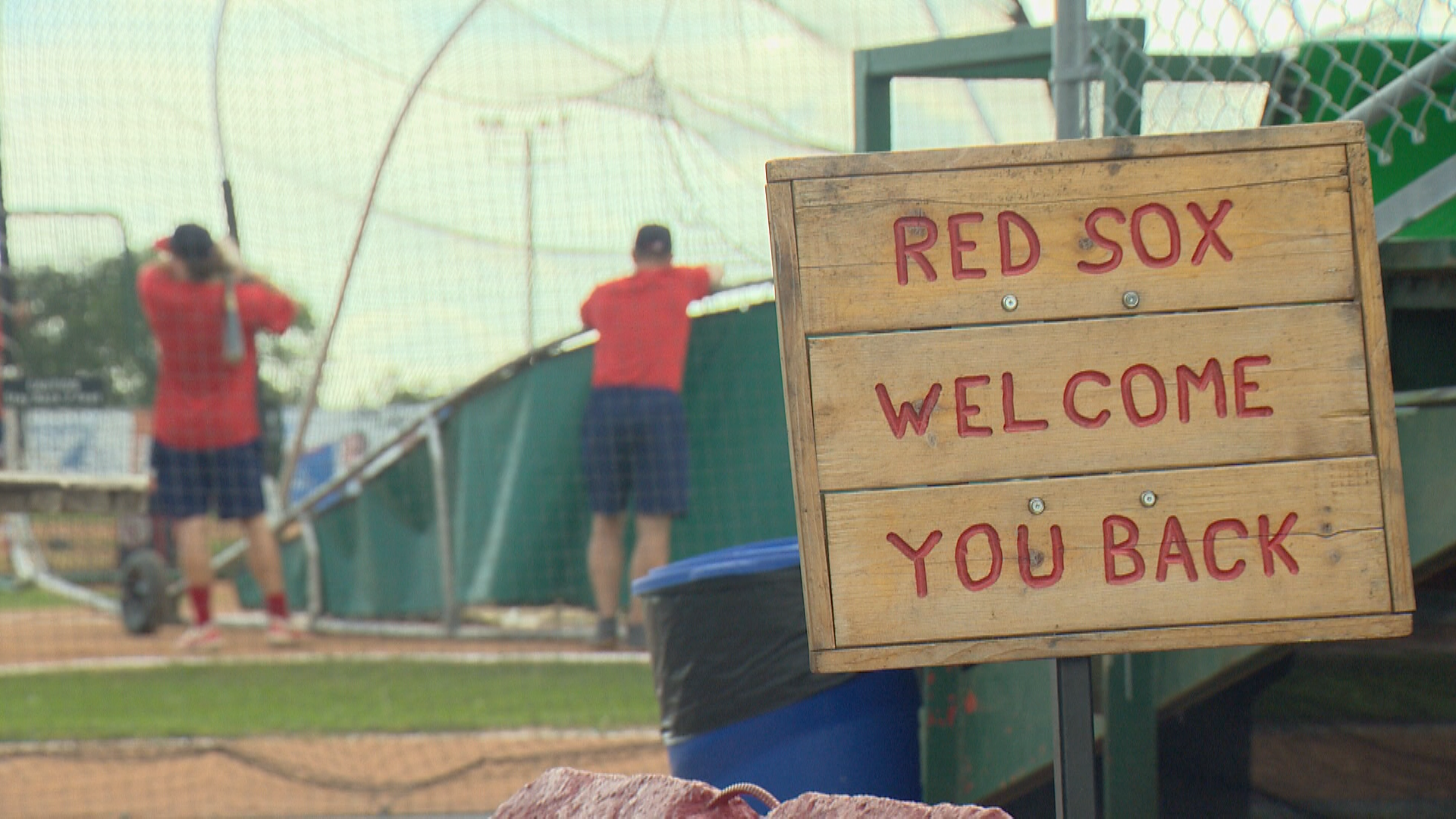
The Regina Red Sox are entering another baseball season with the same mandate that has defined them for decades, which is to stay financially solvent while putting a competitive roster on the field. In the Western Canadian Baseball League, that baseline expectation is becoming a monumental hurdle. While standard promotional copy always promises a renewed commitment to championship baseball and family-friendly entertainment, the reality behind the scenes is a grinding economic battle. Surviving in a secondary sports market requires navigating volatile corporate sponsorships, rising travel costs across vast provinces, and an aging stadium infrastructure that limits revenue growth.
Baseball at this level operates on a razor-thin margin. The Regina Red Sox do not have the luxury of multi-million dollar broadcast deals or public subsidies to cushion the blow of a bad month. Every rainy game day directly threatens the bottom line. To understand how the club plans to step up to the plate this year, you have to look past the roster adjustments and examine the balance sheet.
The Broken Stadium Economics of Currie Field
You cannot talk about the future of baseball in Regina without addressing the physical constraints of Currie Field. Opened in use decades ago, the ballpark is a relic of an era when fan expectations were drastically different. Modern sports franchise viability relies heavily on premium seating, diverse concessions, and experiential spaces that keep casual fans engaged even when the home team is losing. Currie Field struggles to provide any of these.
The lack of modern amenities creates an immediate revenue ceiling. Corporate sponsors want luxury boxes or at least designated, high-visibility hospitality areas to entertain clients. When a facility cannot offer those premium packages, the club misses out on the highest-margin revenue streams available in minor-league sports.
Relying purely on standard grandstand ticket sales and basic concession stands is a precarious way to run an organization. It means the club must maximize volume, filling every seat possible for every home game. But in Saskatchewan, the weather rarely cooperates for a flawless two-month stretch. A single weekend series washed out by summer storms can erase the projected profit margin for an entire month, leaving executives scrambled to make up the deficit through late-season promotions.
The Talent Pipeline Challenge
Securing a winning roster in the WCBL requires navigating a complex recruitment ecosystem. The league relies heavily on collegiate players, particularly those coming from American junior colleges and NCAA programs looking to maintain their edge with wood-bat experience during the summer months.
Winning this talent war is not just about scouts finding the right players. It is an administrative and financial puzzle.
- Immigration and Visas: Securing the necessary paperwork for international players is a bureaucratic hurdle that grows more complicated and expensive each year. Delays can ruin a team's early-season chemistry.
- Housing Networks: Finding affordable, temporary summer housing for a roster full of out-of-town athletes in a tight rental market is a massive logistical strain. The club relies heavily on local host families, a resource that requires constant cultivation and management.
- The Exposure Gap: Major American college players have endless summer league options closer to home, such as the Cape Cod League or the Northwoods League. To convince top-tier talent to come north to Regina, the organization has to pitch superior playing time, high-quality coaching, and a track record of developmental success.
When recruitment falters, the product on the field suffers, which immediately reflects in the local attendance numbers. It is a direct, unforgiving correlation.
The Corporate Sponsorship Squeeze
Small-market sports teams live and die by local corporate partnerships. In Regina, the competition for those corporate dollars is fierce. The Red Sox are not operating in a vacuum; they are competing directly with the massive cultural footprint of the Saskatchewan Roughriders, alongside hockey franchises and various community events.
Local businesses only have so much marketing budget to distribute. During economic downturns or periods of high inflation, those community marketing budgets are often the first things to get trimmed. For a baseball team, losing a major outfield wall sponsor or a prominent game-day activation partner means immediate budget cuts elsewhere, often affecting player amenities or promotional marketing.
To fight back, management has to shift away from traditional billboard-style advertising toward highly integrated partnerships. It is no longer enough to just hang a sign on the outfield fence. Businesses want digital engagement, community outreach tie-ins, and measurable returns on their investment. Delivering that level of corporate activation requires dedicated staff and creative execution, adding yet another layer of operational cost to an already lean organization.
The Rising Cost of the Road
The geography of western Canadian sports is notoriously unforgiving. Travel is one of the largest line items in the club's annual operating budget, and it is entirely non-negotiable.
Long bus trips across provincial borders mean significant expenses for fuel, professional drivers, hotel rooms, and player meals. When fuel prices spike, the team’s projected travel budget can be blown apart before the season is even halfway through. Unlike professional major leagues, these teams cannot simply raise ticket prices mid-season to cover the shortfall without risking a severe backlash from their core fan base.
This reality forces difficult choices. Every dollar spent on an extra night in a hotel to ensure players are rested is a dollar that cannot be spent on upgrading training equipment or improving the fan experience at the home ballpark. Managing these trade-offs is a continuous, delicate balancing act that happens entirely out of sight of the fans cheering in the stands.
Adapting to the Modern Fan
The casual sports fan today has completely different expectations than a spectator did twenty years ago. Entertainment options are endless, and a baseball game that lasts three hours needs to offer more than just the action on the diamond to keep people in their seats.
The Red Sox have to invest heavily in the non-baseball elements of the game-day experience. This means on-field promotions between innings, themed nights, improved audio-visual production, and a diverse food and beverage menu that goes far beyond standard hot dogs and peanuts.
Implementing these changes requires upfront capital and a willingness to take risks on new initiatives. Some promotions land perfectly and drive massive walk-up ticket sales, while others fall flat, leaving the club to absorb the promotional costs. The margin for error is non-existent, yet staying stagnant is a guaranteed recipe for declining attendance. The franchise must evolve its presentation continuously just to maintain its current market share.
The Path Forward
The path forward for the Regina Red Sox cannot rely on nostalgia or community goodwill alone. While a historic legacy provides a loyal foundation, long-term sustainability requires aggressive operational modernization.
The organization must continue to pressure local stakeholders for facility upgrades or a concrete plan for a new stadium venue that unlocks modern revenue streams. Simultaneously, they must refine their corporate partnerships to offer undeniable value to local businesses, ensuring a stable influx of capital that can withstand fluctuating ticket sales.
The upcoming season will not be defined merely by the wins and losses recorded in the standings. The true measure of success will be how effectively the front office manages the structural economic pressures that threaten to restrict the club's growth. Survival in this landscape demands relentless financial discipline and an unwavering focus on the bottom line.



.png/revision/latest?cb=20211008004133)