The rain in Kuala Lumpur does not fall so much as it arrives, heavy and warm, turning the zinc roofs of Petaling Jaya into snare drums and blurring the distant, neon-lit spires of the Petronas Towers into smudges of gold.
Inside a cramped kopitiam just off Jalan Gasing, an old man named Uncle Lim—let us call him that, a composite of the millions of ordinary Malaysians who watched the 1MDB scandal unfold like a slow-motion car crash—stirs his kopi-o with a clinking metal spoon. He is looking at his phone. On the screen is a headline about numbers so vast they lose their edges, followed by a number much smaller, yet still entirely unreachable for a man who spent forty years selling hardware to put two daughters through university. Learn more on a connected issue: this related article.
Twelve million dollars. Roughly fifty million ringgit.
Paid. Settled. Cleared. Additional reporting by NPR explores related views on the subject.
And with that wire transfer, the iron doors of Kajang Prison effectively swung open for Najib Razak, the former Prime Minister convicted of looting billions from a sovereign wealth fund meant to build the future of Uncle Lim’s grandchildren. He is not walking out into a public square, of course. He is going home. House arrest. A gilded cage in an upscale neighborhood of Kuala Lumpur, secured by a royal addendum and backed by a stern warning from the Istana Negara, the national palace itself.
Do not challenge this. The King has spoken. The matter is closed.
Silence.
That is what the twelve million dollars really bought. Not just a change of venue from a concrete cell to a sprawling villa, and not merely the reduction of a twelve-year sentence that had already been halved once before. It purchased a sudden, suffocating quiet over the most contentious legal and moral battle in modern Southeast Asian history.
To understand why a single royal decree can freeze an entire nation’s vocal cords, you have to understand the invisible architecture of power in Malaysia. Outsiders often read headlines about royal pardons and see a simple binary: democracy versus monarchy, justice versus corruption. They miss the deep, cultural gravity that holds the federation together. In Malaysia, the Agong—the rotating King chosen every five years from among the nine hereditary state rulers—is not merely a ceremonial ribbon-cutter. Under Article 42 of the Federal Constitution, the power of pardon is an absolute royal prerogative. It is the ultimate circuit breaker in a political system frequently shorted out by racial tension, party fragmentation, and parliamentary deadlock.
Think of the royal pardon like the emergency override switch on a high-speed train. When the engineers are fighting in the cab and the tracks ahead are washed out, the person holding that key has the legal authority to pull the lever, bypassing every standard brake, every gauge, and every protocol. You do not debate the person holding the override key while the train is moving. In fact, questioning the exercise of royal prerogative in Malaysia carries the very real risk of crossing into the dreaded "3R" territory—Race, Religion, and Royalty—where sedition laws wait like tripwires in the dark.
I remember the electric, almost dizzying euphoria of May 2018. Standing outside a polling station in Selangor as the results trickled in past midnight, strangers wept and hugged one another on the asphalt. For the first time since independence in 1957, the ruling coalition had been toppled. It felt as though a heavy, damp blanket had been lifted off the country. When Najib Razak was finally hauled into court, convicted by High Court judges, and saw his appeals unanimously rejected by the Federal Court in August 2022, it felt like proof that the system worked. That even the son of a founding father, a man who once dined with world leaders and commanded billions, could be held to the same law as the kid caught stealing a tin of Milo from a convenience store.
That feeling is gone now. In its place is a cold, pragmatic confusion.
Let us look closely at the mechanics of what just happened, because the devil is always hiding in the fine print of administrative law. Najib Razak was originally sentenced to twelve years in prison and fined 210 million ringgit for his role in the SRC International case—a subsidiary of 1MDB from which 42 million ringgit flowed directly into his personal bank accounts. Earlier, the Pardons Board, chaired by the previous King, halved his prison time to six years and slashed that 210-million-ringgit fine down to 50 million ringgit.
Then came the phantom document. For months, rumors swirled in the corridors of Putrajaya about a "royal addendum"—an additional order issued alongside the main pardon, allegedly permitting Najib to serve the remainder of his reduced sentence under house arrest. Politicians danced around its existence. Cabinet ministers claimed ignorance or cited confidentiality. Lawyers filed affidavits. The public was left squinting at shadows, trying to figure out if a secret order actually existed, and whether the unity government of Prime Minister Anwar Ibrahim—who built his entire decades-long political career on a crusade against corruption, only to form an alliance with Najib’s old party, UMNO, to secure a parliamentary majority—was quietly facilitating a backdoor exit for his former nemesis.
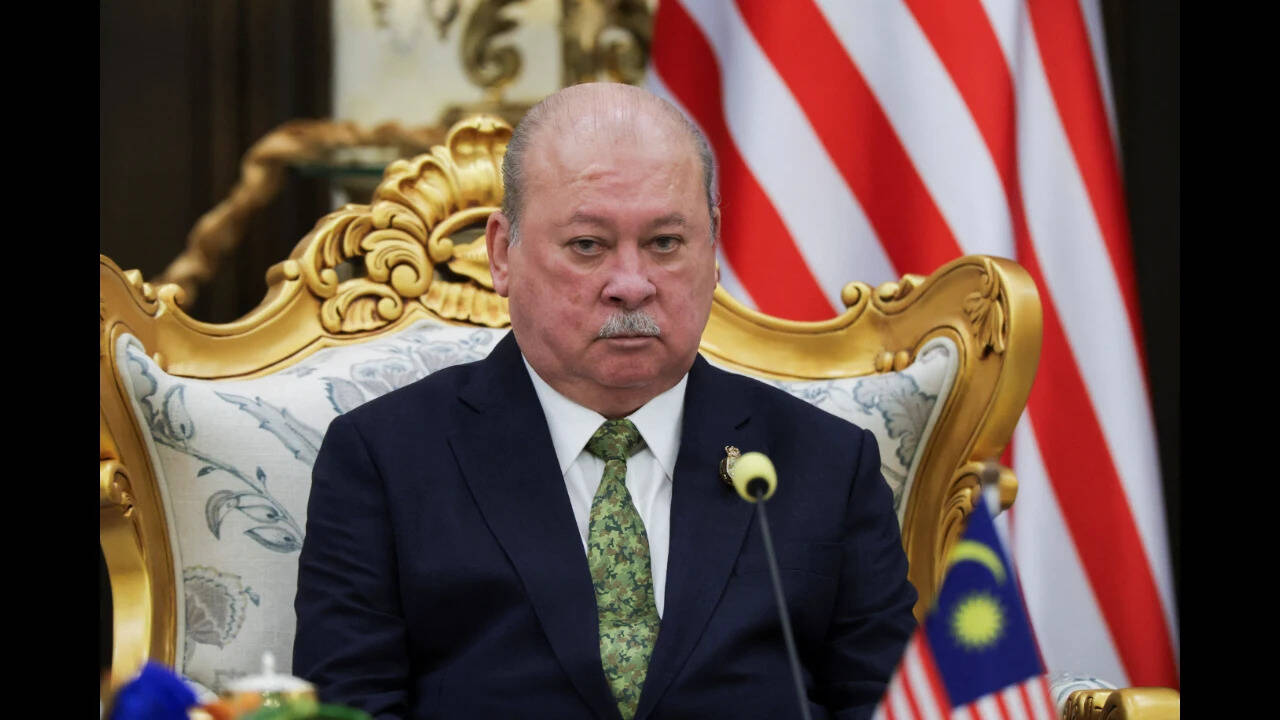
Now, the shadow has stepped into the light. The 50-million-ringgit fine—roughly twelve million US dollars—has been paid. The house arrest order is no longer a rumor whispered in the halls of the Palace of Justice. And the current King, Sultan Ibrahim of Johor, a monarch known for his blunt, no-nonsense demeanor and fierce protection of royal authority, has drawn a thick red line in the sand. Challenging the pardon, or dragging the royal prerogative back into the mud of partisan street politics and endless judicial reviews, will not be tolerated.
You can almost hear the collective sigh of exhaustion across the peninsula.
Consider a hypothetical young lawyer in Kuala Lumpur—let’s call her Aisha. She graduated from law school in 2019, inspired by the prosecutors and judges who stood firm against immense political pressure during the 1MDB trials. She believed, with the fierce, unblemished certainty of youth, that the rule of law was a concrete wall. Today, Aisha sits at her desk staring at the Federal Constitution, trying to reconcile two truths that refuse to sit comfortably in the same room. Truth one: the King acted entirely within the bounds of his constitutional power under Article 42, and historical precedent shows Malaysian courts almost never interfere with the merits of a royal pardon. Truth two: a man convicted of orchestrating one of the largest kleptocracies in human history is sleeping in his own bed after serving less than a fraction of his original sentence, while the bill for 1MDB’s debt—tens of billions of ringgit—will still be paid out of Aisha’s taxes well into her retirement.
How does Aisha explain that to her clients? How does a teacher in Penang explain civic duty to a classroom of sixteen-year-olds?
It is easy to point fingers and demand outrage, yet the reality on the ground is tangled in political survival. Prime Minister Anwar Ibrahim walks a tightrope stretched over a canyon. Without the support of UMNO, the party Najib once led and still commands deep loyalty within, Anwar’s government collapses tomorrow. If his government collapses, the door opens to a hardline opposition coalition that threatens the multicultural fabric of the nation. So, compromises are made. Quiet accommodations are reached. The sharp edges of justice are filed down to keep the peace.
This is the invisible tax of political stability. Nobody sends you an invoice for it, and it never shows up on a consumer price index, yet everyone pays it. You pay it in the slight narrowing of your expectations. You pay it in the cynical shrug that replaces genuine civic engagement. When twelve million dollars can be produced—from where, exactly, remains a question few dare to ask too loudly—to unlock the gates of a prison, the message sent to every civil servant, every corporate executive, and every traffic cop on the street corner is unmistakable. Consequences are negotiable, provided your leverage is heavy enough.
History shows us this pattern is rarely unique to one nation, though Malaysia wears it with a distinctly polite, deferential grace. From the post-Watergate pardon of Richard Nixon in the United States to the tangled amnesty deals of post-authoritarian regimes across Latin America and Asia, states frequently trade the pure satisfaction of accountability for the immediate necessity of institutional calm. Leaders tell themselves that the country needs to "move on," that reopening wounds only bleeds the economy dry and scares away foreign investors who prefer predictable autocracies or stable coalitions over messy, protracted legal wars.
Perhaps they are right. Investors hate chaos. The ringgit prefers calm waters. Yet there is a profound difference between healing a wound and simply painting over the scar while the infection remains underneath.
In the kopitiam on Jalan Gasing, the rain begins to ease, dripping lazily from the awnings onto the wet pavement. Uncle Lim finishes his coffee. He does not slam his fist on the marble table. He does not march into the street with a placard. He knows the rules of the house he lives in. He knows that in Malaysia, there are lines you do not cross, questions you do not ask once the gong has been struck, and powers that sit far above the reach of a ballot box.
He sets a few crumpled ringgit notes beside his empty cup, picks up his umbrella, and steps out into the humid afternoon, blending seamlessly into a crowd of people who have all decided, without speaking a single word to one another, that it is safer to look at their shoes than to look up at the palace on the hill.