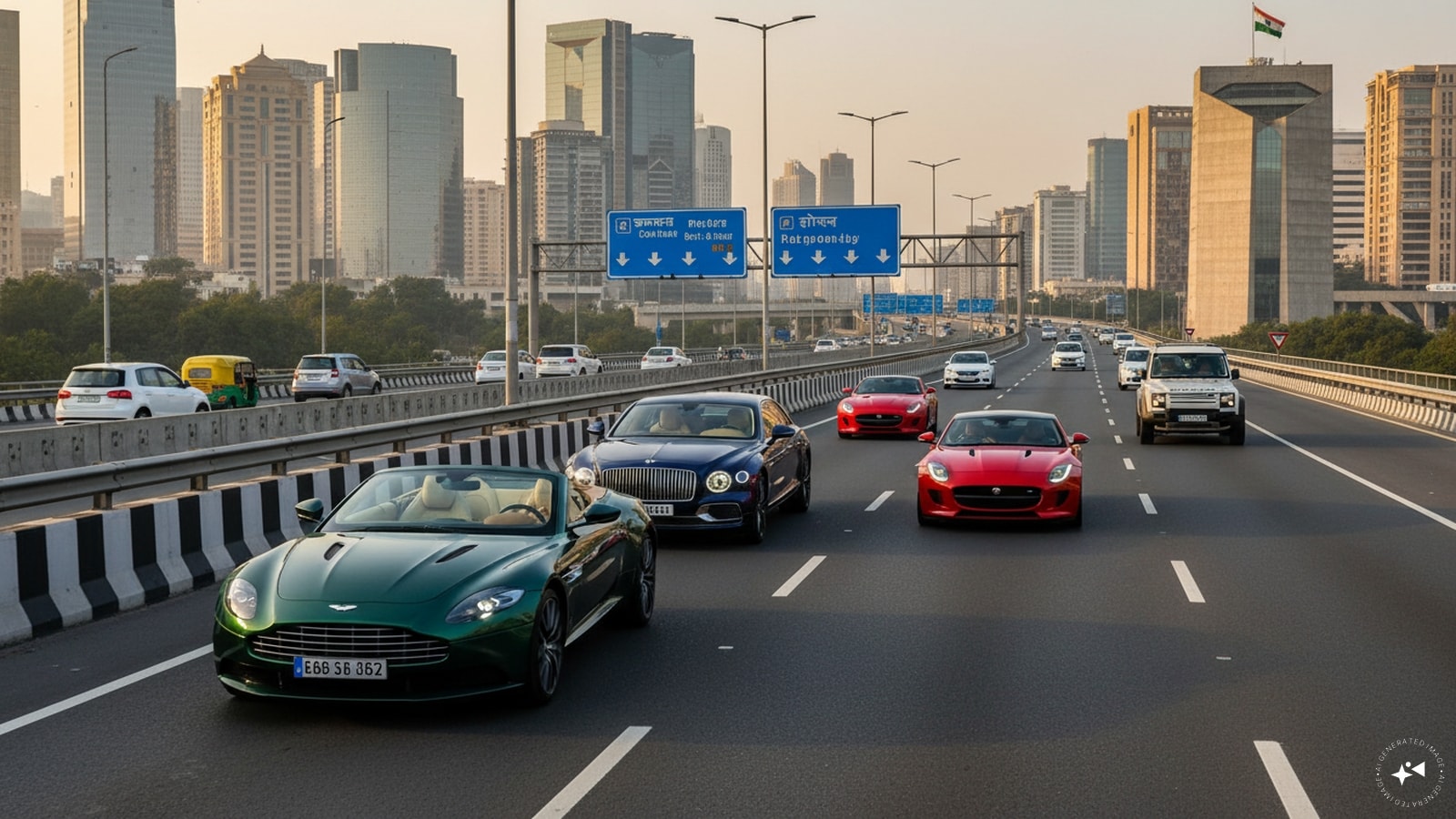
For decades, the math of automotive desire in South Asia was a punishing exercise in geometry and tax codes. Imagine standing in a high-ceilinged Mumbai showroom, tracing the hand-stitched leather grain of a British grand tourer, only to realize that half of what you were paying for had nothing to do with aluminum, engineering, or craftsmanship. It had to do with a wall. A towering, impenetrable customs barrier that levied up to a 110 percent tax on completely built units shipped straight from the assembly lines of England.
To buy a thoroughbred supercar meant paying for two—one for yourself, and effectively one for the state.
That invisible wall is currently crumbling. Under the India-UK Comprehensive Economic and Trade Agreement, the landscape of ultra-luxury performance is rewriting itself in real time. Regulators are finalizing a structured quota framework allowing over 10,000 British-origin vehicles to enter the country under slashed tariff brackets. For the legendary names of British motoring—Aston Martin, Bentley, Jaguar Land Rover, McLaren, and Rolls-Royce—the shift is tectonic.
Consider what happens next: the arithmetic of exclusivity is changing.
Take a hypothetical buyer named Sameer, a self-made tech entrepreneur who spent years admiring the sculptural lines of a mid-engine British supercar from behind a digital screen. For him, the barrier wasn't merely monetary; it was an existential question of value. Why pay nearly eight crore rupees for a machine that cost a fraction of that to build just outside of London? It felt less like a purchase and more like a penalty.
When Jaguar Land Rover moved first, slicing tens of lakhs off heavy-hitting icons like the Range Rover SV, they didn't just adjust a price tag. They dropped an anchor into a market that had drifted into hyper-inflationary territory. Then came McLaren, with downward adjustments scaling into multiple crores across the 750S and GTS ranges, transforming cars that were once locked behind an elite ceiling into attainable objects of obsession for a broader tier of collectors. Aston Martin followed suit, recalibrating the baseline for its entire stable, from the nimble Vantage to the roaring Vanquish.
The mechanics behind this shift rely on a Tariff Rate Quota system. In its initial phase, large-engine internal combustion vehicles—specifically petrol powerplants exceeding 3,000cc—see their import duties plummet from a crushing 110 percent down to 30 percent. Over a five-year horizon, those in-quota duties will compress further toward a nominal 10 percent, while the annual quota volume expands significantly.
Yet, this is not a free-for-all clearance sale. The rules of origin are strict. A badge is not enough; the metal must be forged and bolted together on British soil. Vehicles built in secondary European hubs, such as certain popular SUVs assembled in Slovakia, miss out entirely. The geographic pedigree matters just as much as the crest on the hood.
For the legacy marques, this quota-bound opening represents a delicate dance. They are not merely dumping inventory; they are recalibrating brand gravity. Some manufacturers may choose to pass every rupee of tax relief down to the consumer, sparking a rush of fresh garage acquisitions. Others might absorb a portion of the savings to reinforce local after-sales infrastructure, build bespoke customization studios, or hedge against currency volatility.
The psychological shift is profound. For years, the ultra-wealthy buyer in Mumbai, Bengaluru, or New Delhi treated foreign luxury imports as trophy assets burdened by bureaucratic friction. Now, the conversation has shifted from endurance against the odds to pure, unadulterated engineering appreciation. The barriers are lowering, the quotas are opening, and the open road is suddenly looking a lot closer.
Auto Imports From UK To Get Cheaper As Govt Set To Greenlight Import Of Over 10,000 Cars
This video provides a detailed breakdown of the regulatory decisions and market implications surrounding the upcoming UK car import quotas.
:max_bytes(150000):strip_icc():focal(749x0:751x2)/chrissy-teigen-wren-split-071723-6256dab1033241bca6a15fdcd0f5c26a.jpg)

