The ink on diplomatic cables rarely smells like ozone. It usually smells like old wool, damp paper, and the stale coffee of a basement conference room where men and women in gray suits argue over the map of the world.
Outside those rooms, the world moves on muscle and momentum.
Meet Rajesh. In a bustling workshop on the outskirts of Mumbai, the air tastes faintly of copper and heated motor oil. Rajesh is not a diplomat. He has never set foot in Washington, and he does not own a television set tuned to the frantic chatter of cable news. He is a machinist, twenty-eight years into a career spent shaping alloy components for industrial pumps. His calloused thumbs know the exact tolerance of a brass fitting before his eyes can even see the micro-fracture.
Rajesh knows that his livelihood depends on two things: the quality of his steel and the reliability of the shipping lanes that carry it across the Arabian Sea. What Rajesh does not know—yet—is that a vote cast thousands of miles away in the United States Senate is about to alter the weight of every crate he packs.
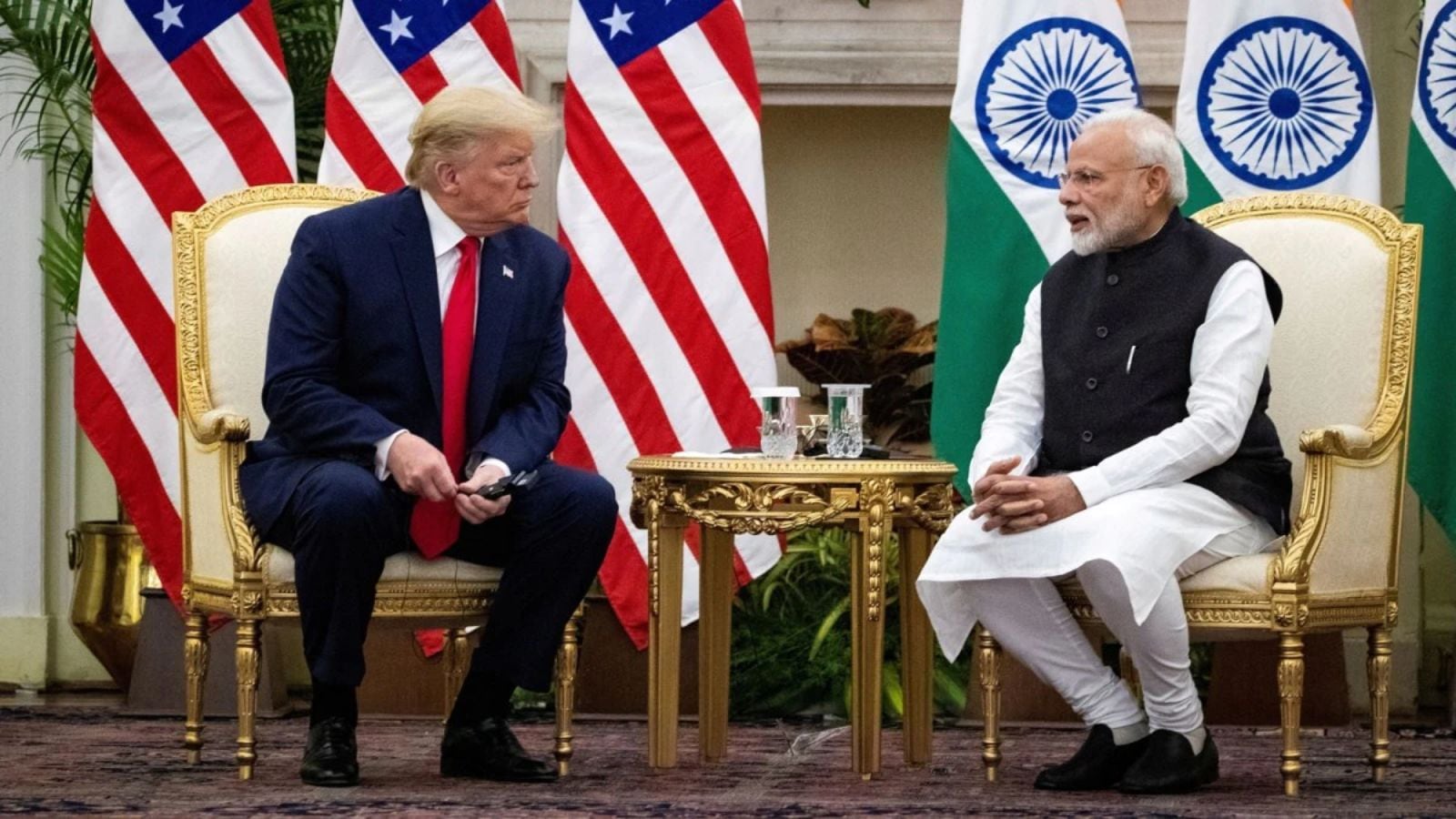
We are living through a quiet architectural shift in international commerce. When the US Senate moves to clear sweeping sanctions legislation targeting nations that trade heavily with Moscow, the shockwaves do not strike like a thunderbolt. They settle like sediment. They drift downward through bilateral treaties, corporate boardrooms, supply chain ledgers, and finally, onto the concrete floor of Rajesh’s workshop.
At the center of this legislative machinery lies a blunt, intimidating instrument: the threat of one hundred percent tariffs.
To understand why this matters to a machinist in Maharashtra or a shipping clerk in Chennai, we have to look past the sterile language of legislative summaries. The Senate bill is designed to construct an economic firewall. The logic is stark. If you continue to purchase discounted Russian energy or maintain traditional trade corridors that bypass Western financial clearinghouses, the cost of entry to the American market doubles. Overnight.
It is a policy written in black and white. But the real world is lived in shades of gray.
Consider the historical gravity of India's position. For decades, New Delhi has walked a tightrope. It is a diplomatic tradition born of necessity, balancing historic defense ties and energy dependencies against the rising, urgent imperative of a strategic partnership with the West. When global energy markets convulsed following the invasion of Ukraine, India did what any pragmatic state would do: it kept the lights on for one point four billion people. It absorbed discounted crude, stabilizing domestic inflation while the rest of the world scrambled for alternatives.
That pragmatism now carries a heavy invoice.
The Senate's proposed sanctions operate on a simple, brutal premise of economic gravity. The United States remains one of the largest consumer markets on earth. When you threaten a hundred percent tariff on goods originating from countries that refuse to fall in line with total economic isolation of Russia, you are not merely tweaking trade policy. You are forcing a choice.
Imagine standing at a railway switchboard with two incoming trains barreling toward the same junction.
On one track lies decades of strategic autonomy, cheap raw materials, and an independent foreign policy that refuses to take orders from any single capital. On the other track lies access to Western capital, high-tech partnerships, and the avoidance of punitive trade walls that could suffocate export-driven sectors like textiles, pharmaceuticals, and precision manufacturing.
There is no compromise track. There is only the switch.
Down in Mumbai, Rajesh’s employer received an email from their primary American distributor last Tuesday. It was polite, corporate, and terrifyingly vague. It asked about "contingency planning" and "regulatory exposure." It did not use the word tariffs, but the shadow of the number one hundred hung over every sentence like a storm cloud over the monsoon sea.
This is the hidden cost of geopolitical posturing. We talk about sanctions as if they are abstract chess pieces moved across a mahogany board. We count votes. We measure export volumes in billions of dollars. But the human reality is measured in hesitation. It is measured in canceled expansion plans, frozen hiring freezes, and the quiet dread of a small business owner who realizes his profit margins have just been mortgaged to a Senate subcommittee.
The legislation assumes that economic pain travels in a straight line. If you squeeze here, the target bends there. But modern supply chains do not work like billiard balls. They work like spiderwebs. Tug on one strand in Washington, and a craftsman in India feels the vibration in his fingertips.
What happens when a hundred percent tariff hits? The math ceases to make sense. A pump component that costs fifty dollars to manufacture suddenly costs one hundred dollars to clear customs in New Jersey. The American buyer looks elsewhere. The workshop in Mumbai loses its contract. Rajesh’s overtime is cut.
And for what? The architects of the sanctions believe they are starving a war machine. They believe that by tightening the economic vise, they can accelerate an end to hostilities on the European continent. That is the moral clarity of the bill. It is an argument rooted in a desire to stop bloodshed by choking off the financial oxygen of an aggressor.
Yet history teaches us that economic isolation rarely produces clean, predictable outcomes. More often, it hardens resolve. It accelerates the creation of parallel financial systems. It drives nations closer together that might otherwise have remained cautious rivals. When you back a major global economy into a corner with threats of prohibitive tariffs, you do not necessarily force submission. You force innovation around the barrier.
We are watching the fracture of the old globalized consensus. For thirty years, the story of the world economy was one of bridges—container ships crossing every ocean, manufacturing hubs moving wherever labor was cheapest, and capital flowing without regard to national borders.
That story is ending.
The new story is about walls. It is about economic nationalism disguised as security. It is about drawing lines in the sand and daring your trading partners to cross them.
Back in the workshop, the shift whistle blows. The motors wind down, their whine dropping from a sharp shriek to a low, dying hum. Rajesh wipes his hands on a rag, smears grease across his forehead, and walks out into the humid evening air. He does not know about the Senate committees. He does not know about the complex calculus of secondary sanctions or the geopolitics of energy corridors.
He only knows that his hands are steady, his work is precise, and the world outside his door is starting to feel smaller, colder, and much more dangerous than it did yesterday.
The vote in Washington has been tallied. The bill moves forward. And the tide continues to turn, indifferent to the lives it carries along in the wash.