The proclamation that the United States will unilaterally secure the Strait of Hormuz and levy a 20 percent reimbursement fee on commercial cargo represents a fundamental shift in the economics of global maritime trade. Rather than operating as a public goods provider that maintains open seas as a structural subsidy to global commerce, the United States is proposing a transition to a transactional, fee-for-service security model. Analyzing the viability of this initiative requires evaluating three core domains: the physical transit economics of the chokepoint, the legal and operational mechanics of tariff collection, and the macroeconomic feedback loops triggered by maritime escalation.
The Economics of the Hormuz Chokepoint
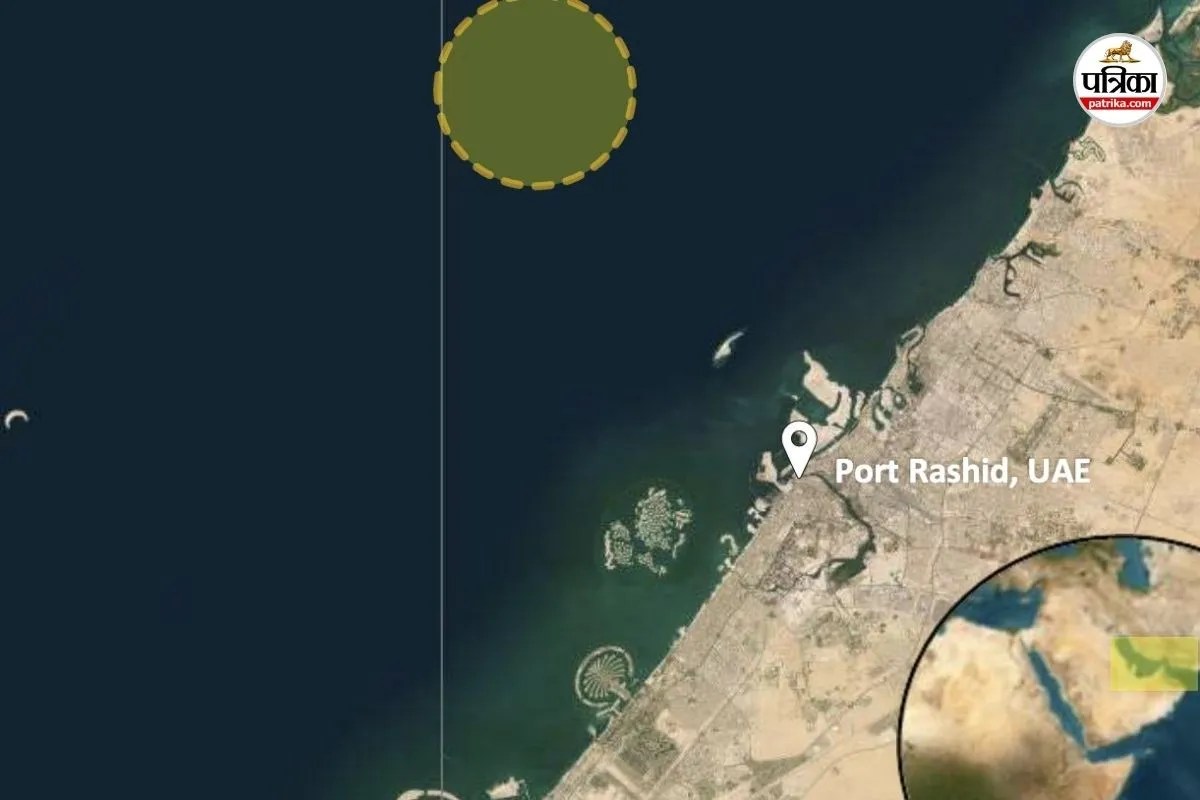
The Strait of Hormuz is the most critical maritime chokepoint in the global energy supply chain. Approximately 20 percent of the world's petroleum liquids and liquefied natural gas (LNG) transits this narrow waterway daily, constrained by a traffic separation scheme consisting of two-mile-wide inbound and outbound lanes. For a closer look into this area, we suggest: this related article.
The financial footprint of the proposed 20 percent fee is best understood by modeling its direct impact on a standard Very Large Crude Carrier (VLCC).
The Transit Cargo Cost Equation
To quantify the direct cargo surcharge ($C_s$), we establish a baseline cost function for a standard cargo transit: For additional background on this topic, detailed analysis can be read on Financial Times.
$$C_s = V \times P \times R_t$$
Where:
- $V$ is the volume of the cargo in barrels. A standard VLCC carries approximately $2,000,000\text{ bbl}$.
- $P$ is the spot price of the commodity (e.g., Brent Crude). Let $P = $80\text{ per barrel}$.
- $R_t$ is the proposed tariff rate ($20%$, or $0.20$).
Applying these values:
$$C_s = 2,000,000 \times 80 \times 0.20 = $32,000,000$$
A $32 million fee per supertanker transit represents an unprecedented escalation in shipping overhead. On a per-barrel basis, this fee adds exactly $16.00 of regulatory premium to the cost of crude oil passing through the strait.
This cost function does not exist in isolation. It operates alongside fluctuating war-risk insurance premiums ($I_p$), which spike during periods of kinetic escalation. The total transit premium ($T_p$) is therefore defined as:
$$T_p = C_s + I_p$$
Under normal operating parameters, $I_p$ represents a fraction of a percent of the vessel's hull value. During active military exchanges—such as the recent attacks east of Oman—insurance underwriting fees scale exponentially, sometimes reaching 1 to 2 percent of hull value per transit. This dual-cost structure forces shipping consortia to choose between paying a prohibitive security fee or navigating without sovereign protection, risking total loss.
Operational and Legal Collection Barriers
Implementing a 20 percent fee on international commercial transits faces severe structural friction under existing maritime law. The United Nations Convention on the Law of the Sea (UNCLOS) outlines the legal regime governing international straits.
The Transit Passage Conflict
Article 38 of UNCLOS guarantees the right of transit passage, which states that all ships enjoy the freedom of navigation solely for the purpose of continuous and expeditious transit through international straits. Under this framework, coastal states cannot hamper, suspend, or tax passage. While the United States is not a formal party to UNCLOS, it historically recognizes and enforces its navigational provisions as customary international law.
Introducing a mandatory fee to cover security costs directly violates the international consensus maintained by the International Maritime Organization (IMO). The IMO Council maintains that there is no legal instrument allowing a state to levy unilateral tolls on international straits.
Collection Mechanics and the Enforcement Dilemma
Assuming the United States proceeds irrespective of international legal structures, the operational enforcement of the fee requires a complex maritime customs apparatus. The administration has not clarified whether the levy will be assessed based on the free-on-board (FOB) value of the cargo, the gross tonnage of the vessel, or a flat-rate equivalent.
Physical collection at the point of transit is practically impossible. Boarding every commercial vessel to verify cargo manifests and collect fees would cause catastrophic logistical bottlenecks, halting the flow of 20 million barrels of oil per day.
An alternative pathway is an indirect ledger-and-sanction system:
- Registry Tracking: Utilizing Automatic Identification System (AIS) data and satellite tracking to log all vessels transiting the strait.
- Digital Invoicing: Issuing digital invoices to the registered shipowners, operators, or cargo charterers.
- Port Access Denial: Enforcing payment by threatening to deny non-compliant vessels or parent fleets access to U.S. ports, financial systems, or maritime insurance networks.
The limitation of this strategy is that a significant portion of the oil transiting the strait is destined for non-Western economies, particularly China. State-owned entities in importing countries are highly likely to bypass the U.S. financial system entirely, rendering digital enforcement mechanisms ineffective against the very vessels using the waterway.
The Geopolitical Game Theory of the Renewed Blockade
The announcement of a targeted "Iranian blockade" introduces a high-stakes, tit-for-tat escalation loop. By restricting only Iranian vessels and their customers from entering or leaving the strait, the United States is attempting to choke off Iran's remaining energy export pathways while minimizing disruption to other global shippers.
This selective blockade creates a highly unstable strategic equilibrium, which can be modeled using basic game theory:
- U.S. Strategy: Maintain localized dominance to keep the strait open for allied shipping while denying transit to Iranian exports. Collect fees from neutral parties to offset naval operation costs.
- Iranian Counter-Strategy: Disrupt the passage of neutral vessels using low-cost asymmetric tactics (e.g., sea drones, limpet mines, and fast-attack craft). The goal is to prove that the U.S. cannot guarantee security, thereby forcing shippers to pay Iranian-proposed tolling alternatives or bypass the strait entirely.
The recent targeting of the container ship GFS Galaxy east of Oman illustrates the vulnerability of this model. Even if U.S. forces successfully patrol the core shipping lanes along the Omani coast, they cannot protect every vessel from long-range precision strikes or asymmetric drone deployments.
This dynamic is further complicated by competing sovereign claims. Iran’s foreign ministry has countered the U.S. proposal by asserting its own historical role as the guardian of the strait, suggesting it would implement its own, lower tolling system. This creates a scenario where commercial vessels could face competing demands for payment from both the United States and Iran, effectively doubling the regulatory cost of transit.
Macroeconomic Feedback Loops and Market Contortion
The financial markets reacted immediately to the policy declaration, with Brent crude surging past $80 per barrel and major equity indices registering significant losses. The market is pricing in two distinct risks: a prolonged supply disruption and a systemic shock to global supply chains.
The broader macroeconomic impact operates through a three-stage transmission mechanism:
[U.S. Security Tariff / Escalation]
               │
               ▼
   [Spike in Energy Costs]
               │
               ▼
[Increased Transportation Overhead]
               │
               ▼
 [Global Inflationary Pressures]
This transmission mechanism acts as a regressive tax on global manufacturing and consumer demand. If the 20 percent cargo fee is successfully implemented, the added $16 per barrel of oil will be passed directly to refiners, resulting in a permanent upward shift in global fuel prices.
For the United States, this presents a challenging policy paradox. The stated goal of the operation is to stabilize global markets and lower energy costs. However, the introduction of a security tariff, combined with the inevitable retaliatory strikes, directly drives up the spot price of crude, worsening domestic inflation.
Strategic Recommendation for Maritime Operators
Commercial shipping companies and energy importers cannot treat the "Guardian of Hormuz" declaration as mere rhetoric. The immediate operational reality requires a rapid realignment of risk-management frameworks.
Rather than waiting for a formal legal framework to emerge from Washington, operators must immediately recalculate their route elasticity. At an additional cost of $32 million per VLCC transit, alternative logistics routes that were previously cost-prohibitive—such as routing tankers around the Cape of Good Hope or utilizing overland pipelines across the Arabian Peninsula—become financially competitive.
The immediate tactical move for fleet operators is to run comparative cost-benefit analyses comparing the total transit premium ($T_p$) of the Hormuz route against the increased fuel and time costs of circumnavigating Africa. If the combined cost of the U.S. tariff and war-risk insurance exceeds the $4 million to $6 million overhead of the longer route, diversion is the mathematically optimal choice.