Someone wants to drop a 500-megawatt warehouse full of humming graphics processors right next to a quiet rural township. The province sees billions in foreign investment and a shiny new tech reputation. The local mayor sees a strained electrical grid, millions of gallons of vanishing groundwater, and zero local jobs once the concrete dries.
That's the exact fault line splitting Canadian infrastructure politics right now.
Across provinces like Alberta, Ontario, and Quebec, a sharp jurisdictional fight has broken out over who actually gets to say yes—or no—to massive AI data centres. Provincial energy and economic ministers are increasingly asserting top-down authority over grid connections and land approvals, pushing back against municipal councils that want strict zoning bans, noise bylaws, or flat-out moratoriums. When provincial leaders essentially tell local governments "we control who and where," they aren't just flexing political muscle. They're colliding head-on with the reality of how hyper-scale computing alters physical communities.
The Real Reason Provincial Leaders Want Total Control
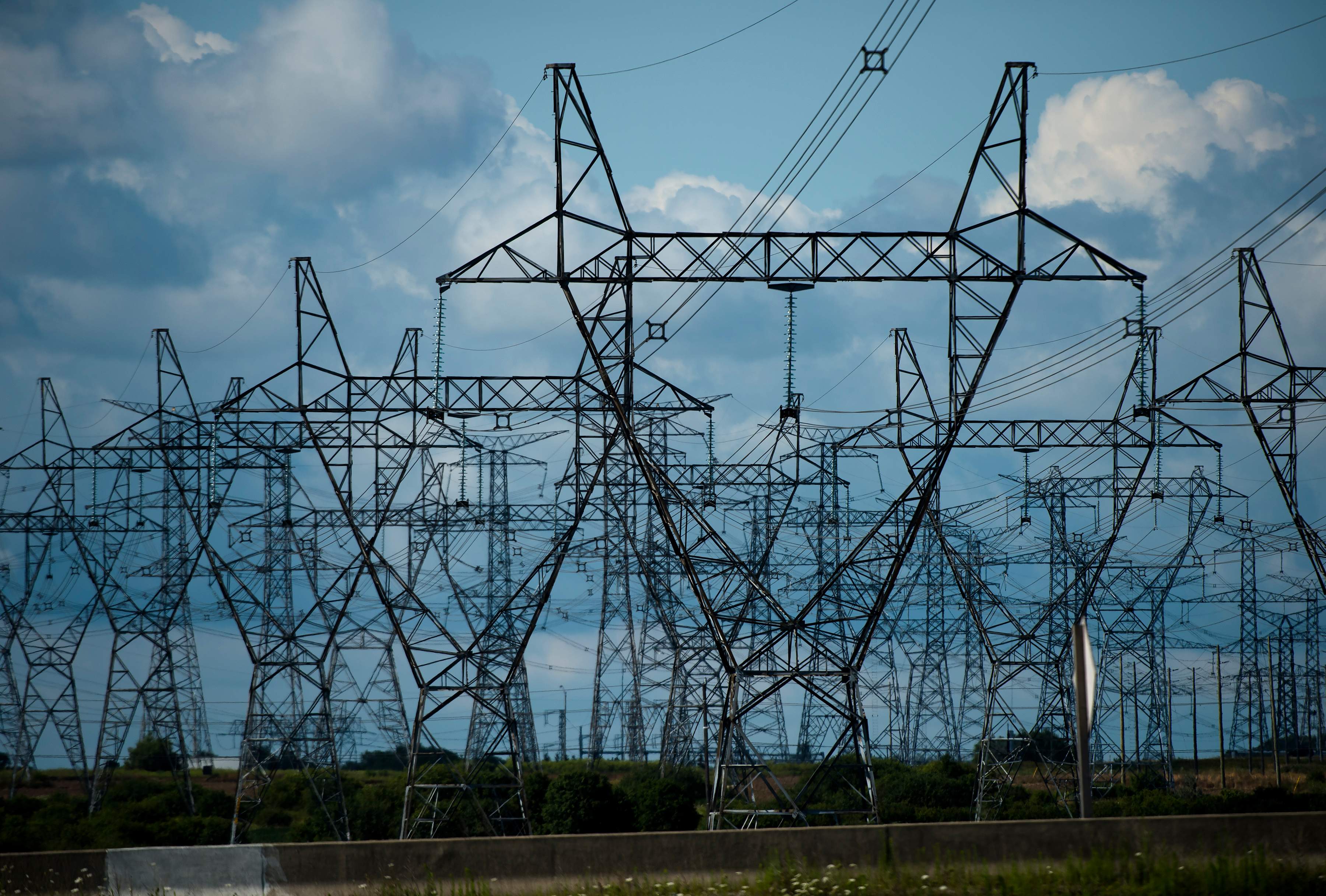
You can't build an AI cluster in a vacuum. Training frontier models requires staggering amounts of continuous baseload electricity, high-voltage transmission lines, and massive cooling infrastructure.
In Canada, electricity generation, transmission planning, and major resource allocation sit squarely under provincial jurisdiction. Organizations like the Alberta Electric System Operator (AESO) and Ontario's Independent Electricity System Operator (IESO) manage grid capacity at a macro level. From a provincial cabinet's perspective, letting a single rural municipality block a multi-billion-dollar data centre over local zoning quirks threatens the entire regional economic strategy.
They have a point, at least on paper.
If every town along a major transmission corridor vetoes grid-adjacent industrial development, clean energy projects and tech investments stall out completely. Provincial ministries argue that centralized planning prevents NIMBYism—Not In My Backyard resistance—from killing generational capital inflows. Alberta's government, for instance, has actively courted large-scale data centre operators by pitching its deregulated power market and abundant natural gas capacity, signaling clearly that provincial regulators hold the master keys to grid interconnection.
Yet local mayors aren't fighting these projects just to be difficult.
What Municipalities Actually Deal With on the Ground
When a tech giant or colocation developer breaks ground, the provincial treasury gets the corporate tax revenue and the press release. The municipality gets the trucks, the hum, and the utility headaches.
I've watched municipal planning meetings turn hostile within minutes once residents realize what a modern AI campus actually looks like. People picture sleek glass offices filled with software engineers. What they actually get is a windowless concrete fortress the size of several football fields, staffed by maybe thirty security guards and HVAC technicians once construction wraps up.
Here is what lands directly on a town council's desk:
- Water consumption battles. Evaporative cooling systems used in large data centres can consume millions of litres of potable water every single day during peak summer heat. In agricultural regions already dealing with drought restrictions, telling local farmers to cut back while a server farm drains the municipal aquifer is political suicide for a mayor.
- Low-frequency noise pollution. Massive arrays of chillers and backup diesel generators produce a constant, low-frequency hum that travels for kilometres across flat rural terrain. Standard municipal noise bylaws rarely account for 24/7 industrial acoustics.
- Grid crowding. When a single facility demands 300 to 1,000 megawatts of power, it eats up the local substation capacity meant for future housing subdivisions, hospitals, or manufacturing plants.
- Minimal long-term employment. Construction brings a temporary boom of electricians and pipefitters, sure. After commissioning, however, automated server racks don't buy groceries, send kids to local schools, or support Main Street restaurants.
Municipalities control local zoning, road access, building permits, and municipal water hookups. Naturally, councils use those exact levers to slow things down when they feel steamrolled by provincial ministries.
How Jurisdictional Power Struggles Play Out in Practice
Under Canadian constitutional law, municipalities are legally "creatures of the province." Provincial legislatures hold the ultimate legal authority to override local zoning bylaws, issue ministerial zoning orders, or strip local boards of approval power altogether.
Ontario has used Minister's Zoning Orders (MZOs) aggressively in recent years to bypass municipal planning delays for priority industrial and housing projects. In Quebec, Hydro-Québec and the provincial energy ministry strictly ration large-load power connections—specifically anything over 5 megawatts—requiring explicit ministerial sign-off before a project even gets plugged in. Alberta relies heavily on the Alberta Utilities Commission (AUC) to approve power plants and transmission hookups, a process that routinely supersedes local county land-use preferences.
Still, legal authority doesn't erase political friction.
If a province overrides a local council to force through an unpopular AI campus, the local government can still make life miserable for the developer. Towns control secondary road upgrades, fire department inspection sign-offs, stormwater drainage permits, and local property tax assessments. A hostile municipality can drag out mundane civil engineering approvals for eighteen months without ever technically violating a provincial mandate.
Developers hate uncertainty even more than they hate strict regulations. When the province says "come on in" and the county says "we'll see you in court," capital quietly moves to another jurisdiction.
The Energy Math Nobody Wants to Say Out Loud
The elephant in the server room is grid capacity.
According to the International Energy Agency (IEA), global electricity demand from data centres, artificial intelligence, and cryptocurrency is projected to double between 2022 and 2026, reaching upwards of 1,000 terawatt-hours—roughly equivalent to the entire electricity consumption of Japan. Canada isn't immune to that surge. Both Ontario's IESO and Hydro-Québec have publicly warned of tightening electricity surpluses as industrial electrification, EV manufacturing, and data centres compete for the exact same megawatts.
Provinces love pitching "clean, hydro-powered AI" to international investors. The catch is that zero-emission baseload power isn't infinite.
If a provincial government hands 400 megawatts of existing hydro or nuclear capacity to a foreign AI operator, that power has to come from somewhere. Either the province builds expensive new generation and transmission lines—costs that often bleed into everyday residential utility bills—or it relies on natural gas peaker plants to bridge the gap. Municipalities end up fielding angry calls from voters whose hydro bills are climbing while a massive tech facility down the road negotiates discounted industrial power rates.
Honestly, it's easy to see why local councillors feel like they're being handed the short end of the stick.
Closed-Loop Cooling and Behind-the-Meter Power Change the Game
Smart developers and forward-thinking provinces are starting to realize that brute-forcing projects past local councils is a losing strategy. The smartest operators are changing their engineering designs before they ever file a zoning application.
Two technical shifts are solving the biggest municipal objections right now.
First, closed-loop liquid cooling eliminates the water fight almost entirely. Instead of evaporating millions of litres of municipal water into the sky, direct-to-chip liquid cooling circulates coolant in a sealed loop, rejecting heat through dry coolers with near-zero ongoing water loss. When a developer walks into a town hall and proves their facility won't touch the local aquifer, half the opposition evaporates overnight.
Second, behind-the-meter generation takes pressure off the local grid. In energy-rich provinces like Alberta, several AI data centre proposals are pairing directly with dedicated off-grid natural gas generation, carbon capture infrastructure, or co-located renewable microgrids. If the facility generates its own electricity without draining the town's substation, municipal anxiety drops dramatically.
What Local Leaders and Developers Should Actually Do Next
If you're a municipal planner, economic development officer, or infrastructure consultant caught in the middle of this tug-of-war, waiting for provincial politicians and mayors to suddenly agree isn't a plan. You have to build guardrails into the local approval process early.
Start by updating municipal zoning bylaws before a land assembly agent shows up at your door. Most rural and suburban zoning codes lump data centres under generic "light industrial" or "warehousing" categories written thirty years ago. Create a specific zoning classification for high-density computing facilities that explicitly sets decibel limits at the property line, mandates closed-loop cooling systems, and requires documented grid-impact studies.
Next, negotiate formal Community Benefit Agreements (CBAs) alongside any development permit. Since data centres create very few permanent jobs, municipalities shouldn't trade away land and infrastructure for empty employment promises. Instead, tie approvals to concrete local funding—dedicated contributions to volunteer fire departments (who have to train for massive lithium-ion battery fires), direct funding for municipal water upgrades, or district heating partnerships that pipe waste server heat into nearby greenhouses or community centres.
Finally, demand transparency on power sourcing. Provincial energy ministries may control who gets a grid connection, but local governments still hold the megaphone in their own communities. Requiring developers to disclose whether they are drawing from the public grid or bringing behind-the-meter generation forces an honest conversation about who actually pays for the infrastructure.
Provinces can dictate where the high-voltage wires go, and mayors can stall the bulldozers on the ground. Until both sides stop treating AI infrastructure like a zero-sum turf war, every megawatt of computing power is going to come with a political fight attached.