Silence.
That is the sound that usually follows the death of a giant, a heavy, suffocating stillness that settles over rooms where decisions are made, leaving behind a sudden, terrifying awareness of just how much weight one person was carrying on their shoulders while the rest of us were looking elsewhere.
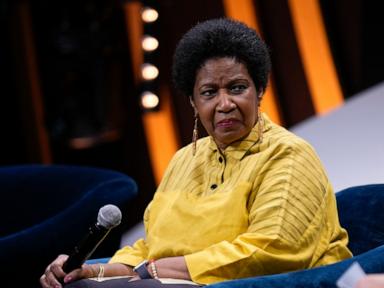
When news broke that Phumzile Mlambo-Ngcuka had died at the age of seventy-one, the official obituaries did what official obituaries always do. They flattened a ferocious, complicated, unstoppable human life into a neat column of dates and titles. First female Deputy President of South Africa. Executive Director of UN Women. Anti-apartheid activist. Educator. Minister of Minerals and Energy.
Read those words on a screen, and they feel cold, almost distant, like plaques bolted to the walls of buildings you walk past without looking up. They tell you what she held, not what she carried. They tell you where she sat, not what she broke open just to pull up a chair.
To understand what we actually lost when Phumzile Mlambo-Ngcuka took her final breath, you have to step away from the podiums in New York and the leather-bound chairs in Pretoria. You have to step into a humid, overcrowded classroom in KwaZulu-Natal in the late nineteen-seventies, or a dimly lit safe house where the curtains stayed drawn against the glare of the apartheid police, or a rural clinic where a mother had to choose between buying bread and buying the medicine that would keep her alive until morning.
Because that is where her story really lived. Not in the titles, never in the titles, but in the stubborn, relentless refusal to accept that half the human race was born to ask permission for the air it breathes.
The Classroom Where Everything Began
Imagine a young woman standing in front of a chalkboard in the early nineteen-eighties. Let us call her Thandi, a composite of the thousands of Black South African girls who sat in segregated classrooms under the brutal arithmetic of Bantu Education, a system explicitly engineered by the apartheid regime to ensure that Black children learned just enough to serve, and never enough to lead.
Thandi’s textbook is missing pages. The roof leaks when the summer storms roll in off the Indian Ocean. Outside the window, the world is policed by armored vehicles and passbooks, a daily reminder that her body, her movement, her very future belong to someone else.
Now, walk Phumzile Mlambo-Ngcuka into that room.
Born in Claremont, a township outside Durban, in November nineteen-fifty-five, Phumzile did not grow up insulated from the machinery of oppression. She grew up inside its gears. After earning her bachelor’s degree from the National University of Lesotho—one of the few places where Black South Africans could breathe slightly freer air while pursuing higher education—she came back to teach.
She taught at Mpumalanga Teachers Training College. She stood in front of young people like our hypothetical Thandi and realized something that would define the rest of her life: an unfair system does not collapse simply because it is evil. It collapses when people are given the tools to dismantle it from the inside, brick by stubborn brick.
Teaching was never just about grammar or history for her. It was a quiet act of insurgency. Every lesson plan was a counter-argument to a state that insisted Black minds were inferior. Every student who walked out of her classroom with their spine a little straighter was a crack in the foundation of white minority rule.
Yet a classroom, no matter how fiercely led, has walls. And the crisis outside those walls was bleeding through the bricks.
By the mid-nineteen-eighties, she had moved to Geneva to serve as the youth director for the World Young Women’s Christian Association. On paper, it looked like a step into the polite world of international non-governmental organizations. In reality, it was an education in global leverage. She learned how international networks moved money, how they applied diplomatic pressure, and how women across the Global South were fighting different versions of the exact same war—a war against systems designed without them in mind.
When she returned to South Africa as the walls of apartheid finally began to buckle, she did not come back looking for comfort. She came back to build.
Walking Into the Fire of 1994
We have a habit, looking backward through the soft focus of history, of treating nineteen-ninety-four as a fairy tale. Nelson Mandela walks free, millions stand in winding lines under the African sun to cast their first votes, and suddenly, miraculously, a rainbow nation is born.
Anyone who actually lived through those years knows how fragile, terrifying, and chaotic that transition really was.
You do not undo three centuries of systemic dispossession with a single election. When Phumzile Mlambo-Ngcuka entered South Africa’s first democratic Parliament in nineteen-ninety-four, the country was standing on a razor’s edge. The treasury was strained. Millions lived without running water, electricity, or basic healthcare. Expectations were sky-high, and the margin for error was zero.
Think of the government in those years as a ship whose crew had just taken the helm in the middle of a hurricane, only to discover that the previous captains had taken the navigation charts and punched holes in the hull before abandoning deck. You had to bail water, patch the wood, and steer toward shore all at the exact same time.
She did not ask for an easy portfolio.
First as Deputy Minister of Trade and Industry, and then, in nineteen-ninety-nine, as Minister of Minerals and Energy, she stepped straight into the beating, uncompromising heart of South Africa’s economy.
Stop and appreciate the sheer audacity of that placement.
For more than a century, South African mining had been the ultimate fortress of white, male capital. It was an industry built on migrant labor, deep-shaft extraction, and boardrooms where a Black woman was expected to serve tea, not rewrite the rules of ownership.
Mlambo-Ngcuka walked into those boardrooms and demanded transformation. She pushed through the Broad-Based Socio-Economic Empowerment Charter for the South African Mining Industry—the Mining Charter—forcing companies that had extracted trillions of rands from South African soil to finally share ownership, management, and opportunity with the people whose backs had built the industry.
The pushback was ferocious. Critics called her policies reckless. Markets trembled. Executives whispered in hallways that she was going to drive away foreign investment and wreck the economy.
She did not blink. She understood something that frightened men in tailored suits rarely grasp: stability built on permanent exclusion is an illusion. You cannot have a healthy economy in a country where the majority of citizens are locked outside the gates watching a tiny minority feast.
She was tough, unsentimental, and relentlessly practical. She did not care about ideological purity if it failed to put food on a table or electricity into a township shack. When she later co-founded the Umlambo Foundation to support school leadership and teachers in impoverished communities, it came from that same bone-deep conviction: grand speeches mean nothing if the local school principal doesn't know how to manage a budget or inspire a struggling staff.
The 2005 Crucible
Then came June two-thousand-and-five.
History rarely asks if you are ready before it drops the weight of a nation onto your collarbone. President Thabo Mbeki dismissed his deputy, Jacob Zuma, amid a swirling corruption scandal that threatened to tear the ruling African National Congress apart at the seams. To fill the void, Mbeki turned to Phumzile Mlambo-Ngcuka.
Suddenly, she was the highest-ranking woman in the history of South Africa.
It should have been a moment of pure, unalloyed triumph. Instead, it was walking into a political ambush.
The ANC was fracturing into bitter, warring factions. To Zuma’s loyalists, Mlambo-Ngcuka was not a pioneer; she was a usurper, an obstacle standing between their champion and the presidency. When she appeared at public rallies, crowds sometimes booed her off the stage. Political cartoons mocked her. The media dissected her every move, every flight, every alliance with a ferocity that rarely greeted her male counterparts.
Let us be honest about this, because honesty is the only tribute a leader like her deserves: those years were messy, bruising, and politically perilous. Nobody walks through the center of a South African succession battle with clean boots. She faced scrutiny over government travel expenses, she navigated treacherous cabinet dynamics, and she bore the brunt of a patriarchal political culture that was far more comfortable praising women in theory than obeying them in practice.
Yet even inside that political storm, she refused to become a ceremonial figurehead.
She took charge of the Accelerated and Shared Growth Initiative for South Africa—known as AsgiSA—an ambitious blueprint designed to halve poverty and unemployment by tackling the structural bottlenecks holding the economy back: crumbling infrastructure, skills shortages, and red tape that strangled small businesses before they could breathe.
And she confronted the silent, devastating crisis that was hollowing out an entire generation: HIV and AIDS.
At a time when South Africa’s official response to the epidemic was paralyzed by catastrophic denialism at the very top of government, Mlambo-Ngcuka worked within the South African National AIDS Council to help pivot the state toward science, dignity, and life-saving antiretroviral treatment. Think about what that required. When the most powerful man in your political life is questioning the link between HIV and AIDS, pushing for a rational, evidence-based national response is not merely policy work. It is a quiet act of moral survival.
In September two-thousand-and-eight, when Mbeki resigned after being recalled by the ANC, Mlambo-Ngcuka stepped down alongside him. She did not cling to power. She walked out of the Union Buildings with her dignity intact, leaving behind a precedent that could never be erased: a Black woman had stood one heartbeat away from the presidency of South Africa, and the sky had not fallen.
Taking the Fight to the World’s Stage
Many politicians, having survived the bruising gladiatorial arena of national leadership, would have retired to write a comfortable memoir and collect honorary degrees.
Phumzile Mlambo-Ngcuka went to New York instead.
In two-thousand-and-thirteen, UN Secretary-General Ban Ki-moon appointed her Executive Director of UN Women, the United Nations entity dedicated to gender equality and the empowerment of women. She arrived at an agency that was still young, underfunded, and struggling to make its voice heard above the roar of older, louder UN bureaucracies.
She treated the global stage the exact same way she had treated a leaking classroom in KwaZulu-Natal: she looked at the gap between what people promised and what they actually did, and she went to work closing it.
Consider what happens when you sit in a conference room in Manhattan listening to diplomats deliver eloquent speeches about women’s rights, while five thousand miles away, a fourteen-year-old girl is being pulled out of school to marry a man three times her age, or a woman working two jobs is still earning twenty cents less on the dollar than the man sitting at the next desk.
That gap—the chasm between polite applause and lived reality—was her lifelong enemy.
Under her leadership from two-thousand-and-thirteen to two-thousand-and-twenty-one, UN Women stopped asking politely for incremental change and started demanding structural transformation. She launched the HeForShe campaign, a deceptively simple idea that shifted the conversation overnight: gender equality is not a "women’s issue" for women to solve alone in a corner. It is a human rights issue that requires men and boys to actively dismantle the privileges and habits that keep women down.
When Emma Watson stood at the UN podium in twenty-fourteen to launch the campaign, millions watched around the world. Behind that viral moment was Mlambo-Ngcuka’s strategic insistence that movements need both moral urgency and broad coalitions to survive.
She pushed gender equality into the very center of the United Nations’ Sustainable Development Goals, ensuring that Goal Five—achieving gender equality and empowering all women and girls—was not treated as a decorative footnote, but as the engine without which none of the other goals on poverty, climate, or peace could ever succeed.
And then came twenty-twenty.
The Shadow Pandemic
If you want to know who a leader really is, watch what they do when the world locks its doors.
When COVID-19 swept across the globe in the spring of twenty-twenty, governments scrambled to track infection rates, hospital beds, and stock market crashes. Almost nobody was looking behind the closed doors of locked-down apartments and quarantined homes.
Phumzile Mlambo-Ngcuka was.
Within weeks of the first global lockdowns, reports began trickling in from police departments, hotlines, and women’s shelters from Paris to Buenos Aires, from Johannesburg to Tokyo. Trapped inside with their abusers, cut off from friends, family, and financial independence, women and girls were experiencing a terrifying surge in domestic violence.
Mlambo-Ngcuka gave that horror a name that echoed across the world’s front pages: The Shadow Pandemic.
She did not wait for a six-month committee study. She sounded the alarm immediately, forcing prime ministers and presidents to recognize that shelters, hotlines, and legal protections for survivors were essential services—just as vital as ambulances and grocery stores. She understood that a virus does not create inequality; it exposes it, pouring accelerant onto every crack that was already there.
Throughout her two terms at UN Women, culminating in the twenty-twenty-one Generation Equality Forum in Paris and Mexico City—which mobilized forty billion dollars in concrete commitments for women’s rights—she operated with a fierce, unsentimental clarity. She knew that progress for women is never permanent. Rights won by one generation can be stripped away by the next if nobody stands guard at the gate.
Look around the world today, and tell me she was wrong.
In country after country, reproductive freedoms are under siege. Girls are barred from classrooms. Women’s representation in parliaments crawls forward at a glacial pace while online harassment drives young women out of public life before they even get started. At current rates, global institutions estimate it will still take well over a century to close the overall gender gap.
A century. Four generations of daughters waiting for the world to decide they are fully human.
Phumzile Mlambo-Ngcuka refused to accept that timeline. She lived as if equality were due yesterday, and she spent every ounce of her seventy-one years trying to collect the debt.
What Remains When the Voice Goes Quiet
It is easy, when someone of her stature dies, to feel a wave of grief that quickly curdles into helplessness. The problems feel too big. The systems feel too entrenched. The giants leave the room, and the ceiling suddenly feels much lower.
That would be the worst possible way to remember her.
Phumzile Mlambo-Ngcuka was never interested in being worshipped from afar. She was a teacher to her bones, and a great teacher does not measure success by how much her students admire her; she measures it by what they build after she leaves the room.
Think back to that leaking classroom in KwaZulu-Natal, and the young girl we called Thandi sitting at a scarred wooden desk.
Because of women like Phumzile Mlambo-Ngcuka, Thandi’s daughter grew up in a country where she could vote, where she could walk into a university without a passbook, where she could look at the highest offices in the land and see a face that looked like hers. She grew up in a world where the phrase shadow pandemic forced governments to unlock shelter doors, and where millions of men were finally asked to step out of their comfort and stand beside the women in their lives.
The work is unfinished. She would be the first person to tell you that, probably with an impatient wave of her hand and a sharp reminder that mourning is not a strategy.
Somewhere tonight, in a crowded classroom in Durban, or a community clinic in rural Limpopo, or a cramped office in New York where a young organizer is drafting a policy nobody thinks will pass, a woman is refusing to lower her voice. She is pulling up a chair to a table that was not built for her, setting her papers down on the wood, and waiting for the room to go quiet so she can begin.