Two words. That is all it takes to make a tanker captain in the Strait of Hormuz check his radar twice, or a currency trader in Tehran watch the rial lose three percent of its purchasing power before breakfast.
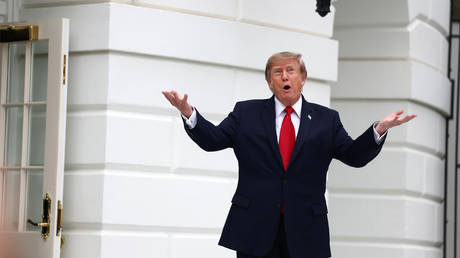
When President Donald Trump warned that Iran could face another "little Epic Fury"—referencing the past U.S. military campaign known as Operation Epic Fury—the headline landed like a familiar thunderclap. To cable news panels in Washington, it sounded like standard geopolitical posturing, another round of rhetorical brinkmanship in a decades-long standoff.
Yet down at the water's edge, far from the microphones, the phrase carries a very different weight.
Consider a hypothetical logistics coordinator named Darius, working out of a cramped shipping office in Bandar Abbas. Darius does not care about polling numbers in Pennsylvania or cable news chyrons. He cares about marine insurance premiums. The moment a U.S. president casually invokes the memory of a strike operation and attaches the word little to it, Darius’s phone starts ringing. Underwriters in London recalculate war-risk surcharges. Freight rates jump. Within forty-eight hours, the cost of importing basic medical reagents or industrial spare parts into southern Iran climbs quietly, invisibly, and painfully.
This is the true anatomy of modern deterrence. It rarely begins with an explosion; it begins with a vocabulary shift.
The Architecture of a Threat
To understand why the phrase "little Epic Fury" resonates so sharply, you have to look at the history embedded in those words. Operation Epic Fury was not an abstract policy paper—it was a concrete demonstration of American air and naval reach, designed to degrade specific military capabilities while stopping short of an all-out ground war.
By reviving that name and shrinking its scale with the adjective little, the White House is signaling a very specific doctrine: calibrated escalation.
In diplomatic terms, calibrated escalation is like turning up the heat under a kettle just enough to make the lid rattle, without boiling the water dry. Supporters of this approach argue that ambiguity is a strategic asset. According to defense analysts who favor maximum pressure, unpredictable rhetoric forces adversaries to spend scarce resources hardening every possible target—from coastal radar installations to drone assembly plants—because they cannot afford to guess where a "little" strike might land.
Critics, however, see a far more dangerous dynamic at play. Foreign policy scholars who have studied decades of U.S.-Iran friction point out that what looks like a surgical, limited warning from the Oval Office almost always looks like an existential threat from inside Tehran.
I remember sitting in a dimly lit briefing room years ago during an earlier flare-up in the Persian Gulf, watching military planners map out "limited" retaliation scenarios on a digital screen. Every red dot represented a clean, geometric objective: a fuel depot, a command bunker, a naval pier. None of the dots showed the ripple effects—the commercial flights rerouted over Central Asia, the nervous regional allies quietly hedging their bets, or the hardliners in Tehran using external threats to silence domestic reformers.
What "Limited" Really Means on the Ground
There is no such thing as a neat military strike when the target sits beside one of the world’s most vital economic arteries.
Roughly a fifth of the world’s petroleum liquids pass through the Strait of Hormuz, a chokepoint barely twenty-one miles wide at its narrowest navigable channel. Even the suggestion of renewed kinetic action sends tremors through global energy markets.
When traders hear "little Epic Fury," they immediately ask a cascade of practical questions:
- Will the targets be nuclear, conventional, or proxy-linked? Striking ballistic missile infrastructure carries a vastly different escalation risk than hitting an offshore naval asset.
- How will Tehran respond to save face? Historically, Iranian leadership has favored asymmetric replies—harassing commercial shipping, activating regional militias, or accelerating uranium enrichment—rather than matching conventional force head-on.
- Where is the off-ramp? A threat without a clear, achievable off-ramp often backs both sides into a corner where neither can blink without looking weak.
For an ordinary family in Isfahan or a small business owner in Rasht, these strategic questions translate into immediate, visceral anxiety. Memory in the region is long. People still recall the nights when air defense sirens wailed, when grocery shelves emptied in hours, and when the internet slowed to a crawl. Fear does not wait for a formal declaration of war. It moves at the speed of a rumor on a messaging app.
The Illusion of Control
We like to believe that foreign policy is a chess match played by rational actors moving pieces across a quiet board. In reality, it is closer to carrying a full bowl of scalding soup across a crowded room while someone shouts directions from the doorway.
Both Washington and Tehran insist they do not want a full-scale regional war. U.S. officials routinely emphasize that American force posture is defensive and aimed at deterring aggression, while Iranian officials maintain that their military doctrine is built around self-reliance and resistance to coercion. Yet the history of international conflict is littered with crises where neither side wanted a broader war, and both sides walked into one anyway because each misread the other’s red lines.
When President Trump uses a phrase like "little Epic Fury," he is speaking to multiple audiences at once. To domestic supporters, it projects strength and resolve—a reminder that American power is coiled and ready. To regional partners in the Gulf, it offers reassurance that Washington has not abandoned the theater. To Tehran, it is a warning that the cost of crossing invisible boundaries will be immediate and painful.
The danger lies in the translation between those audiences.
A message crafted for a rally stage or a press gaggle in Washington arrives in Tehran stripped of domestic political nuance. Iranian military commanders do not parse American campaign rhetoric for hyperbole; they plan against worst-case capabilities. If they conclude that a strike is inevitable regardless of what they do, the incentive for restraint evaporates.
The Weight of Unspoken Consequences
Step back from the headlines for a moment and consider the sheer exhaustion of living under permanent brinkmanship.
In a hypothetical port café just across the water in Oman, fishermen mend their nets under the same sun that warms the Iranian coast forty miles away. To them, the Gulf is not a geopolitical chessboard or a flashpoint; it is a livelihood, a highway, a home. Yet their daily catch, the price of the diesel in their boats, and the safety of the waters they navigate are tethered to decisions made thousands of miles away in rooms they will never see.
That is the invisible tax of threats like "little Epic Fury." Even if not a single missile is launched, the threat itself reshapes reality. Capital flees. Diplomatic channels freeze. Moderates on every side lose ground to those who argue that only force matters.
There is an honesty required when we talk about military power—an admission that we rarely control the second and third echoes of a strike once the first one lands. Precision-guided munitions can hit a building within a few feet of an aimpoint, yet no technology on earth can precisely aim the human grief, nationalist pride, or retaliatory fury that follows.
At dusk along the Persian Gulf, the horizon blurs until the sea and the sky become the exact same shade of bruised violet, leaving every captain on the water staring into the dark, trying to tell the difference between a distant lighthouse and an incoming flare.