The fluorescent lights in the county clerk’s office hum with a low, persistent vibration that seems to settle right behind your eyes. It is 6:14 AM on a Tuesday in November. Outside, the air smells like damp asphalt and exhaust from early commuters. Inside, a retired high school history teacher named Arthur—let us call him Arthur, a hypothetical composite of the thousands of poll workers who keep American democracy breathing—is taping a laminated paper sign to a folding table.
He has done this every two years since 1998. Usually, the hardest part of his morning is figuring out why the thermal receipt printer for the poll pad is jamming or reminding first-time voters to put their phones away inside the booth.
Not anymore.
Today, Arthur has a panic button clipped to his lanyard. His training manual includes three pages on how to de-escalate confrontations with self-appointed "auditors" filming voters' license plates in the parking lot. And somewhere in a state capitol three hundred miles away, a newly appointed election board member—installed after a quiet, methodical purge of career administrators—is preparing to argue that a minor clerical discrepancy in Arthur's precinct is grounds to refuse certifying the entire county's results.
We tend to think of election interference as something cinematic. We picture hooded hackers in darkened rooms or dramatic, midnight ballot drops. That makes it easy to spot, and even easier to dismiss until the sirens start wailing.
The reality unfolding ahead of the US midterm elections is far quieter, infinitely more bureaucratic, and deeply personal. It is not about breaking into the vault; it is about replacing the locksmiths, rewriting the combination, and convincing the people standing in line that the vault was never secure in the first place.
The Architecture of Doubt
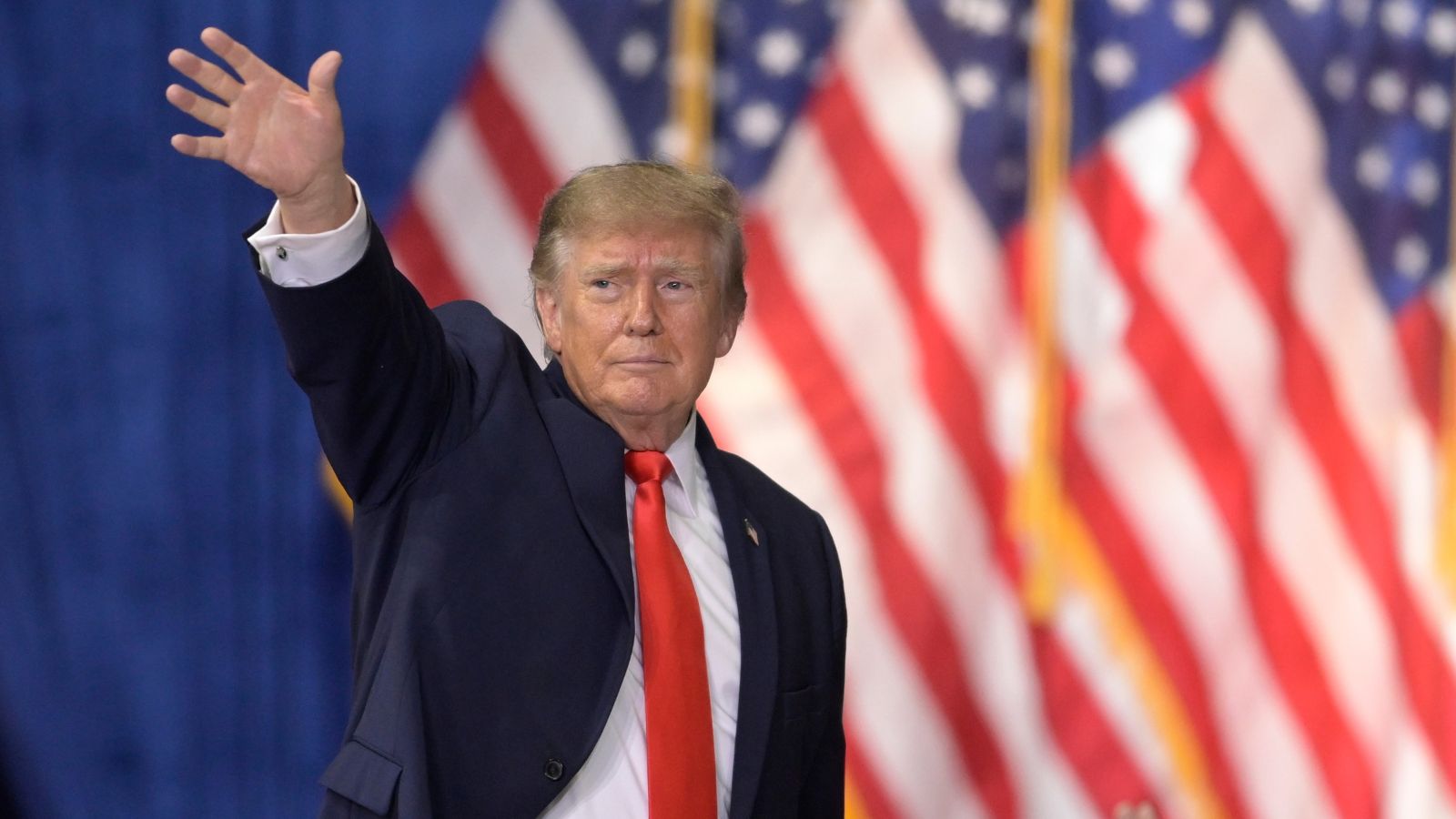
To understand how Donald Trump and his allies have reshaped the battlefield for the midterms, you have to look away from the rally stages and focus on the mundane plumbing of local government.
After the 2020 presidential election, dozens of state and federal courts—including judges appointed by Trump himself—rejected more than sixty legal challenges alleging widespread fraud. The paper trails held. The audits confirmed the counts. From a purely technical standpoint, the system worked under extraordinary pressure.
Yet a massive portion of the electorate walked away convinced the opposite had occurred. Why? Because facts rarely defeat a well-told story, especially when that story is repeated daily by people in positions of authority.
In the years since, a coordinated strategy has emerged to turn that lingering skepticism into institutional leverage. Think of an election like a commercial airline flight. For decades, the pilot, the co-pilot, and the air traffic controllers operated under a shared, boring consensus: follow the checklist, land the plane safely, and go home. You didn't need to know the names of the mechanics inspecting the flaps because the system relied on professional standards, not partisan loyalty.
Now, imagine a movement dedicated to replacing the air traffic controllers with people who openly question whether gravity is real, while simultaneously convincing the passengers that the altimeter is rigged.
Across battleground states—from Georgia and Arizona to Michigan and Pennsylvania—allies aligned with Trump’s movement have systematically targeted the administrative machinery of voting. They have run for local county boards, secretary of state offices, and precinct captain roles. Many of these candidates ran on explicit platforms of skepticism toward the very systems they now oversee.
The Invisible Squeeze on Local Clerks
Step into the shoes of a county election director in a mid-sized Midwestern town. Let’s call her Elena, another composite drawn from dozens of real interviews and public resignations documented over the past four years.
Elena isn't a politician. She got into this line of work because she liked spreadsheets, logistics, and civic duty. Her job used to be invisible unless a ballot measure had a typo.
Today, Elena spends nearly forty percent of her week responding to mass-produced public records requests. Coordinated networks of activists flood small, underfunded offices with demands for cast vote records, ballot images, router logs, and vendor contracts. Under state sunshine laws, Elena is legally required to fulfill them. If she misses a deadline because her three-person staff is busy testing voting machines for the upcoming midterms, she faces lawsuits and accusations of a "cover-up."
It is death by paperwork.
Between 2020 and 2024, nearly forty percent of local election officials nationwide left their jobs, according to data tracked by the Bipartisan Policy Center. When institutional memory walks out the door, mistakes become more likely. A rookie administrator forgets to publish a notice on time, or misconfigures a scanner, or misreads a statute.
And that is the exact trap.
When a predictable human error occurs in an understaffed office, political operatives seize on it immediately. They amplify it across social media and partisan news ecosystems, presenting an honest clerical slip as proof of a sinister conspiracy. The exhaustion isn't a side effect of the strategy; it is the strategy.
Rewriting the Rules Before the Whistle Blows
While local clerks are drowning in administrative warfare, state legislatures and newly constituted election boards have been quietly altering the rules of engagement.
Consider the mechanics of certification. Historically, certifying election results at the county or state level was considered a purely ministerial duty—a formal rubber stamp confirming that the math added up and the paperwork was complete. If someone suspected fraud or irregularities, the remedy was to certify the count and then take the evidence to a judge.
In recent cycles, however, local board members in states like Arizona, Georgia, and Nevada have attempted to weaponize certification itself. They have voted to delay or withhold certification based on unverified rumors, software glitches that were already resolved, or vague feelings that "something didn't look right."
In Georgia, for instance, a conservative majority on the State Election Board passed rules requiring local officials to conduct a "reasonable inquiry" before certifying results and mandated hand-counting the number of ballots at precincts on election night—moves that state legal experts and even Georgia’s Republican Attorney General warned exceeded the board’s statutory authority and risked delaying results.
Picture what happens when certification becomes optional.
Suppose a closely contested House race comes down to four thousand votes in a suburban county. If two members of a five-person county board refuse to certify the results because they distrust the machines, the clock starts ticking toward federal deadlines. Even if a state court eventually forces them to sign the paperwork, the delay creates an informational vacuum. Into that vacuum rushes speculation, outrage, and calls for the state legislature or Congress to step in and "fix" the outcome.
The Ghost of 1876
We have seen versions of this movie before, though we rarely teach the ending in high school history classes.
In 1876, the presidential race between Rutherford B. Hayes and Samuel Tilden ended in chaos when Florida, Louisiana, and South Carolina sent competing slates of electors to Washington. State returning boards, stacked with partisan loyalists, threw out tens of thousands of ballots on technicalities. The country teetered on the brink of renewed civil conflict until a backroom political bargain settled the race—a deal that ended Reconstruction and stripped Black Americans in the South of federal protection for nearly a century.
History doesn't repeat itself verbatim, yet it loves to rhyme.
The modern effort to influence the US midterm elections borrows directly from that playbook: create enough procedural friction, legal ambiguity, and public distrust at the local level that the winner isn't decided by the voters in November, but by lawyers, judges, and politicians in December and January.
I remember standing outside a counting center in Phoenix a few years ago as the sun went down, watching the desert sky turn a bruised shade of purple. Behind a chain-link fence, a crowd had gathered. Some carried flags; a few carried holstered handguns, legal under state open-carry laws. They were chanting through megaphones at the tinted windows of the building where bipartisan teams of grandmothers and retirees were sorting envelopes.
What struck me wasn't the anger. It was the absolute certainty in their faces. They genuinely believed they were defending the republic from theft. They had been told, relentlessly and persuasively, that the people inside that building were their enemies.
And inside, the workers were taking shifts walking to their cars in pairs, checking underneath their bumpers before turning the key in the ignition.
The Illusion of the "Clean" Fix
When you talk to people caught up in these theories, a common refrain emerges: Why not just get rid of the machines? Count everything by hand on paper ballots in one day. Simple.
It sounds intuitive. It feels tangible. You can see a piece of paper; you cannot see inside a microchip.
Except anyone who has actually organized a large-scale hand count knows the math falls apart instantly. Humans are terrible at repetitive counting under fatigue. Studies by the Massachusetts Institute of Technology and Rice University have repeatedly shown that hand-counting complex, multi-race ballots introduces significantly higher error rates than optical scanners—often missing or misallocating up to two percent of votes, which is more than enough to flip a close congressional district.
Moreover, a modern midterm ballot isn't a single yes-or-no question. It contains races for the U.S. House, Senate, governor, state legislators, local judges, school boards, and a dozen ballot initiatives. Hand-counting millions of those ballots in a single night would require armies of paid workers sitting shoulder-to-shoulder for days, driving costs into the tens of millions of dollars while delaying results for weeks.
Ironically, the very delays caused by hand-counting would then be cited as proof that the election was being rigged behind closed doors.
This is the catch-22 at the heart of modern election interference. Every reform demanded in the name of "transparency"—banning mail-in voting, eliminating drop boxes, mandating hand counts, allowing partisan observers to hover inches away from poll workers—slows the system down, increases the likelihood of human error, and makes it harder for ordinary working people to cast a ballot.
The Voter on the Margins
Strip away the constitutional theory and the cable news shouting matches, and the real impact lands on people with zero political power.
Think about a single mother working two hourly jobs in a state where early voting days have been trimmed and drop boxes removed. Or consider a college student whose campus polling place was consolidated, requiring a forty-minute bus ride across town. Or an elderly veteran in a rural county whose mail-in ballot is rejected because his signature looks slightly shakier at eighty-two than it did when he registered at forty-five, and new rules shorten the window to "cure" or fix that discrepancy.
None of these people are part of a grand conspiracy. Yet when barriers rise incrementally—a stricter ID requirement here, a purged voter roll there, a closed precinct in a growing neighborhood—the cumulative effect quietly reshapes the electorate.
It doesn't take millions of changed votes to alter the balance of power in Washington. In the 2022 midterms, control of the U.S. House of Representatives hinged on fewer than seven thousand votes spread across five razor-thin districts. Shift a fraction of a percent of turnout in a handful of suburban counties, and you decide who controls subpoena power, judicial confirmations, and federal spending for the next two years.
Why the System Still Holds—For Now
It is easy to look at this landscape of intimidation, rule changes, and disinformation and feel a cold sense of inevitability. If the referees are being replaced and the rules are being rewritten mid-game, what is the point of playing?
That despair is actually the ultimate goal of election interference. Authoritarian movements rarely need to win a majority of hearts and minds; they only need to convince enough decent people to stay home out of disgust or futility.
Yet if you look closely at what is happening in courthouses and county offices across the country, you find a fierce, quiet counter-offensive.
State courts have repeatedly struck down rogue election board rules that violate statutory law, reminding appointed officials that they cannot invent powers the legislature never gave them. Civil rights organizations and nonpartisan legal groups have built rapid-response networks to defend local clerks from frivolous lawsuits and help voters fix rejected ballots before deadlines expire.
Most importantly, thousands of ordinary citizens have stepped forward to fill the seats left behind by retiring poll workers. They are showing up at 5:00 AM, drinking terrible coffee, learning the statutes, and refusing to be bullied out of their community centers and school gymnasiums.
The View from the Folding Table
By 7:00 AM, the first line of voters is stretching out the door of Arthur’s precinct.
There is a guy in paint-splattered work boots checking his watch before heading to a construction site. Behind him stands a woman in nurse’s scrubs coming off a night shift, leaning slightly against the cinderblock wall. Next to her is an eighteen-year-old holding his driver's license like a golden ticket, looking nervous about doing it wrong.
Arthur adjusts his glasses, checks the seal on the ballot scanner one last time, and unlocks the front door.
No speech on television, no billionaire’s super PAC, and no partisan board member in a state capitol can cast a ballot for those people. The entire multi-million-dollar apparatus of political influence—the algorithms, the lawsuits, the rhetoric, the intimidation—exists for one reason only: to stop that line from moving, or to convince the people in it that their trip wasn't worth the trouble.
Arthur smiles, hands the nurse a pen, and points her toward the privacy booth. The fluorescent lights keep humming. Outside, the morning traffic picks up speed. And one by one, quietly, stubbornly, the paper drops into the box.


