The fluorescent lights in a suburban middle school gymnasium hum at a frequency that seems designed to fray human nerves. By 8:45 p.m. on a Tuesday in November, the air smells of floor wax, damp wool coats, and lukewarm coffee. For twelve hours, neighbors have shuffled past cardboard privacy booths, fed thick paper ballots into optical scanners, and peeled tiny oval stickers off rolls to press onto their lapels.
It looks mundane. Quiet. Almost administrative.
Yet inside those cardboard booths, millions of ordinary Americans were dismantling the political architecture of Washington. When the final tallies settled in the 2018 midterm elections—the historical moment captured in the headline "Democrats sweep to power at midterms in rejection of Trump, Republicans"—the numbers told a stark story of reversal. Democrats gained a net total of 41 seats in the U.S. House of Representatives, reclaiming the majority for the first time in eight years. Nearly 114 million Americans cast ballots, pushing voter turnout to roughly 49 percent of the voting-eligible population, the highest rate for a midterm election since 1914.
Cold numbers, however, rarely explain why someone stands in the rain for forty minutes before a night shift to fill in an oval with a felt-tip pen. To understand what actually happened when voters reshaped Congress, you have to look past the cable news maps and into the kitchens, hospital waiting rooms, and small-town Main Streets where political abstractions turn into daily survival.
The Anatomy of a Wave
Midterm elections are historically unkind to the party holding the White House. Political scientists call it the "midterm penalty," a recurring thermostatic reaction in American democracy. When one party controls the executive branch, voters often grow anxious about unchecked power, unmet promises, or legislative overreach, using the two-year mark to pull the lever back toward equilibrium.
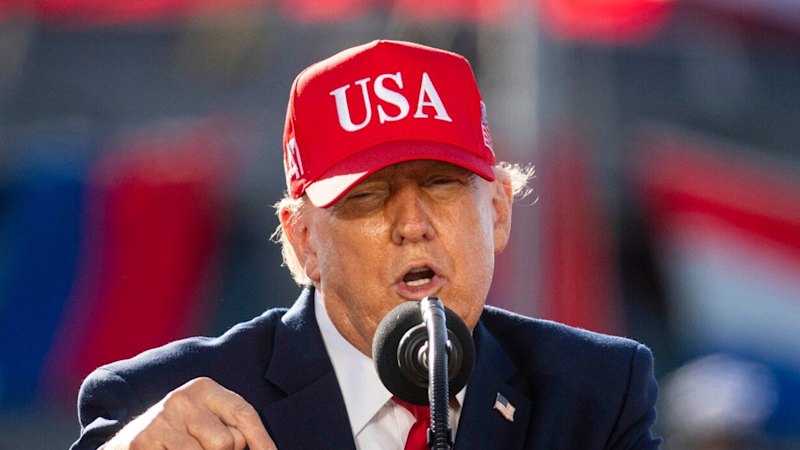
In 2018, that historical pattern collided with an intensely polarizing presidency. According to exit polls conducted by Edison Research and reporting from major outlets like Reuters and The Associated Press, the election functioned largely as a national referendum on President Donald Trump and the Republican-controlled Congress. Roughly two-thirds of voters told exit pollsters that the president was a major factor in their vote—with significantly more saying they cast their ballots to oppose him than to support him.
Consider a hypothetical voter—let us call her Sarah—living in an inner-ring suburb outside Philadelphia or Dallas. For decades, suburban districts like hers formed the reliable bedrock of the Republican coalition, drawn by promises of lower taxes, fiscal restraint, and business-friendly regulation. Sarah is not a political activist. She works in healthcare administration, worries about her son's college tuition, and checks her retirement account once a quarter.
In the months leading up to November, Sarah watched Washington debate repealing the Affordable Care Act, threatening protections for people with pre-existing conditions. She watched the passage of the 2017 Tax Cuts and Jobs Act, which lowered corporate rates while capping state and local tax deductions that directly affected homeowners in her neighborhood. She watched daily turmoil dominate the news cycle, turning dinner-table conversations into minefields.
She did not suddenly become a doctrinaire progressive. Instead, she walked into her local polling place and voted for a moderate Democratic newcomer, joining millions of suburban women and college-educated voters who shifted away from the GOP.
Healthcare Over Rhetoric
If there was a single issue that anchored the Democratic resurgence, it was not found in sweeping ideological manifestos. It was found in insurance deductibles and medical billing codes.
Political analysts noted throughout the autumn of 2018 that Democratic candidates ran relentlessly on healthcare. According to data from the Wesleyan Media Project, nearly half of all Democratic television ads in federal races focused on healthcare—specifically defending protections for Americans with pre-existing conditions.
Think of an insurance policy like a roof over a family's house. You rarely spend your weekends admiring the shingles when the sky is clear. You think about them when storm clouds gather and a leak threatens everything inside. For millions of families managing asthma, diabetes, cancer recoveries, or chronic heart conditions, the 2017 congressional attempts to dismantle the Affordable Care Act felt like someone prying up the shingles during hurricane season.
Republicans frequently pointed to a booming economy—unemployment had fallen below 4 percent, and job growth remained steady—expecting pocketbook optimism to carry them through November. Yet economic statistics operate on a macro level, while medical bills arrive in envelopes addressed to individuals. For many households, a strong stock market did not offset the fear of losing coverage or watching premiums climb.
In districts across Virginia, New Jersey, Kansas, and California, Democratic challengers—many of them first-time candidates, veterans, former intelligence officers, and teachers—hammered on that vulnerability. The strategy proved decisive. Exit polling showed that roughly four in ten voters named healthcare as their top issue, and among that group, Democrats won by a margin of roughly three to one.
A Split Decision Across the Map
Calling an election a "sweep" can sometimes obscure the sharp regional divides that define modern American politics. While Democrats surged in the House of Representatives, the U.S. Senate told a markedly different story.
Because of the constitutional design of the Senate—where only one-third of the chamber faces voters every two years—Democrats were defending ten seats in states Donald Trump had won in 2016, including deep-red strongholds like North Dakota, Missouri, Indiana, and West Virginia. In those rural and industrial states, the president's message on immigration, judicial appointments, and economic nationalism retained powerful appeal.
Republicans capitalized on that structural advantage, flipping Democratic-held Senate seats in Indiana, Missouri, North Dakota, and Florida to expand their majority from 51–49 to 53–47.
Picture a split-screen television broadcast on election night. On one side, Democratic candidates celebrated historic breakthroughs in suburban House districts from Orange County, California, to the plains of Oklahoma and the foothills of South Carolina. A record number of women—more than 100 in the House alone—won seats, reshaping the demographic face of Congress. On the other side, Republican senators celebrated victories in rural heartland states, reinforcing conservative control over federal judicial confirmations and executive nominations.
Both parties claimed validation. Both had evidence.
For Democrats, retaking the House meant ending single-party Republican rule in Washington, installing Nancy Pelosi back into the Speaker's chair, and gaining subpoena power to conduct congressional oversight of the Trump administration. For Republicans, expanding their Senate majority ensured they could continue confirming conservative federal judges—including Supreme Court nominees—without Democratic obstruction.
The Invisible Stakes of Divided Government
When power splits between the White House and Congress, the immediate consequence is rarely dramatic legislation. Instead, the true impact lies in friction—the sudden reappearance of checks, balances, and institutional resistance.
For two years, unified Republican control had allowed the administration to pass major tax legislation and reshape the federal judiciary with minimal legislative roadblocks. With a Democratic House majority taking office in January 2019, that era of unilateral momentum ended abruptly.
Consider what happens inside a government agency when oversight returns. Before the midterms, cabinet secretaries faced friendly questioning from committees controlled by their own party. After the shift, committee gavels passed to Democratic chairs empowered to demand documents, compel testimony, and investigate everything from administration ethics to the handling of immigration enforcement and foreign policy.
At the same time, divided government forced a quiet reckoning over what could actually pass into law. Any bill approved by the Democratic House still had to survive a Republican-controlled Senate and earn a signature from President Trump. Any conservative priority passed by the Senate faced a brick wall in the House.
Critics of divided government often lament this dynamic as gridlock, picturing lawmakers locked in endless stalemates while bridges crumble and budgets stall. Yet the framers of the U.S. Constitution intentionally built friction into the federal system, betting that ambition must be made to counteract ambition. For voters uneasy with the concentration of power in Washington, gridlock was not a bug. It was the entire point.
Beyond Washington's Marble Halls
While national headlines fixated on Capitol Hill, some of the most consequential shifts of the 2018 midterms unfolded in state capitols and governor's mansions—places where policy touches daily life with far greater speed than federal legislation.
Democrats flipped seven governor's seats across the country, including critical Midwestern battlegrounds like Michigan, Wisconsin, and Illinois, alongside Kansas and New Mexico. Those victories carried immediate, tangible consequences for millions of residents.
In states where Republican governors or legislatures had previously blocked Medicaid expansion under the Affordable Care Act, new Democratic governors—or voter-approved ballot initiatives in conservative states like Idaho, Nebraska, and Utah—opened healthcare access to hundreds of thousands of low-income workers. Equally vital, winning governorships ahead of the 2020 census gave Democrats veto power over the redrawing of congressional and state legislative district maps, a process that shapes political representation for a decade.
Meanwhile, ballot measures across the country revealed a striking independence among voters who refused to fit neatly into partisan boxes. In Florida, voters approved a constitutional amendment restoring voting rights to most people with prior felony convictions—a measure that passed overwhelmingly even as the state elected a Republican governor and a Republican senator on the very same night. In Missouri and Arkansas, voters approved increases to the state minimum wage while simultaneously backing conservative candidates.
People are complicated. Their lives do not conform to cable news talking points. A warehouse worker in Missouri can favor conservative cultural values while still believing forty hours of labor ought to pay enough to cover rent and groceries. A retiree in Florida can support Republican economic policies while believing that someone who has served their sentence deserves a second chance at citizenship.
The Exhaustion of Perpetual Conflict
There is an emotional undercurrent to modern elections that statistics struggle to capture: sheer civic exhaustion.
Anyone who lived through the 2018 cycle remembers the relentless ambient noise. Push notifications chiming at dinner. Social media feeds fracturing extended families. Campaign mailers piling up on kitchen counters like dry kindling. For many voters, stepping into the voting booth was less an act of partisan triumph than an attempt to turn down the volume.
That exhaustion cuts both ways. Supporters of President Trump argued that the media and Democratic opposition treated his presidency as a permanent emergency, ignoring tangible economic gains, deregulation efforts, and conservative judicial appointments. To his base, the midterms were a necessary defense of a leader who spoke plainly for forgotten working-class communities.
Opponents saw the exact opposite: an administration whose norms-breaking rhetoric and policy upheavals demanded an immediate institutional counterweight. To them, sitting out the election felt like abandoning the guardrails of democracy.
When two deeply sincere, mutually incompatible narratives collide at the ballot box, the result is historic participation. People who normally skipped midterm elections—younger voters, first-time registrants, occasional participants—showed up in numbers that shattered modern records. Turnout among voters under 30 surged dramatically compared to the 2014 midterms, proving that apathy was no longer the default setting of American civic life.
The Echo After the Polls Close
By midnight on election night, the gymnasium floors are swept clean. The cardboard booths are folded flat and stacked in storage closets. Poll workers pack up the ballot scanners, lock the memory cards into tamper-evident bags, and drive home through quiet streets.
Nothing about the physical world looks different the next morning. The traffic on the interstate still crawls at 7:30 a.m. The coffee shop still runs out of oat milk by nine. The hospital waiting rooms are still full of people clutching clipboards and worrying about what the scan will show.
Yet beneath the surface, the balance of power has shifted. A single election did not resolve the deep cultural, economic, and geographic fault lines dividing the United States—in many ways, the split verdict between the House and the Senate sharpened them. What it did do was prove that the American electorate remains volatile, attentive, and willing to pull the emergency brake when it feels the vehicle veering too far in one direction.
Inside a quiet suburban kitchen, an envelope arrives from an insurance provider, a paycheck reflects a slightly higher minimum wage, or a newly elected representative steps onto the House floor to take an oath of office—each one a small, concrete echo of millions of felt-tip pens pressing ink into paper.