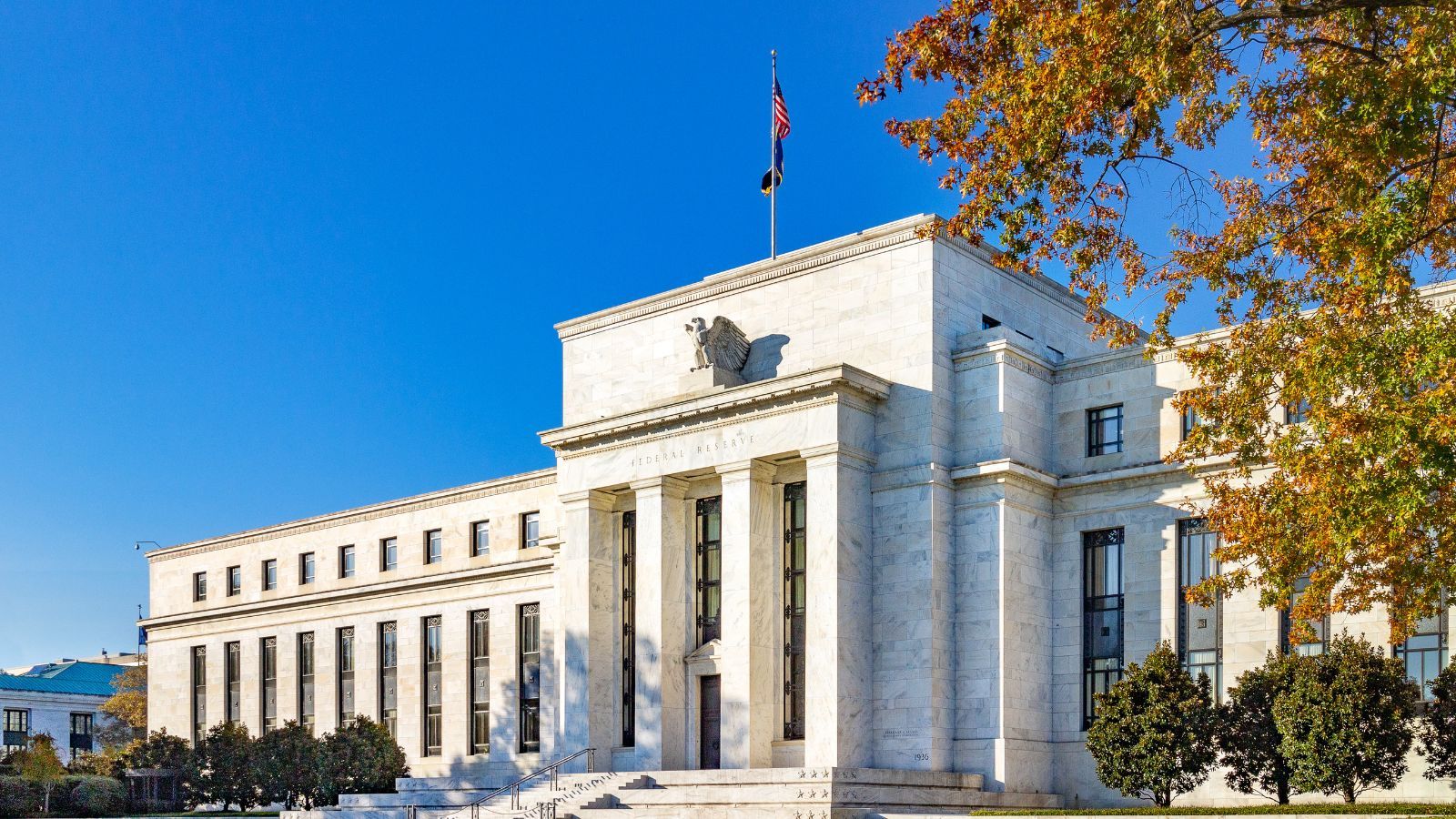
Raghuram Rajan wants the Federal Reserve to keep hiking rates. He looks at persistent inflation prints, squints at labor market data through an academic lens, and concludes that central bankers need to inflict more pain. Meanwhile, he shrugs off the depreciation of the Indian rupee as a minor administrative nuisance.
It is a clean, textbook argument. It also completely ignores how modern global capital actually moves.
I have watched desks panic over central bank commentary for two decades. The prevailing consensus treats the Fed as the undisputed puppeteer of the global economy and views emerging market currencies through the nostalgic lens of old-school balance-of-payments accounting. That model is dead. Clinging to it means misdiagnosing every currency shift, every capital flight vector, and every domestic policy constraint in developing markets today.
Let us dismantle the lazy consensus piece by piece.
The Fed Rate Obsession is a Distraction
The entire narrative that the Federal Reserve holds the master key to global stability relies on a linear view of monetary transmission that broke down somewhere around 2015. When a former central bank governor calls for higher American borrowing costs to crush sticky inflation, he is fighting yesterday's war with yesterday's weapons.
Domestic inflation in the United States is no longer driven purely by overheated domestic demand reacting to cheap credit. It is structural. It is tied to supply chain realignments, industrial policy spending, and labor force participation limits. Pushing the federal funds rate another quarter point higher does not fix a fractured semiconductor supply chain or build out domestic battery factories. It just makes debt servicing more expensive for every corporate balance sheet from Chicago to Chennai.
More importantly, treating Fed policy as the primary catalyst for emerging market distress lets domestic policymakers off the hook. When capital leaves a developing economy, local pundits immediately blame the interest rate differential with the United States. They argue that if the Fed cuts, money comes back; if the Fed hikes, money flees.
This view treats emerging market economies like passive victims of American monetary weather. It ignores the domestic credit creation, fiscal deficits, and structural bottlenecks that actually drive smart money away. Foreign institutional investors do not dump domestic assets simply because US Treasuries yield five percent. They dump them when local regulatory unpredictability outweighs potential yield. Focusing endlessly on what Jay Powell does is a convenient excuse for local policymakers to avoid difficult structural reforms at home.
Why a Weaker Rupee is Not a Crisis
Rajan’s relaxed stance on the rupee sounds pragmatic on the surface. He suggests letting the currency find its level, arguing that depreciation enhances export competitiveness. This is classic textbook economics from the 1990s.
The problem is that the transmission mechanism between a weaker currency and higher export volumes has fundamentally eroded. Modern manufacturing is deeply globalized. India does not simply chop down trees and ship out finished timber; it imports raw components, assembles them, and exports the final product. When the rupee drops, the cost of those vital imported inputs skyrockets. The net margin gain on the export side is often entirely wiped out by the increased cost of production inputs.
Depreciation is not a free lunch ticket to export dominance. It is an inflation tax levied directly on the domestic consumer.
When a currency slides rapidly, imported energy costs rise. Oil has to be paid for in hard currency. Every drop in the exchange rate translates immediately to higher fuel prices at the pump, which cascades into transport costs, food prices, and core inflation. Central banks then find themselves forced to hike domestic rates not because growth is too strong, but simply to defend the purchasing power of the local currency against imported inflation.
Brushing off a weakening currency as a natural shock absorber ignores the balance sheet mismatches lurking in the corporate sector. Plenty of regional enterprises borrow in dollars because the headline interest rate looks attractive compared to local borrowing costs. When the local currency depreciates against the greenback, the actual liability balloons in local currency terms. What looked like a manageable corporate loan suddenly becomes a solvency crisis.
Telling people to stay relaxed while the currency slides is like telling a captain not to worry about a leak below the waterline because the ship is moving forward.
The Real Mechanism of Capital Flight
If the old models are broken, what actually dictates capital flows in the current macro environment?
Imagine a scenario where the Federal Reserve cuts interest rates aggressively tomorrow. According to conventional theory, a tidal wave of hot money should rush back into emerging markets, pushing up local currencies and inflating asset prices.
It will not happen.
Global capital does not chase yield blindly anymore. It chases predictability, rule of law, and liquidity depth. Institutional allocators managing trillions of dollars face intense internal risk parameters. They are not parking capital in a developing economy simply because the local bond yield is two percentage points higher than US paper, not when currency volatility can wipe out that entire yield differential in a single week of unannounced regulatory shifts or sudden tax changes.
The real driver of capital retention is domestic reform momentum. Countries that clean up domestic tax regimes, streamline bureaucratic friction, and build deep, liquid domestic capital markets do not need to worry about what the Federal Reserve eats for breakfast. Their local pension funds, insurance pools, and retail investors provide a resilient domestic buffer against foreign capital outflows.
Conversely, countries that rely entirely on high interest rates to artificially prop up their currency while kicking structural economic reforms down the road are building houses on sand.
What the Competitors Missed
The fundamental flaw in analyses like Rajan's is the assumption that globalization is pausing rather than permanently mutating. We are living through a period of regionalization and friend-shoring. Capital is no longer seeking the absolute lowest-cost labor jurisdiction regardless of geopolitical risk. It is looking for trusted supply chain nodes.
In this environment, managing a currency requires a sophisticated understanding of balance-of-payments dynamics that goes far beyond letting the exchange rate float or begging foreign central banks to change course. It requires accumulating strategic reserves, managing domestic debt maturity profiles to avoid currency mismatches, and ensuring that local capital markets are robust enough to intermediate domestic savings without relying on foreign hot money.
Blaming the Fed is a legacy reflex. It provides intellectual cover for domestic inaction.
Stop looking across the Pacific for permission to grow, and stop pretending that currency depreciation is a harmless free lunch for exporters. The real economic battle is fought in the boring details of domestic market depth, regulatory consistency, and productivity growth. Fix those, and the exchange rate takes care of itself.