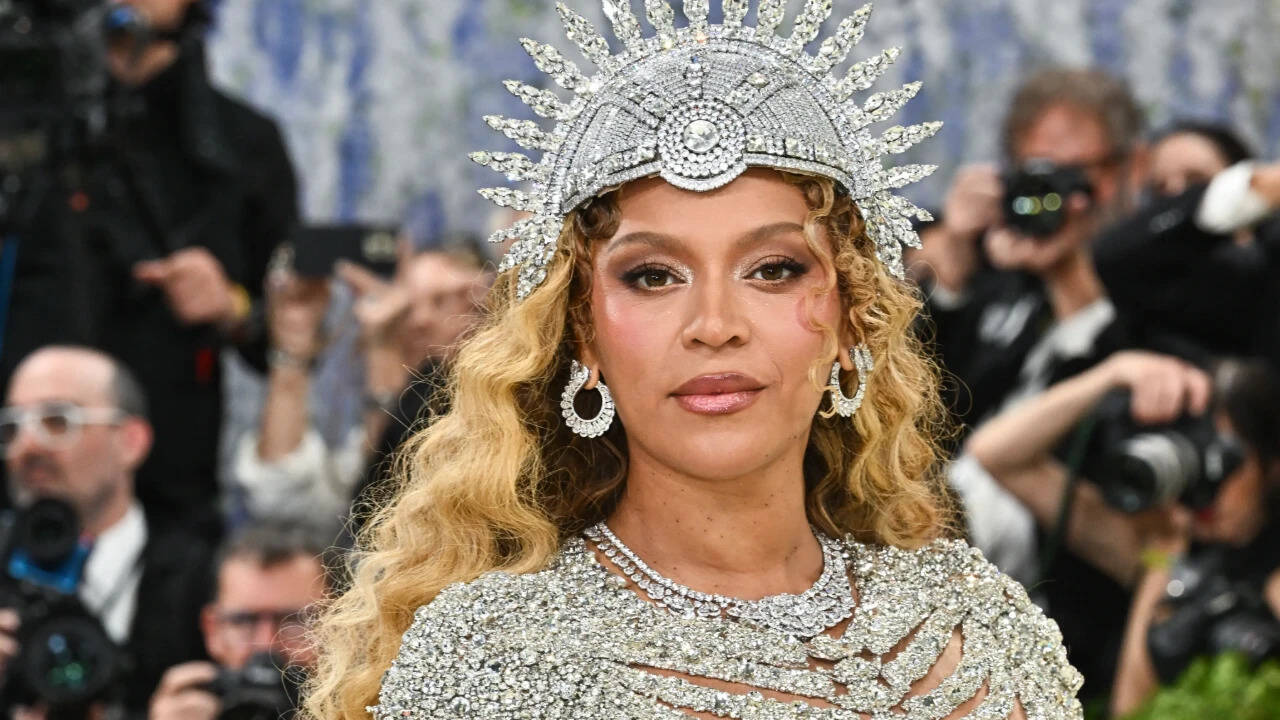
When Beyoncé’s BeyGOOD Foundation writes a $50,000 check to a grassroots youth charity, the public relations machine immediately kicks into gear. Headlines celebrate the generosity. Fans flood social media with praise. Yet behind the viral applause lies a far more calculated reality of modern celebrity philanthropy. Rather than dropping millions into bloated national conglomerates, BeyGOOD routinely deploys targeted, mid-sized capital injections—specifically $50,000 grants—to hyper-local organizations, youth mentorship programs, and Black-owned small businesses. This micro-grant strategy maximizes operational impact on the ground while insulating the donor from the bureaucratic waste that plagues traditional charitable mega-foundations.
To understand why a billionaire entertainer issues $50,000 checks instead of $5 million endowments, you have to look at how non-profit infrastructure actually works. Money changes things. When an obscure community center suddenly receives a multi-million-dollar windfall, it often collapses under the weight of its own good fortune.
The Mechanics of the $50,000 Micro-Grant Strategy
Most grassroots youth charities operate on shoestring budgets. Their annual operating expenses frequently hover between $100,000 and $300,000.
If a celebrity foundation dumps seven figures into an organization of that size, the charity faces an immediate crisis of capacity. Suddenly, the leadership must hire compliance officers, retain high-priced tax attorneys, rent larger facilities, and overhaul their accounting systems just to legally manage the funds. Within two years, administrative bloat eats the donation alive. When the celebrity moves on to the next cause, the charity is left with massive overhead it can no longer afford.
A $50,000 grant avoids this trap entirely. It represents roughly 15% to 50% of a small non-profit’s annual budget—enough to fund a summer coding camp, buy laptops for an entire after-school cohort, or pay two youth counselors for a year, without forcing the organization to reinvent its legal structure.
BeyGOOD, founded by Beyoncé Knowles-Carter in 2013, has refined this exact model across multiple tour cycles and crisis response initiatives. During the Renaissance World Tour, for example, the foundation bypassed legacy charities in major tour stops, opting instead to distribute tens of thousands of dollars directly to local community groups, scholarship funds, and small business incubators in cities like Houston, Atlanta, Chicago, and London. The checks were consistently sized to move the needle immediately without breaking the recipient's operational spine.
How Fiscal Sponsorship Bypasses Red Tape
There is another, less publicized financial mechanism at play here. Many celebrity charities are not structured as independent private foundations. Instead, they operate as donor-advised funds (DAFs) or under the umbrella of a fiscal sponsor.
Under U.S. tax law, setting up and maintaining a standalone private foundation requires strict public disclosures, mandatory minimum annual payouts (typically 5% of net investment assets), and heavy administrative overhead. By operating through a fiscal sponsor or a DAF, a celebrity can collect donations—from tour ticket proceeds, corporate brand partnerships, and public appeals—and disburse grants rapidly without building a massive internal staff.
Consider a hypothetical example of how this functions during a stadium tour. A corporate sponsor agrees to match tour proceeds up to $1 million for youth education. Because the foundation operates leanly, it does not spend six months vetting fifty-page grant proposals through a committee of salaried executives. Instead, a small team identifies twenty vetted, ground-level youth organizations across twenty tour cities and wires $50,000 to each. The capital hits local bank accounts before the tour buses even leave the state.
Why Grassroots Youth Charities Need Unrestricted Cash
If you ask the executive director of an inner-city youth program what they need most, they will rarely say "new branded backpacks." They will say unrestricted operating capital.
Traditional institutional philanthropy—the kind practiced by billion-dollar family foundations and corporate giving arms—is notoriously obsessed with metrics and restrictions. If a foundation gives a youth charity $50,000, that money usually comes with a thick contract stipulating that the funds can only be used for "STEM curriculum materials" or "measurable literacy outcomes."
You cannot use that money to fix a leaking roof. You cannot use it to pay the electric bill in August. You cannot use it to cover liability insurance for the van that drives kids home from practice.
Celebrity foundations like BeyGOOD frequently distinguish themselves by offering far greater flexibility than institutional grantmakers. When $50,000 arrives as unrestricted support, a youth charity can plug its most dangerous operational leaks. It allows directors to retain experienced mentors who would otherwise leave for retail jobs paying two dollars more an hour.
The Halo Effect and Secondary Fundraising
The check itself is only half the value. In the non-profit sector, credibility is currency.
A small youth organization in Houston or Detroit struggles to get meetings with local bank executives, municipal grant boards, or wealthy regional donors. They are viewed as risky, unproven bets. The moment BeyGOOD publicly awards that organization $50,000, the risk profile vanishes overnight.
This phenomenon, known in fundraising circles as the halo effect, allows local charities to convert celebrity validation into long-term institutional backing.
- Municipal Grants: City councils and state agencies are far more likely to approve matching funds for a program that has already survived the vetting process of an A-list foundation.
- Corporate Sponsorships: Regional businesses want their logos next to winners. A charity backed by Beyoncé suddenly becomes an attractive marketing vehicle for local auto dealerships, law firms, and credit unions.
- Board Recruitment: High-net-worth individuals are hesitant to join the board of directors for an unknown charity. Celebrity endorsement brings immediate prestige, helping the organization recruit seasoned accountants, lawyers, and fundraisers to its board.
The Optics Problem and the Billionaire Critique
Not everyone views these $50,000 announcements through a celebratory lens. Whenever an entertainer worth hundreds of millions of dollars—or, alongside Jay-Z, part of a household worth well over two billion—publicizes a five-figure donation, cynicism inevitably follows.
Critics argue that $50,000 to a billionaire is the mathematical equivalent of a middle-class worker tossing a few quarters into a Salvation Army bucket. From a purely proportional standpoint, the math holds up. If an individual has a net worth of $1 billion, a $50,000 grant represents 0.005% of their wealth.
This critique points to a broader tension in modern celebrity philanthropy: the blurred line between charity and brand maintenance.
Every press release detailing a $50,000 youth grant generates millions of dollars in earned media. In the entertainment industry, positive press coverage is not a byproduct of philanthropy; it is an essential asset. When an artist launches a new album, a liquor brand, or a stadium tour, public goodwill directly correlates with consumer spending. Framing a $50,000 donation as a monumental act of generosity can feel manipulative to an audience acutely aware of staggering wealth inequality.
The Transparency Deficit in Celebrity Foundations
Beyond the optics of wealth disparity lies a legitimate structural criticism: lack of transparency.
Because many entertainment-backed funds rely on fiscal sponsors or private pass-through entities, the public rarely gets a granular look at the balance sheet. Unlike traditional public charities, which must file detailed IRS Form 990s that break down exact revenues, executive salaries, and every single grant recipient, celebrity-affiliated funds often obscure the ratio of money raised versus money spent.
When a tour or brand partnership pledges "a portion of proceeds" to a foundation, consumers have almost no way to verify the exact percentage. Does 100% of the corporate sponsorship go to the youth charities, or does 30% go toward event production, PR agencies, and administrative fees? Without independent audits and standalone public filings, observers are forced to take the foundation’s press releases at face value.
Furthermore, episodic giving creates a boom-and-bust cycle for the recipients. Celebrity attention is dictated by album cycles, tour schedules, and news trends. A youth charity might receive $50,000 in 2023 when the tour rolls through town, only to find the well completely dry in 2025 when the artist is off the road. Smart non-profit leaders treat celebrity money like a lottery ticket—great for one-time capital improvements, fatal if baked into recurring payroll.
What Separates Effective Celebrity Giving from PR Stunts
Decades of tracking entertainment philanthropy reveal a stark divide between vanity projects and functional aid. Most celebrity foundations fail within five years. They launch with a star-studded gala, burn through their initial capital on event planning and executive salaries for friends, and quietly dissolve once the tax benefits fade.
BeyGOOD has survived—and expanded—for over a decade precisely because it avoided building a bloated standalone bureaucracy. By keeping its internal footprint small and relying on established local partners to execute the actual social work, the foundation avoids the classic celebrity trap of trying to reinvent social services from scratch.
True impact in youth philanthropy comes down to three concrete variables:
- Speed of Disbursement: Bureaucracy kills momentum. When a community faces an economic shock or an immediate educational gap, getting $50,000 into the hands of local leaders within weeks matters infinitely more than pledging $5 million to be distributed over a ten-year feasibility study.
- Proximity to the Problem: National charities spend fortunes flying consultants into communities they do not understand. Giving directly to people who already live in the zip code ensures the money goes toward actual needs rather than theoretical solutions.
- Zero Strings Attached: Trusting local directors to allocate funds where the fires are burning hottest produces vastly better outcomes than forcing them to jump through corporate compliance hoops.
The $50,000 check is neither a cure-all for systemic underfunding nor an empty publicity stunt. It is a calculated financial instrument. For the youth charity on the receiving end, that capital keeps the lights on, puts computers on desks, and buys another year of survival in a sector starved for cash. For the celebrity donor, it delivers measurable, verifiable community impact without the legal and financial liabilities of managing a massive charitable institution. If you want to evaluate any celebrity foundation moving forward, ignore the gala photos and look strictly at the wire transfers: how fast the money moves, how little stays in administrative overhead, and whether the people cashing the checks actually live in the neighborhoods being served.