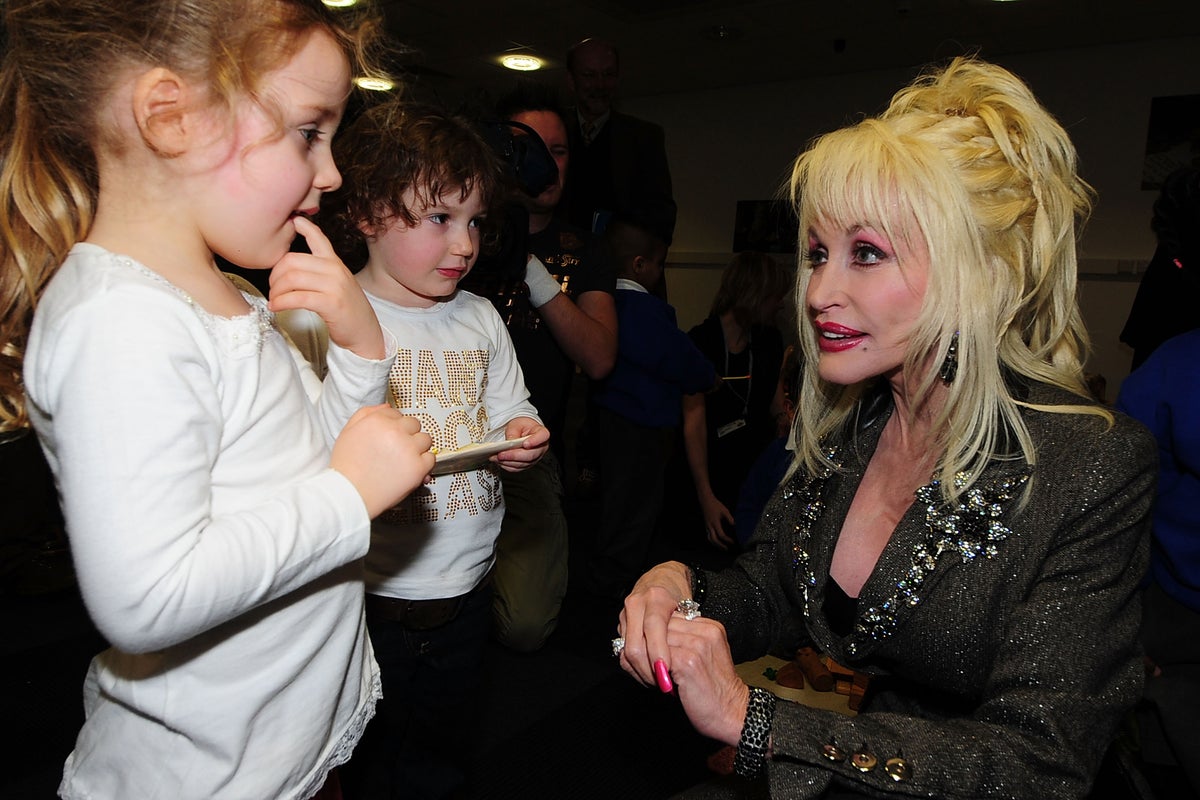
Missouri lawmakers have quietly gutted the state budget for Dolly Parton’s Imagination Library, a move that effectively halts the statewide expansion of the celebrated early childhood literacy initiative. By slashing the program’s allocation from $6 million down to $2 million for the upcoming fiscal year, the state has triggered an immediate enrollment freeze for new families. Over 170,000 Missouri children currently receive these free monthly books, representing roughly 45% of the eligible population under the age of six. State education officials warn that without a swift injection of private capital or structural adjustments, the entire statewide contract could dissolve before the year ends.
The funding crisis exposes the fragile underbelly of state-subsidized philanthropy. When Missouri committed to fully funding the program in 2023, it was heralded as a bipartisan victory for early education. Three years later, the realities of fiscal negotiation and shifting legislative priorities have turned a model partnership into a cautionary tale of institutional whiplash.
The Mechanical Breakdown of a Funding Collapse
To understand how a $4 million cut can derail an entire state apparatus, one must look at the specific cost-sharing architecture designed by the Dollywood Foundation. The Imagination Library does not operate on a centralized charity model where the pop icon simply cuts a check for global literacy. Instead, it relies on a strict fifty-fifty financial split between local partners and the foundation.
The foundation manages the macro-logistics: negotiating bulk publishing rates, managing database infrastructure, and coordinating monthly mailings. The local partners—which in Missouri’s case became the state government via the Department of Elementary and Secondary Education (DESE)—are legally responsible for the direct cost of purchasing the books and covering the postage.
+-------------------------------------------------------------+
|                     Dollywood Foundation                    |
|  - Negotiates bulk book pricing with global publishers       |
|  - Manages central database and shipping infrastructure     |
|  - Absorbs corporate overhead and administrative costs     |
+-------------------------------------------------------------+
                              |
                              v  (50/50 Cost & Infrastructure Split)
                              ^
+-------------------------------------------------------------+
|                 Missouri State Partner (DESE)               |
|  - Originally funded via $6M annual line item               |
|  - Slashed to $2M, triggering immediate enrollment freeze     |
|  - Funds local book procurement and monthly USPS postage    |
+-------------------------------------------------------------+
When the partnership launched under a $6 million annual appropriation, the state absorbed the financial burden that usually falls on fractured municipal charities or local United Way chapters. It centralized enrollment and used school districts as local hubs. This infrastructure allowed enrollment to surge to more than 45% of eligible children in less than 36 months, delivering over 4.3 million books across the state since inception.
The sudden retraction to $2 million leaves DESE with a profound logistical deficit. The math is unyielding. At approximately $2.10 per book for production and mailing, a $2 million budget can only sustain roughly 80,000 children for a full calendar year. With 169,000 children currently on the active registry as of March, the remaining funds will not cover the existing cohort through the end of the winter, let alone accommodate the thousands of infants born in Missouri each month.
Kyle Kruse, the deputy commissioner of DESE's Division of Financial and Administrative Services, confirmed the severity of the deficit, stating that the program could face total termination when the current contract expires at the end of the calendar year unless dramatic programmatic modifications are made.
Political Expediency Meets Capital Realities
The decision to scale back early literacy funding highlights a broader, systemic issue within state budget allocations. In a total state budget exceeding $50 billion, a $4 million reduction represents an infinitesimal fraction of total spending—mere pocket change in the grand scheme of state finance. Yet, discretionary line items targeting early childhood development are historically the most vulnerable during late-stage legislative compromise.
The political justification for these cuts often centers on the idea of shifting public services back onto private actors or localized tax bases. Missouri was one of only 11 states providing full government investment for statewide coverage. The remaining states rely either on a patchwork of private philanthropies or partial state grants that require municipal matching funds. Critics of full state funding argue that public coffers should not institutionalize programs initiated by private celebrities, suggesting that local communities should directly shoulder the philanthropic burden if the demand exists.
However, this argument ignores the economic realities of rural versus urban infrastructure.
The Rural Literacy Chasm
In metropolitan areas like St. Louis County, Jackson County, and St. Charles County, the absolute volume of children enrolled is highest. However, DESE data reveals that the highest percentages of eligible children registered live in Missouri’s economically depressed rural counties. These are communities without robust local corporate foundations, affluent school districts, or wealthy United Way chapters capable of absorbing a sudden multi-million-dollar funding shortfall.
The Scale Disadvantage
When a state centralizes an initiative like the Imagination Library, it achieves massive economies of scale regarding administration and outreach. Decentralizing the program back to individual counties means small towns must independently draft contracts, manage enrollment verification, and source local donations. The administrative friction alone ensures that the children who need early intervention the most are the first to lose access.
The Structural Fragility of Public Private Partnerships
The crisis in Missouri underscores the inherent risk that non-profit organizations face when they hook their wagons to government funding cycles. Public-private partnerships are frequently lauded as the golden standard for modern governance, blending the efficiency of private logistics with the scale of tax-funded resources. But public money is fickle. It is subject to election cycles, shifting legislative majorities, and backroom budget reconciliations.
Michelle Anthony, a regional director for the Dollywood Foundation, recently informed local supporters that the state had failed to fulfill its long-term commitment to sustain full funding. The foundation now finds itself in the position of either watching its statewide footprint contract significantly or spending valuable corporate energy searching for corporate donors to plug a state-created budget hole.
This creates a distinct operational bottleneck. Private donors are rarely enthusiastic about stepping in to fund a deficit created by legislative retreat. Philanthropists prefer to fund expansion, innovation, or new capital projects; they resist acting as a recurring financial backstop for a state legislature that decided to walk away from its own promises.
Reassembling the Pieces
If the statewide program is to survive past the expiration of its contract this winter, Missouri’s educational leadership must look toward alternative structural models. Relying on a restoration of state funds in the next legislative session is a high-risk gamble that leaves tens of thousands of families in limbo.
One viable alternative is the Montana model, where statewide coverage is maintained entirely through private investment managed by a centralized, statewide non-profit entity. By decoupling the program from the state budget entirely, the initiative protects itself from legislative whims while maintaining the centralized data management required to ship books efficiently across rural and urban zip codes alike.
Another option involves a hybrid tiered funding mechanism. Under this framework, the state’s remaining $2 million could be weaponized exclusively to match funds raised by local school districts or community foundations, effectively transforming a dying direct-subsidy program into an active matching grant initiative.
Whatever path the state chooses, the current enrollment freeze marks an immediate step backward for early childhood metrics in a state already struggling with reading proficiency levels. The books have stopped moving for the next generation of Missouri enrollees, and the machinery built to deliver them is rapidly running out of fuel.