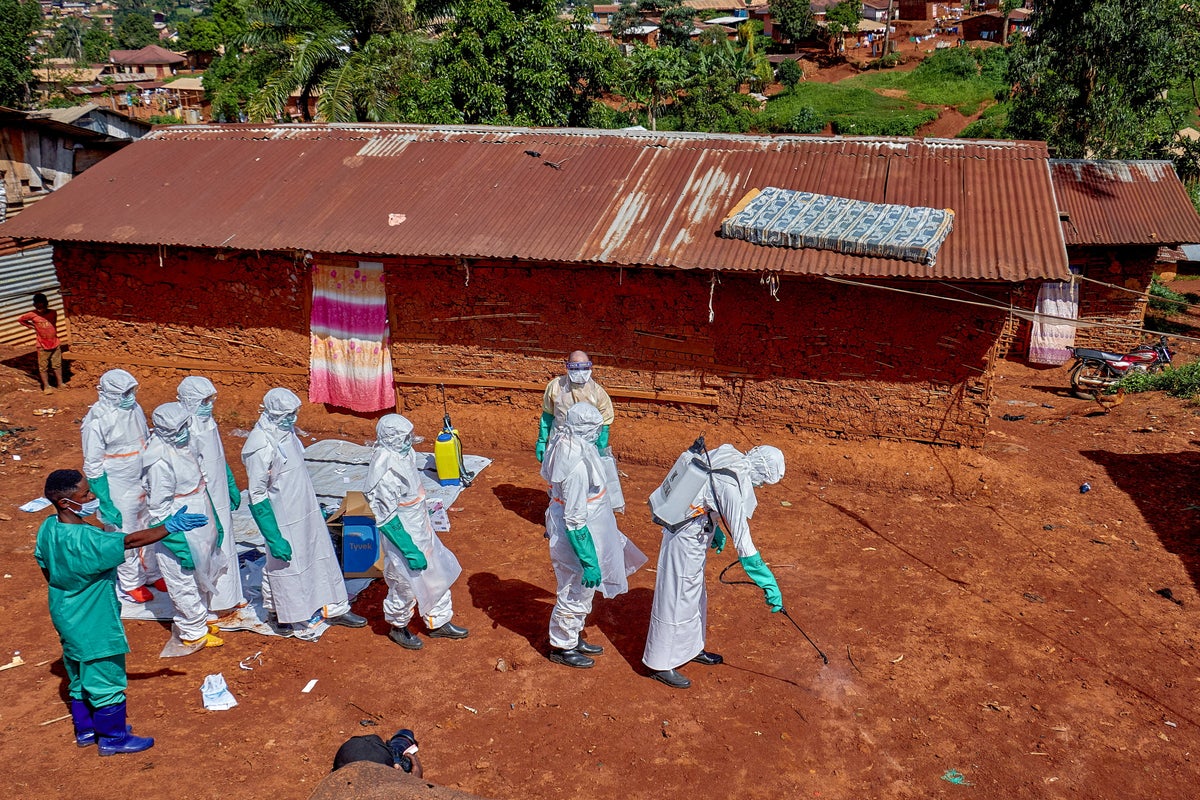
Western governments are learning a devastating lesson about global health security as a major Ebola epidemic tears through central Africa. When the United Kingdom slashed its overseas development aid budget to a historic low of 0.3 percent of gross national income to fund domestic defense priorities, ministers treated it as a localized fiscal adjustment. The rapid spread of the Bundibugyo Ebola strain across the Democratic Republic of Congo and into Ugandan border regions has exposed that decision as a dangerous illusion. Emergency cash injections cannot magically rebuild the deep surveillance networks and public trust that took decades to establish and only months to dismantle.
The immediate crisis stems directly from these deep structural retrenchments. Global health security is an interconnected web where a reduction in field budgets in London or Washington manifests as a broken thermal scanner at a porous border point in Africa. While the UK Foreign, Commonwealth and Development Office recently rushed an emergency package of twenty-one million pounds to containment efforts, frontline operators understand the mathematical reality. A sudden injection of emergency funds cannot instantly train field epidemiologists, re-establish mothballed laboratories, or reverse the damage done by canceled community outreach programs.
The Arithmetic of Containment Failure
Epidemiologic response relies entirely on baseline infrastructure. When a state maintains active, well-funded community health programs, workers monitor everyday ailments and notice immediately when an anomalous hemorrhagic fever surfaces. They possess the transport, the local trust, and the laboratory channels to isolate the pathogen before an outbreak becomes an unmanageable epidemic.
The systemic gutting of bilateral aid directly dismantled this frontline defense. Consider the mechanics of community trust during a public health emergency. When international funding dries up, local clinics close, and health education radio programs drop from five weekly broadcasts to a single slot. This creates an immediate information vacuum. In that silence, conspiracy theories and deep-seated institutional mistrust thrive, causing frightened communities to hide symptomatic relatives from containment teams.
Emergency response funding acts as an expensive bandage on a self-inflicted wound. A nation cannot expect to save money by cutting preventive health infrastructure, only to spend ten times that amount on emergency logistics when a predictable crisis spins out of control. It is a textbook example of being penny-wise and pound-foolish on a geopolitical scale.
The Multilateral Diversion
Government officials frequently defend budget cuts by pointing toward continued investments in massive multilateral development institutions. They argue that pulling back on direct, country-specific bilateral programs does not matter if hundreds of millions still flow into global banking mechanisms and centralized funds.
This bureaucratic logic falls apart completely on the ground. Multilateral funding is notoriously slow, heavily bureaucratic, and poorly suited for rapid, localized adaptation. It is excellent for financing macro-level infrastructure projects over a decade, but it is utterly incapable of deploying a mobile testing unit to a remote village within forty-eight hours of a suspected hemorrhagic fever case.
- Bilateral Aid: Direct, flexible, deeply rooted in local partnerships, and highly responsive to immediate regional health shifts.
- Multilateral Aid: Centralized, restricted by complex international governance, slow to deploy, and insulated from real-time field adjustments.
By shifting resources away from direct bilateral health partnerships, donor nations have effectively severed their own early-warning nervous systems. The current outbreak in central Africa is moving rapidly because the local monitoring networks simply no longer have the personnel to track contacts or secure isolated border crossings effectively.
The Cost of Shattered Trust
Beyond the immediate loss of clinics and field staff, the erosion of international credibility has created a profound barrier to containment. The global health apparatus operates on implicit reciprocity. Developing nations share critical viral genomic data and implement economically painful border controls based on the understanding that wealthier nations will remain reliable partners in development and health infrastructure.
When major donors abruptly walk away from long-term health commitments to solve domestic budgetary headaches, that reciprocity shatters. Local authorities are left to manage the fallout of highly volatile epidemics with fewer tools, while facing public skepticism regarding Western-backed health interventions.
The current containment failure shows that global health cannot be managed through sporadic charity. True biosecurity requires sustained, predictable investment in the mundane aspects of public health: clean water, basic diagnostic equipment, reliable local salaries, and persistent community engagement. Until international budgets reflect the reality that an untreated infection anywhere is a threat to health security everywhere, the global community will remain locked in a ruinous cycle of panic and neglect.
Western states must immediately restore predictable, long-term bilateral health funding, shifting focus away from reactive emergency measures and back toward permanent local infrastructure.