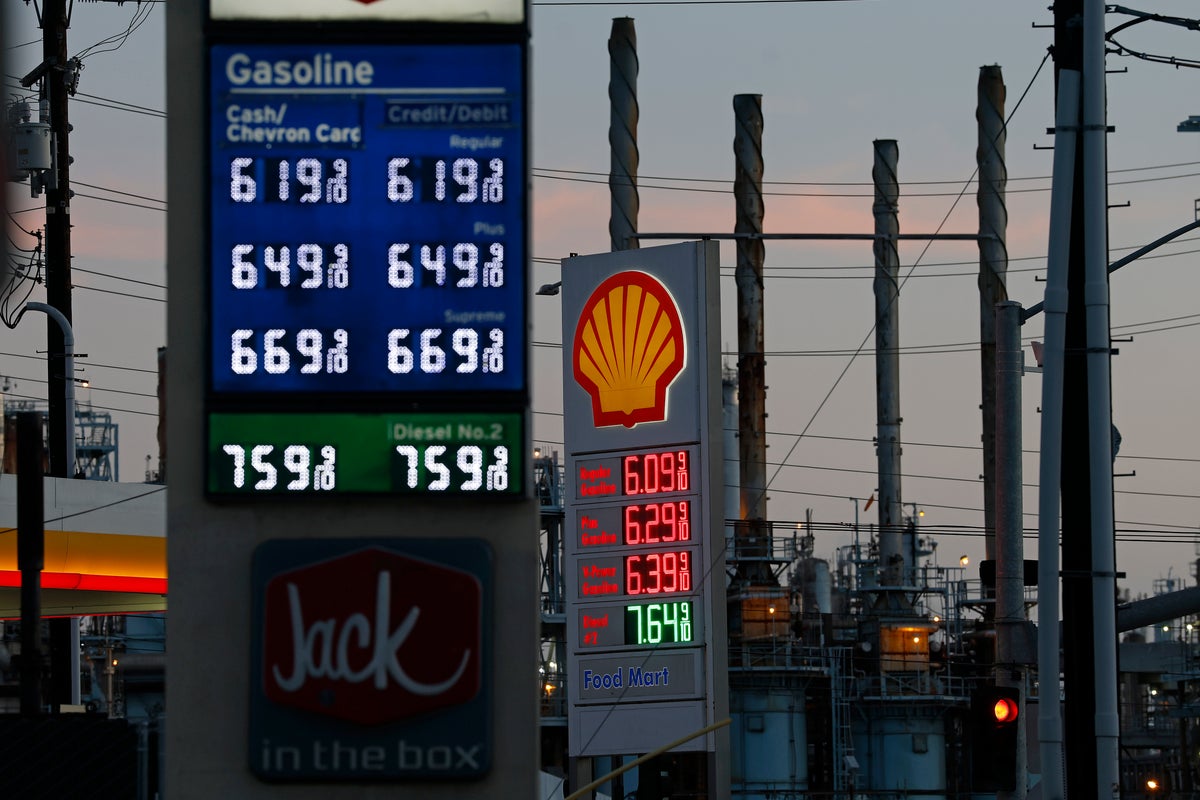
The American commuter is currently trapped in a pincer movement of geopolitical escalation and aggressive trade protectionism. As of April 2026, the national average for a gallon of gasoline has surged past the psychological breaking point of $5.00, leaving the White House scrambling for a narrative that sticks. While the administration points toward overseas instability, a growing majority of the electorate is looking directly at the Oval Office.
Recent data from a Quinnipiac University national poll suggests that 65 percent of voters now blame President Donald Trump for the spiking costs at the pump. This isn't just partisan grumbling. It is a fundamental shift in how the public perceives the link between foreign policy and domestic survival. More than half of those surveyed—51 percent—state they blame the president "a lot" for the current energy crisis.
The Iran Factor and the Strait of Hormuz
The primary driver of the current price action is the ongoing military engagement with Iran. In March 2026, the conflict escalated significantly, leading to Iranian forces asserting what they term "complete control" over the Strait of Hormuz. This is the world’s most sensitive oil chokepoint. When the flow of crude through this corridor is threatened, global markets do not wait for a physical shortage; they price in the risk immediately.
In the weeks following the start of the conflict, Brent crude skyrocketed by 30 percent, briefly touching $102 per barrel. For the average American driver, this translates to an almost instantaneous jump in retail prices. While the administration argues that these are "freedom costs" necessary for national security, voters are increasingly skeptical. The poll shows that 64 percent of Americans find the rhetoric surrounding the conflict—specifically threats to "end a whole civilization"—to be unacceptable. This suggests that the public is losing its appetite for high-stakes brinkmanship when the bill arrives at the gas station.
The Tariff Trap
Beyond the war, a secondary and more self-inflicted wound is hurting the consumer. The administration’s aggressive tariff regime, which saw a major expansion in early 2025, is finally showing its teeth in the broader economy. Though tariffs are often marketed as a tool to protect domestic industry, they function as a tax on the supply chain.
When you tax the steel used in pipelines, the trucks that transport fuel, and the parts required for refinery maintenance, the costs are invariably passed down. A recent Harris Poll indicates that seven in 10 Americans believe these tariffs have directly led to higher prices for everyday goods, including fuel. Even among Republicans, 64 percent admit the tariffs have contributed to the inflationary pressure. The administration's "drill, baby, drill" mantra has hit a wall of rising operational costs, making it harder for domestic production to offset global volatility.
A Fragmented Energy Policy
The current crisis has also exposed the fragility of the domestic energy transition. In 2024, record-breaking production from the United States and South America provided a temporary buffer. However, the subsequent dismantling of clean energy incentives and the gutting of climate-related infrastructure projects have left the grid more dependent on fossil fuels than ever.
Critics argue that by focusing exclusively on oil and gas while halting domestic renewable projects, the administration has doubled down on volatility. When a single geopolitical event in the Middle East can derail the entire U.S. economy, it highlights a lack of energy sovereignty. The move to halt clean energy initiatives during the Iran crisis was intended to project strength in the fossil fuel sector, but it has instead left the public with no alternative to the fluctuating price of a barrel of oil.
The Political Fallout
The timing could not be worse for the incumbent administration. With a job approval rating hovering at 38 percent and a significant 57 percent disapproval on the handling of the economy, the gas price issue is becoming the defining metric of 2026. Independents, often the deciding factor in legislative control, are particularly frustrated. Seventy-three percent of independent voters now blame the president for the "pain at the pump," a sentiment that usually signals trouble for the party in power during midterm cycles.
There is a growing disconnect between the White House's optimistic view of the "tariff-led manufacturing boom" and the reality of the household ledger. While the administration highlights job gains in specific sectors, the broad-based tax of high energy prices acts as a massive anchor on consumer spending.
The Reality of Market Speculation
It is important to understand that oil prices are not dictated by the president's mood, but they are heavily influenced by the president’s actions. Markets hate uncertainty. Every aggressive tweet, every threat of a new tariff, and every escalation in the Persian Gulf adds a "risk premium" to the price of oil.
Traders are currently betting on a prolonged conflict. This speculation keeps prices artificially high even when physical supply remains relatively stable. To lower prices, the administration would need to provide a clear, de-escalatory path for both its trade wars and its shooting wars. Currently, there is no evidence that such a pivot is on the horizon.
Families are forced to make hard choices between long commutes and other necessities. If the current trajectory holds, the 2026 political landscape will be dictated by the numbers on the digital signs at the corner gas station rather than the speeches delivered from the Rose Garden.