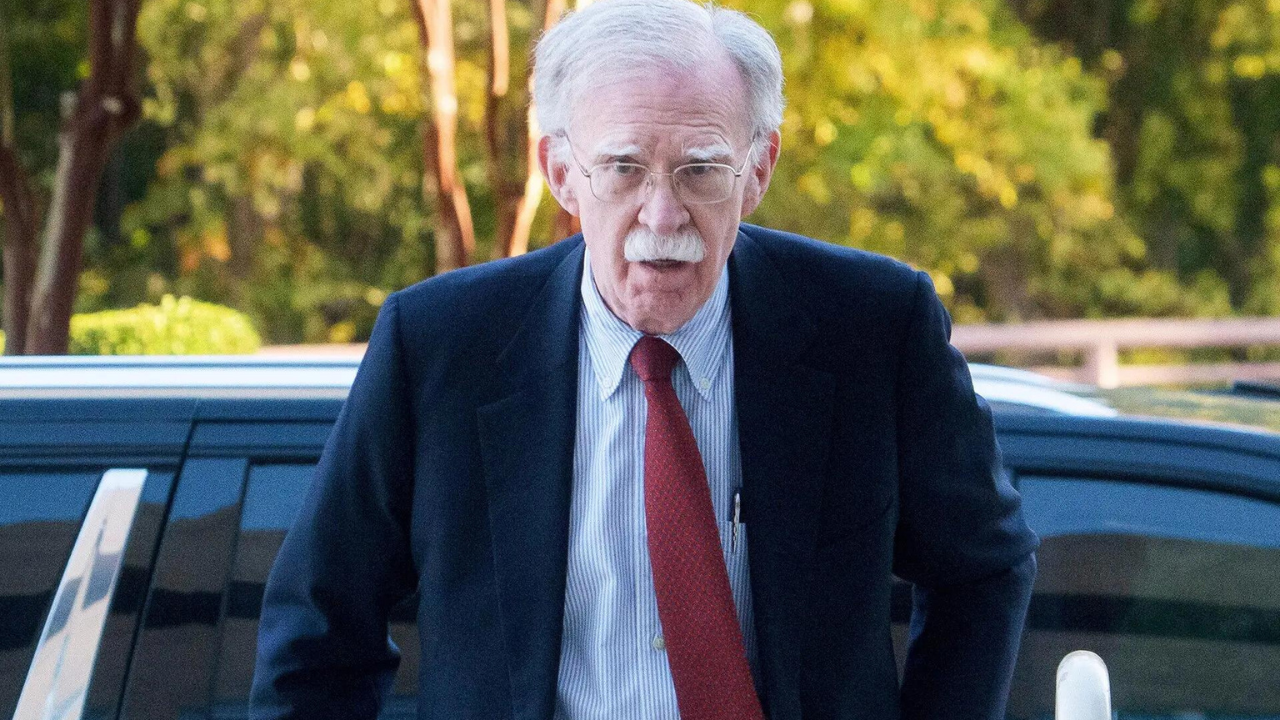
Former National Security Adviser John Bolton has agreed to plead guilty to a single federal count of retaining classified national security information. The deal, struck with the Justice Department, allows the lifelong hawk and prominent critic of Donald Trump to avoid a potentially devastating trial and likely evade time behind bars. In exchange, Bolton will pay a massive $2.25 million fine and accept a prison sentence capped at a maximum of five years, though the agreement gives the judge the discretion to mandate zero prison time.
The plea resolves an 18-count criminal indictment brought against Bolton in October 2025, which accused him of both retaining and disseminating national defense secrets. For decades, Bolton operated at the highest levels of American foreign policy, acting as a fierce defender of state secrecy and executive authority. His decision to cap his career by admitting to a federal security crime marks a profound institutional collapse.
But this case is far more than a simple story of an official mishandling paperwork. It is a window into the messy, personal, and highly weaponized intersection of government bureaucracy and executive retribution.
The Secret Diaries and the Messaging App
The federal government did not catch Bolton walking out of the West Wing with boxes of cardboard files. Instead, prosecutors uncovered a digital trail that reads like an amateur espionage thriller.
Between April 2018 and August 2025, Bolton compiled more than 1,000 pages of highly detailed, diary-like entries documenting his daily activities inside the White House. These notes were not just idle reflections. They contained transcriptions of top-secret briefings, granular details of conversations with foreign heads of state, and sensitive data regarding foreign military capabilities.
Bolton did not keep these files confined to a secure government network. Prosecutors established that he typed up these handwritten notes on his personal computer and transmitted them to two family members.
He used a commercial, non-governmental messaging app to send them. He used standard consumer email accounts like Google and AOL to move the data. To a career national security hand, the vulnerabilities of these platforms should have been obvious.
They were. In fact, they backfired spectacularly.
Between 2019 and 2021, a cyber actor believed to be tied to the Iranian government successfully hacked Bolton’s personal email account. The hackers gained access to the entire cache of sensitive information stored within his inbox and subsequently threatened to leak it. While Bolton’s representative notified the FBI about the security breach in July 2021, the former national security adviser conspicuously failed to inform investigators at the time that the stolen emails contained highly classified national defense secrets.
The Mechanics of a Controlled Fall
When the FBI raided Bolton’s Bethesda, Maryland home and his Washington office in August 2025, they seized electronic devices and binders packed with sensitive materials. The subsequent October indictment could have ended Bolton’s liberty. Facing 18 counts of unlawful transmission and retention of national defense information, a standard defendant would be looking at decades in a federal penitentiary.
Bolton’s legal team, led by veteran attorney Abbe Lowell, chose a pragmatic path.
The defense team recognized the structural weaknesses of fighting a classified documents trial under the rules of the Classified Information Procedures Act. Such trials are slow, agonizingly technical, and heavily tilted in favor of the government’s right to protect its secrets from public view. By pleading guilty to a single count of retention, Bolton avoids the risk of a jury trial while the Justice Department secures a high-profile conviction without forcing sensitive intelligence methods into open court.
Crucially, the plea deal does not allege that Bolton attempted to sell these secrets, nor does it accuse him of sharing them with foreign adversaries or the press. He was writing a memoir. His defense always maintained that these notes were personal diaries meant to ensure the accuracy of his historical account, rather than an intentional effort to compromise the United States.
The $2.25 million fine is a staggering financial penalty for an individual. It effectively strips away the financial windfall Bolton achieved through his post-White House writing and speaking engagements, serving as a punitive clawback of his commercial success.
Weaponization or Accountability
The timing of the prosecution ensures that it will be viewed through a highly polarized political lens. Bolton’s indictment in late 2025 arrived in a rapid-fire sequence alongside federal charges against other prominent critics of the administration, including former FBI Director James Comey and New York Attorney General Letitia James.
The Justice Department, led by Attorney General Pam Bondi and influenced by senior law enforcement figures like FBI Director Kash Patel, has maintained that these prosecutions are strictly about national security and the equal application of the law.
The optics, however, tell a far more complicated story.
Bolton became a prime target for executive ire after publishing his 2020 memoir, The Room Where It Happened, which painted an unflattering portrait of the administration’s foreign policy apparatus. The book details instances where foreign policy decisions were allegedly tied directly to political outcomes, including descriptions of requests made to Chinese leadership regarding agricultural purchases to influence domestic elections.
By pursuing Bolton criminally years after he left office, the government has sent a clear message to the Washington establishment. The institutional protective shield that usually guards former high-ranking cabinet officials has evaporated.
The Gray Area of Washington Memoirs
Washington runs on a currency of selective leaks and insider accounts. Every major political figure leaves office with the intention of writing a book, and nearly all of them rely on personal notes, diaries, and unclassified recollections to fulfill their publishing contracts.
The Bolton case shatters the implicit understanding governing how those books are produced.
The prepublication review process is supposed to serve as a bureaucratic filter, a dry administrative exercise where career officials redact specific lines to protect ongoing operations. By criminalizing the underlying act of keeping the detailed notes required to write those memoirs, the executive branch has effectively monopolized the historical narrative of its own tenure. Future officials will think twice before logging daily interactions if those private journals can be repurposed into a federal indictment.
Bolton is scheduled to enter his formal guilty plea during a re-arraignment hearing in a Maryland federal court on June 26. While he will likely walk out of the courthouse without handcuffs, his reputation as the ultimate institutional insider is permanently altered. He sought to document history from the inside, but he forgot that the system he spent his life building has a tendency to consume those who try to expose its machinery.


