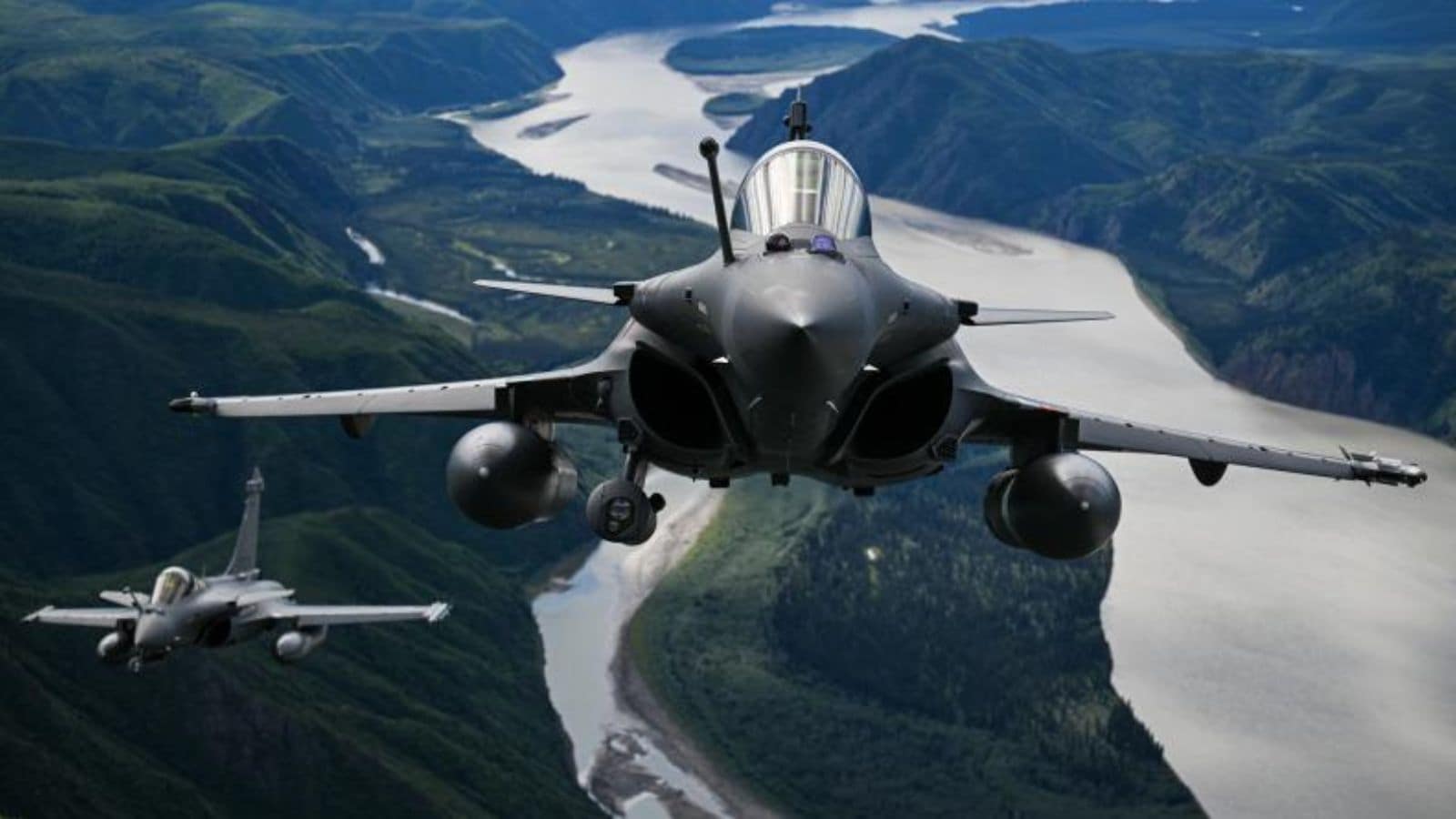
The United States Navy recently wrapped up a quiet test at the Point Mugu Sea Range in California, utilizing a General Atomics MQ-20 Avenger as a surrogate to evaluate a software framework called Collaborative Autonomy Mission Planning, or CAMP. On paper, the exercise proved that human-developed operational instructions could be translated into code that an uncrewed aircraft can digest and execute.
Yet beneath the defense press releases lies a starker operational reality. The military does not have a hardware deficit when it comes to uncrewed combat aircraft. It has a cognitive bottleneck.
For decades, military acquisition focused on the physical platform: thrust-to-weight ratios, radar cross-sections, and hardpoint capacities. That era is over. The modern air combat problem is entirely software-defined, and the friction point has shifted from how fast a jet can fly to how humans instruct a machine to think, adapt, and kill within strict legal and tactical limits.
The Translation Tax of Modern Warfare
To understand why the CAMP initiative matters, one must look at how naval aviation currently plans a strike package. Squadrons rely on established mission planning environments—complex software suites where human aviators map out waypoints, threat rings, timing constraints, and communications windows down to the second.
When introducing autonomous systems into this workflow, a profound translation tax occurs. Historically, every proprietary autonomous software stack required its own bespoke planning tool. An engineer at a defense contractor would write an autonomy algorithm, and a separate interface would have to be reverse-engineered so that operators could command it.
If a strike group commander wanted an uncrewed jet to scout ahead of an F-35C formation, operators essentially had to program that machine using developer-centric tools that bore no resemblance to standard naval command-and-control architectures. That approach creates massive cognitive overhead. In a high-tempo carrier air wing environment, officers do not have the time to learn three different proprietary coding logic interfaces just to direct a supporting drone.
The Navy’s recent trials attempt to solve this by creating a common middle layer. By linking standard human-driven operational plans directly to behavioral tasking frameworks, the service is trying to establish a universal translator.
The Hidden Trap of Rules of Engagement
Translating a waypoint is easy. Translating discretion is where systems break down.
When a human wingman flies alongside a strike lead, they share an intuitive understanding of the commander's intent. If communications are jammed or a target profile shifts unexpectedly, the human applies judgment based on international law, the Law of Armed Conflict, and split-second situational awareness.
Autonomous systems do not possess intuition. They operate on thresholds, decision trees, and probabilistic weightings. CAMP and similar software frameworks must explicitly configure rules of engagement, artificial intelligence decision thresholds, and fallback behaviors before the aircraft ever leaves the deck.
Consider a hypothetical scenario where an autonomous combat jet is assigned to suppress enemy air defenses during an opening strike wave. If the primary radar site goes silent and relocates, a human pilot immediately interprets the tactical maneuver and hunts for the mobile emitter. An uncrewed platform constrained by rigid pre-programmed mission logic might simply orbit its designated search box, waiting for a human supervisor miles away to push a new set of coordinates through a contested data link.
If the data link is severed by electronic warfare, the autonomy framework faces a dangerous paralysis. It must choose between executing stale instructions or executing safety abort protocols. Bridging human operational planning with machine execution does not eliminate this friction; it merely exposes it earlier in the cycle.
The Institutional Inertia of Carrier Aviation
The broader impediment to autonomous integration is not technological immaturity within software labs, but the deeply entrenched culture of naval aviation safety.
Aircraft carrier flight decks are arguably the most hostile, unforgiving workspaces on earth. Every operational procedure is written in blood and refined over a century of naval aviation history. A culture trained to treat mechanical failure as a catastrophic emergency is naturally skeptical of non-deterministic software algorithms making tactical decisions under G-load.
When software defines the tactical envelope, software bugs become flight safety hazards. Traditional airworthiness certification processes evaluate physical components against predictable fatigue limits. Software-driven autonomy, by definition, learns, adapts, and alters its behavior based on sensor inputs. Testing a mission-planning tool like CAMP in a controlled exercise at Point Mugu is a necessary first step, but certifying that software to operate autonomously aboard a Nimitz or Ford-class carrier alongside manned traffic is an entirely different magnitude of challenge.
Furthermore, defense acquisition structures favor hardware milestones. Buying airframes yields Congressional budget lines and visible shipyard progress. Funding a common software planning architecture lacks the visual appeal of a rolling-out ceremony, yet it determines whether those multi-million dollar platforms function as effective weapons or expensive paperweights.
What Comes Next for Fleet Integration
The path forward requires abandoning the fantasy that artificial intelligence will soon operate entirely independent of human oversight. The objective of current naval experimentation is not to remove the human from the loop, but to redefine what the human is doing.
Instead of manually punching coordinates into disparate tactical display terminals, future strike leads will manage portfolios of autonomous effectors, adjusting behavioral boundaries and authorizing engagement windows at a macroscopic level.
The software demonstrated in recent trials points toward that reality, but the gap between a successful demonstration and a deployed fleet capability remains wide. Until the Navy solves the underlying data standards across competing defense primes, every new autonomous platform risks becoming an isolated island of automation.
The bottleneck is no longer the machine's ability to fly without a pilot. It is the service's ability to command a distributed, automated force without drowning in complexity.